Aqueous solution of ‘A’  Black precipitate ‘B’, soluble in 50% HNO 3 forming ‘C’.
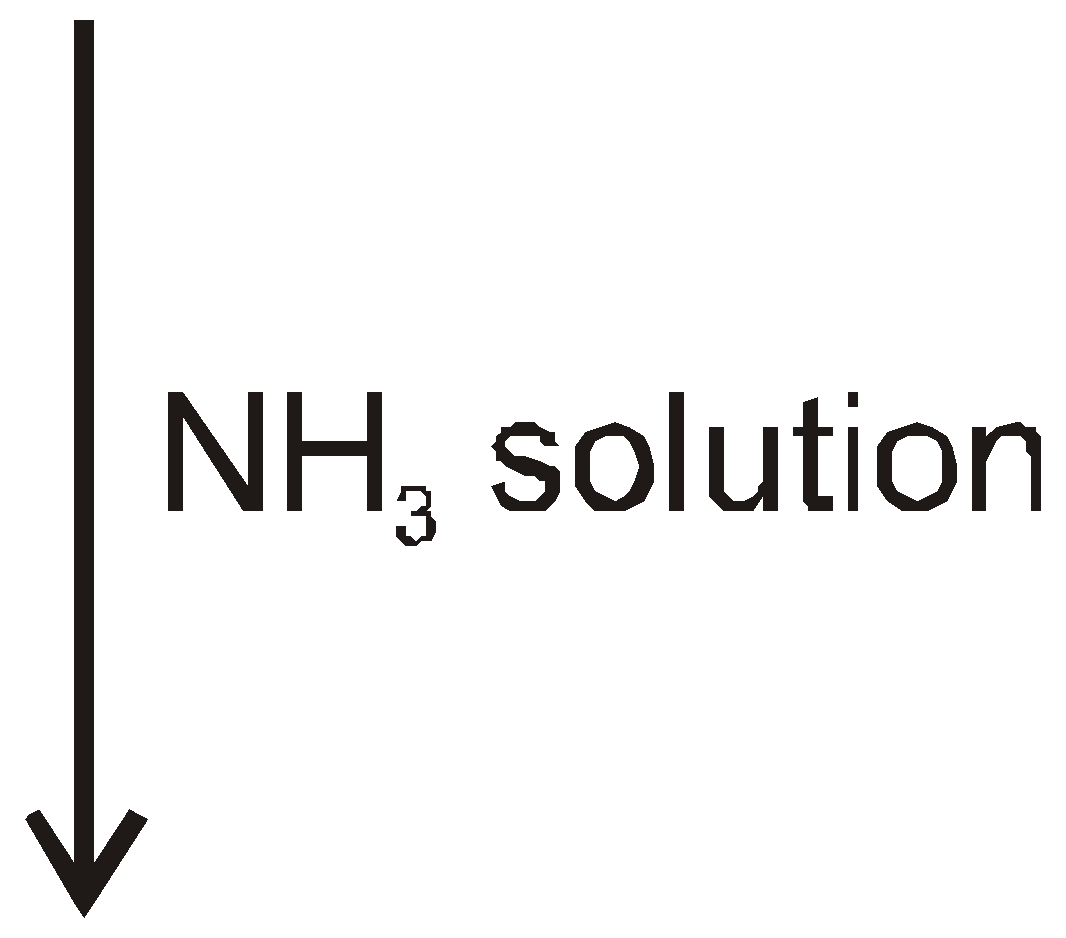
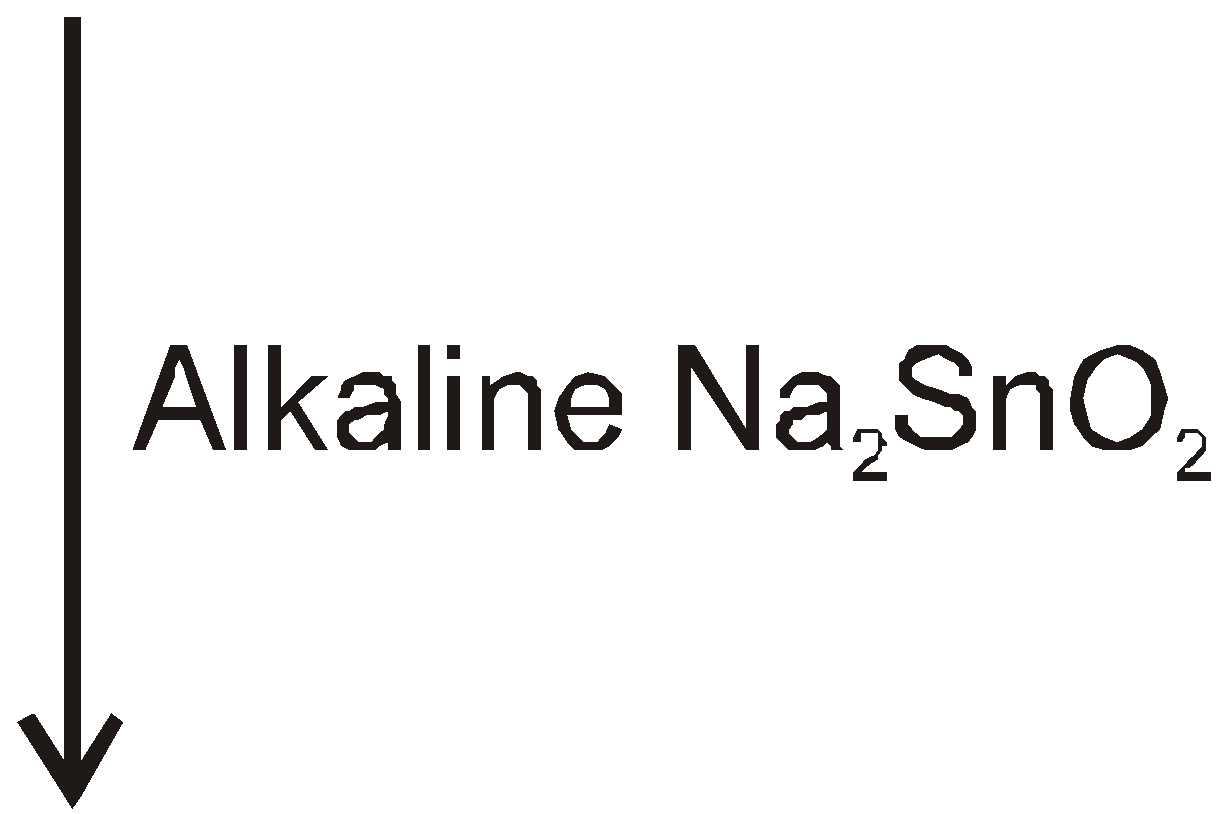
White precipitate dissolves in Black precipitate ‘D’
hydrochloric acid but on dilution with
water again white turbidity appears 'E'.
Moreover, the salt 'A' on heating with solid K 2 Cr 2 O 7 and concentrated H 2 SO 4 produces deep red vapours which dissolve in sodium hydroxide solution forming a yellow solution. This yellow solution gives yellow precipitate with Ba(NO 3 ) 2 solution.
On the basis of the aforesaid characteristic informations answer the following questions :
(i) Acidified solution of ‘A’, on treatment with KI gives black precipitate 'F' which dissolves in excess of reagent forming the coloured compound 'G'. The chemical composition of 'F' and 'G' are respectively :
Text Solution
Verified by ExpertsCHECK THE SOLUTION.
(i) Bi 3+ + 3I – → BiI 3 ↓ (black) ; BiI 3 ↓ (black) + I – → [BiI 4 ] – (orange colour solution)
(ii) Black precipitate of BiI 3 on heating with water turns orange
BiI 3 ↓ + H 2 O  BiOI ↓ + 2H + + 2I – (iii) Cl
– + Ag  AgCl ↓ (white) ; 3AgCl + AsO 3 3–
  Ag 3 AsO 3 ↓ (yellow) + 3Cl –
Bi 3+ + 3OH –  Bi(OH) 3 (white) ; Bi(OH) 3
  BiO.OH ↓ (yellowish-white) + H 2 O
BiOCl ↓ (white) + 2H +  Bi 3+ + H 2 O + Cl –
Prepare Smarter with CGP Edu
Get practice questions, solutions, and test series in one place.
Write a Review
Share your experience with this question and solution.
Commentary
Send your comment, doubt, correction, or feedback to admin.
Similar Questions
Explore conceptually related problems