Published by:
CGP EDU Academic Team
Published on: August 13, 2026
Let the sixth term in the binomial expansion of  , in the increasing powers of
  , be 21 . If the binomial coefficients of the second, third and fourth terms in the expansion are respectively the first, third and fifth terms of A.P., then the sum of the squares of all possible values of
  is
is
Text Solution
Verified by ExpertsThe correct answer is:
4
(4)
 Sixth Term,
So, 

 (But
(But  is inadmissible)

Now, 
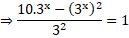



Sum of squeals of values of 
──────────────────────────────────────────────────────────────────────────────────────────
Prepare Smarter with CGP Edu
Get practice questions, solutions, and test series in one place.
Write a Review
Share your experience with this question and solution.
Commentary
Send your comment, doubt, correction, or feedback to admin.
Similar Questions
Explore conceptually related problems
PART-I PHYSICS
SECTION-A
For three low density gases pressure versus temperature graphs are plotte…
An electron of a hydrogen like atom, having , jumps from energy state to energy state. The energ…
The ratio of average electric energy density and total average energy density of electromagnetic wa…
Two objects A and B are placed at and from the pole in front of a concave mirror having radius of…
Equivalent resistance between the adjacent corners of a regular n-sided polygon of uniform wire of …
A Carnot engine operating between two reservoirs has efficiency . When the temperature of cold res…