MEASUREMENT OF PRESSURE
Barometer: A barometer is an instrument that is used for the measurement of pressure. The construction of the barometer is as follows
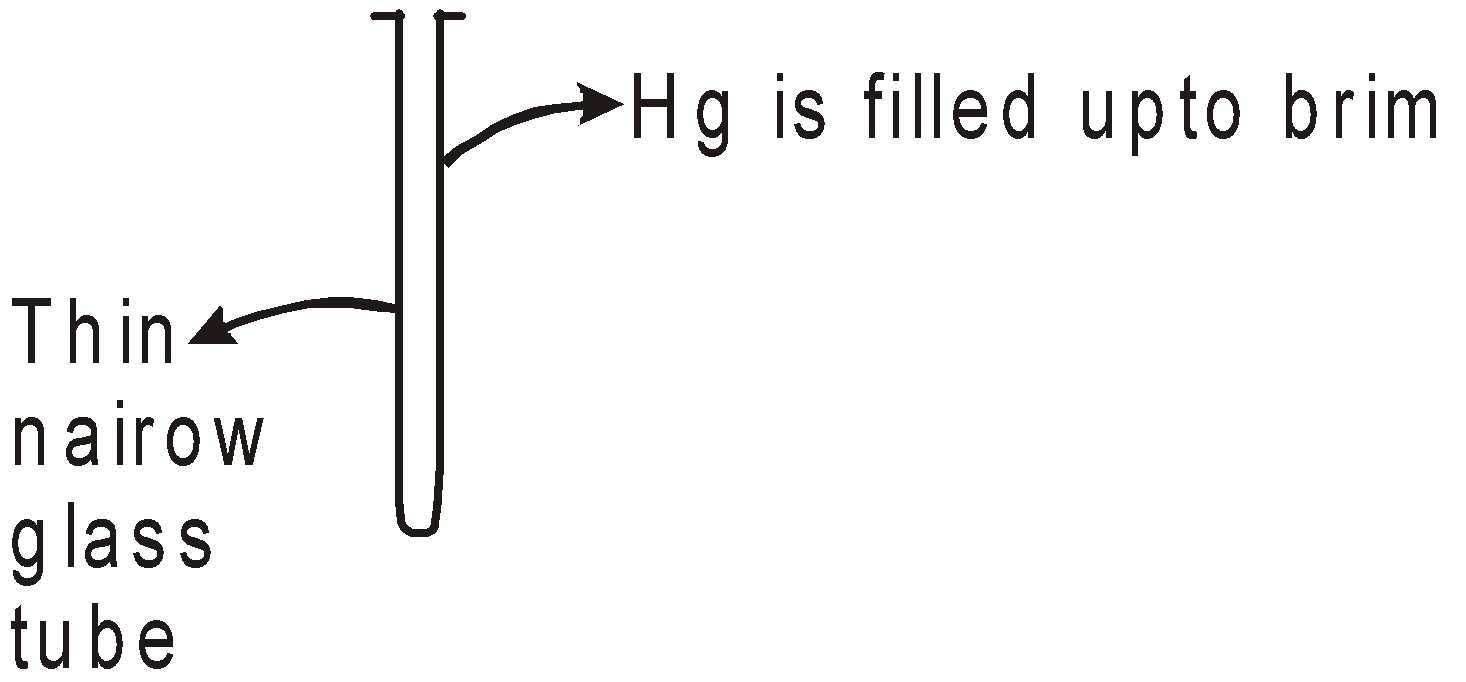
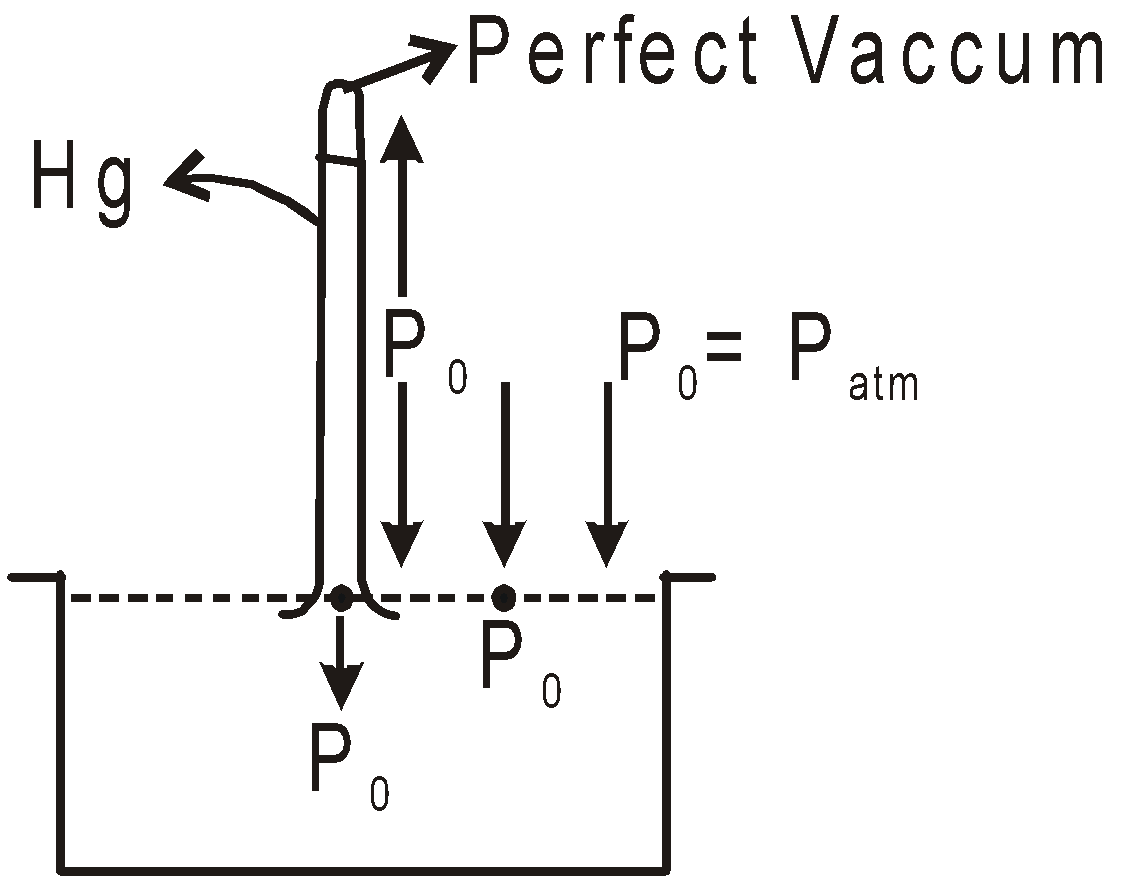
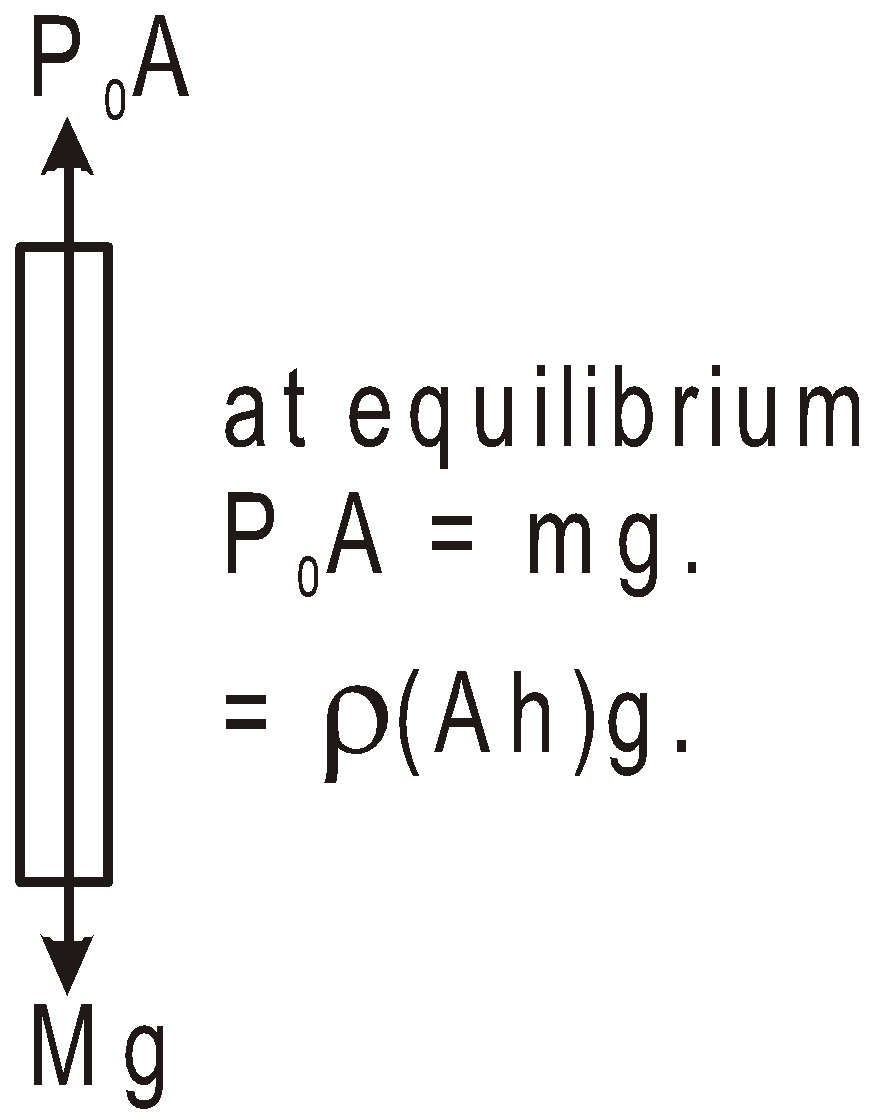
Cross sectional view of the capillary column
A thin narrow calibrated capillary tube is filled to the brim, with a liquid such as mercury, and is inverted into a trough filled with the same fluid. Now depending on the external atmospheric pressure, the level of the mercury inside the tube will adjust itself, the reading of which can be monitored. When the mercury column inside the capillary comes to rest, then the net forces on the column should be balanced.
Applying force balance, we get,
P atm × A = m×g (‘A’ is the cross-sectional area of the capillary tube)
If ‘ ρ ’ is the density of the fluid, then m = ρ × g × h (‘h’ is the height to which mercury has risen in the capillary)
Hence, P atm × A = ( ρ × g × h) × A or, P atm = ρ gh
Faulty Barometer: An ideal barometer will show a correct reading only if the space above the mercury column is vacuum, but in case if some gas column is trapped in the space above the mercury column, then the barometer is classified as a faulty barometer. The reading of such a barometer will be less than the true pressure.
For such a faulty barometer

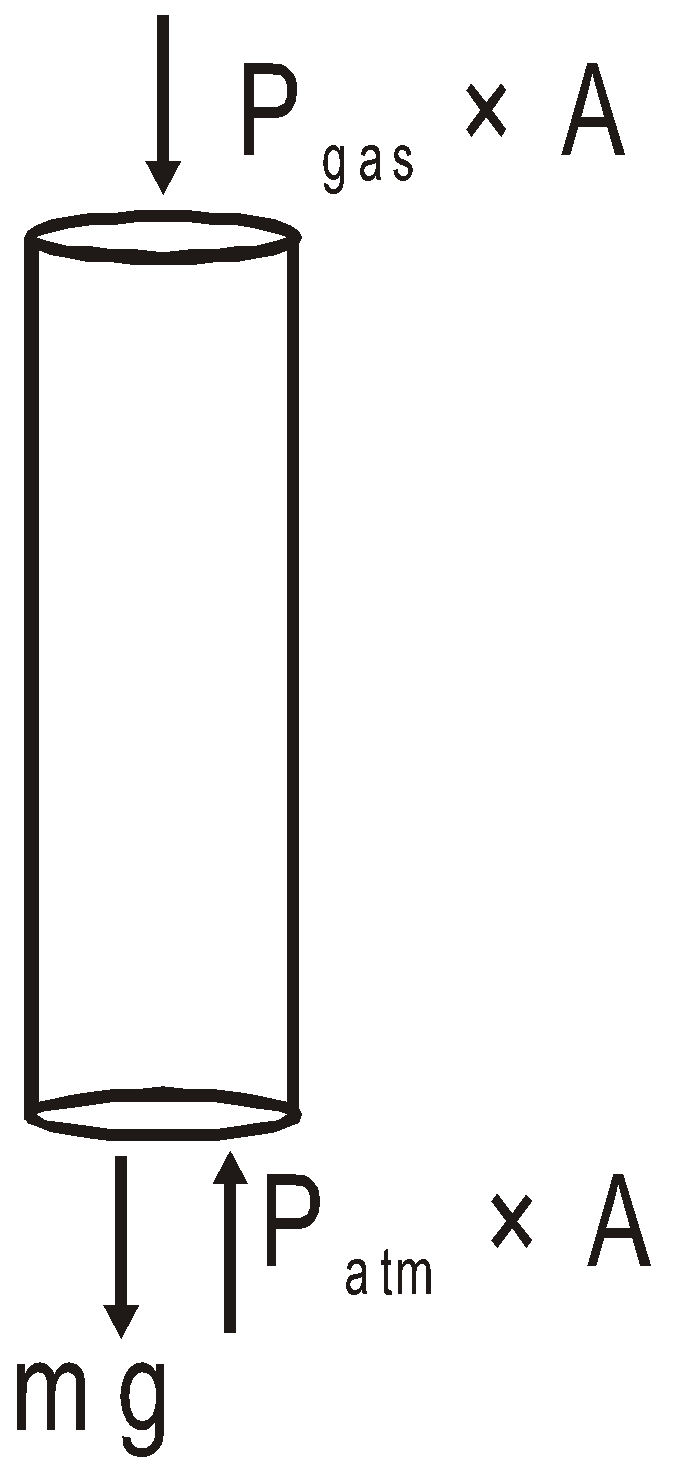
P 0 A = mg + P gas A
P 0 = ρ gh + P gas or ρ gh = P 0 – P gas
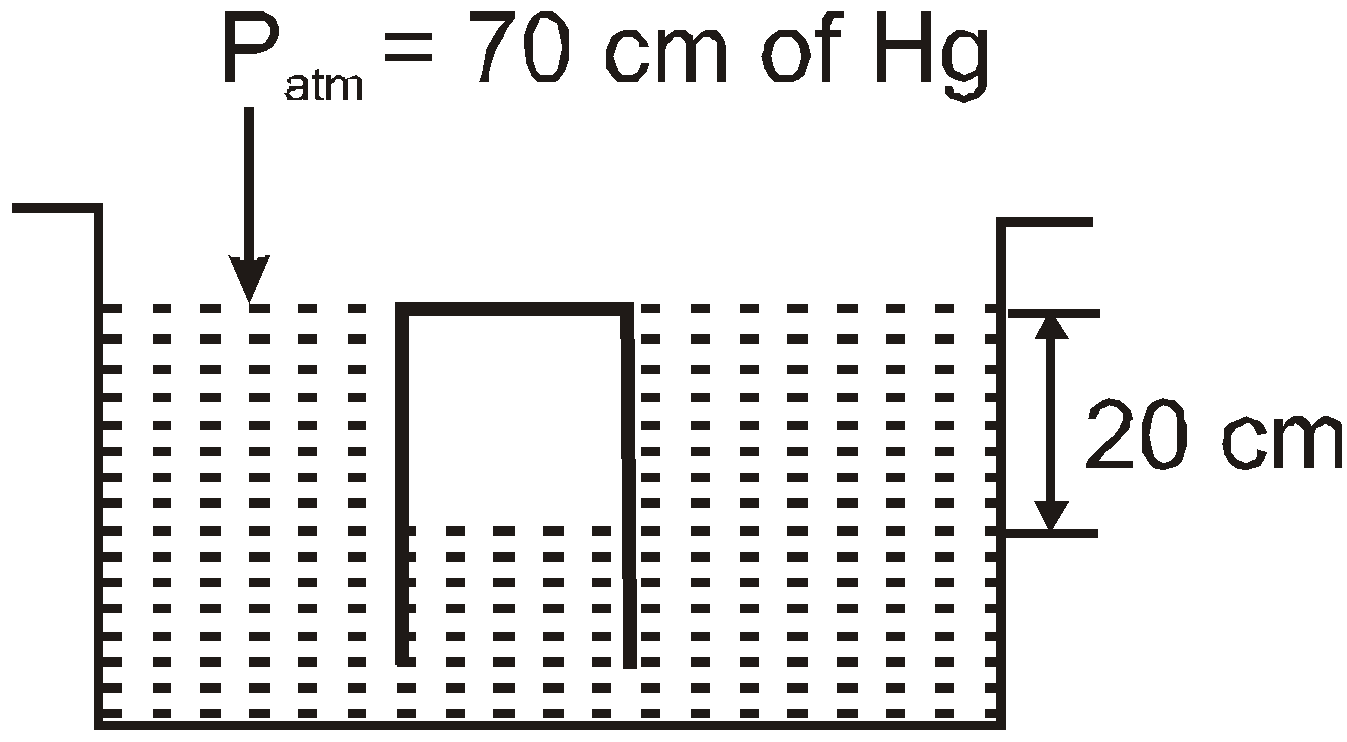
(i) A tube closed at one end is dipped in mercury as shown in figure-3 such that the closed surface coincides with the mercury level in the container. By how much length of the tube should be extended such that the level of Hg in the tube is 5 cm below the mercury level inside the container. (Assume temperature remains constant)



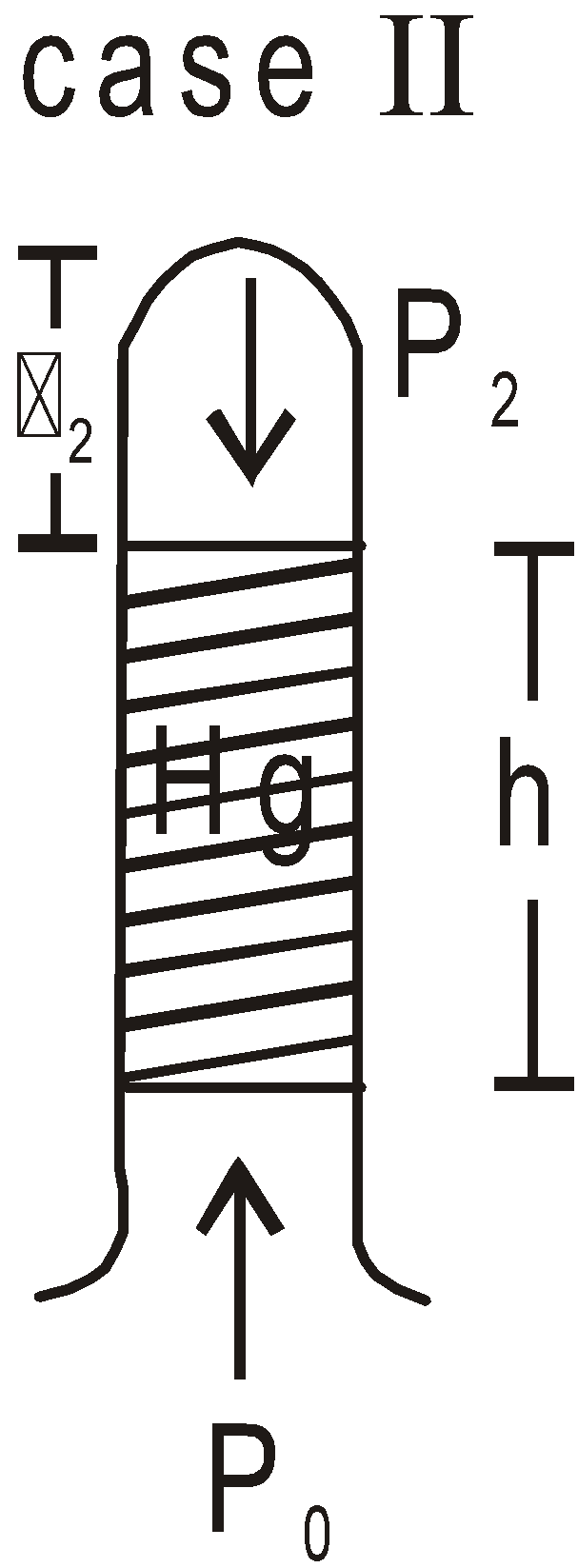
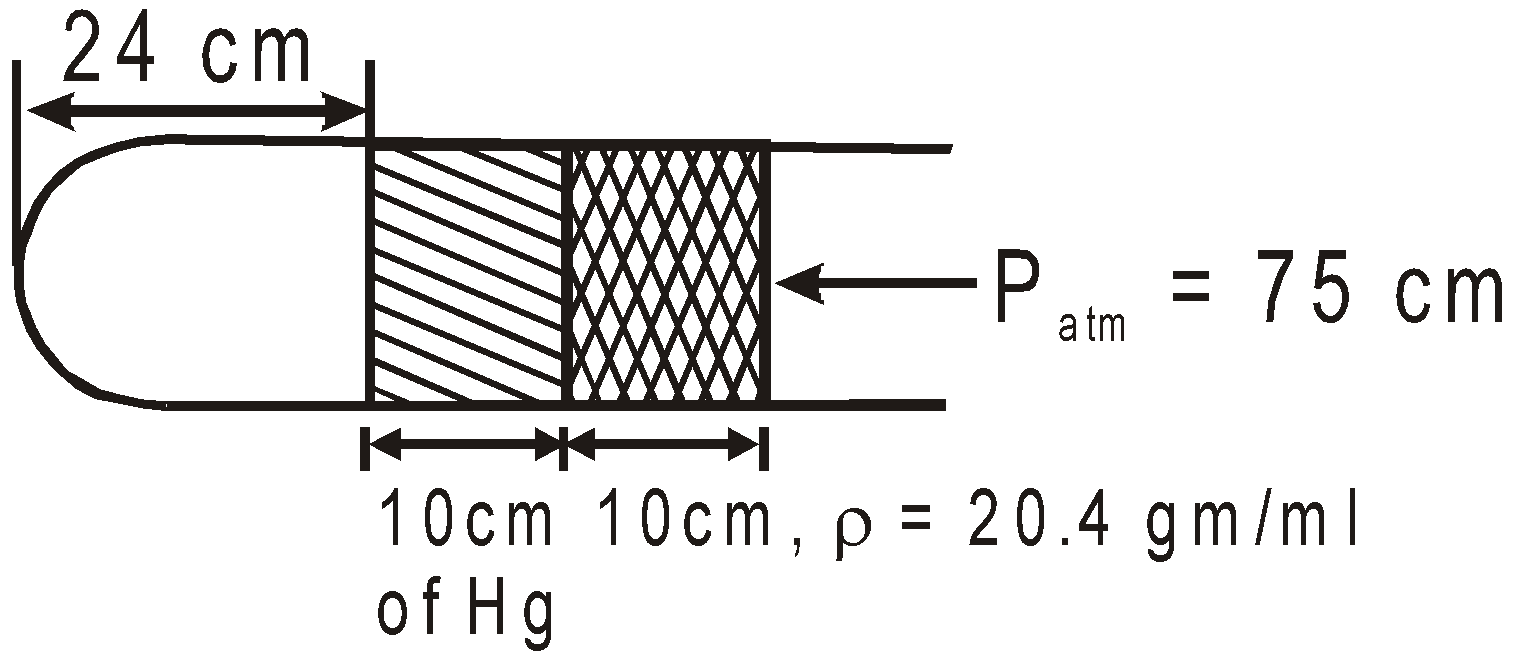 If above tube is placed vertically with the open end upward then the length of the air column will be (assume temperature remains constant) 15 cm (iii) A gas column is trapped between closed end of a tube and a mercury column of length (h) when this tube is placed with its open end upwards the length of gas column is ( λ 1 ) the length of gas column becomes ( λ 2 ) when open end of tube is held downwards (as shown in fig.). Find atmospheric pressure in terms of height of Hg column. (Assume temperature remains constant)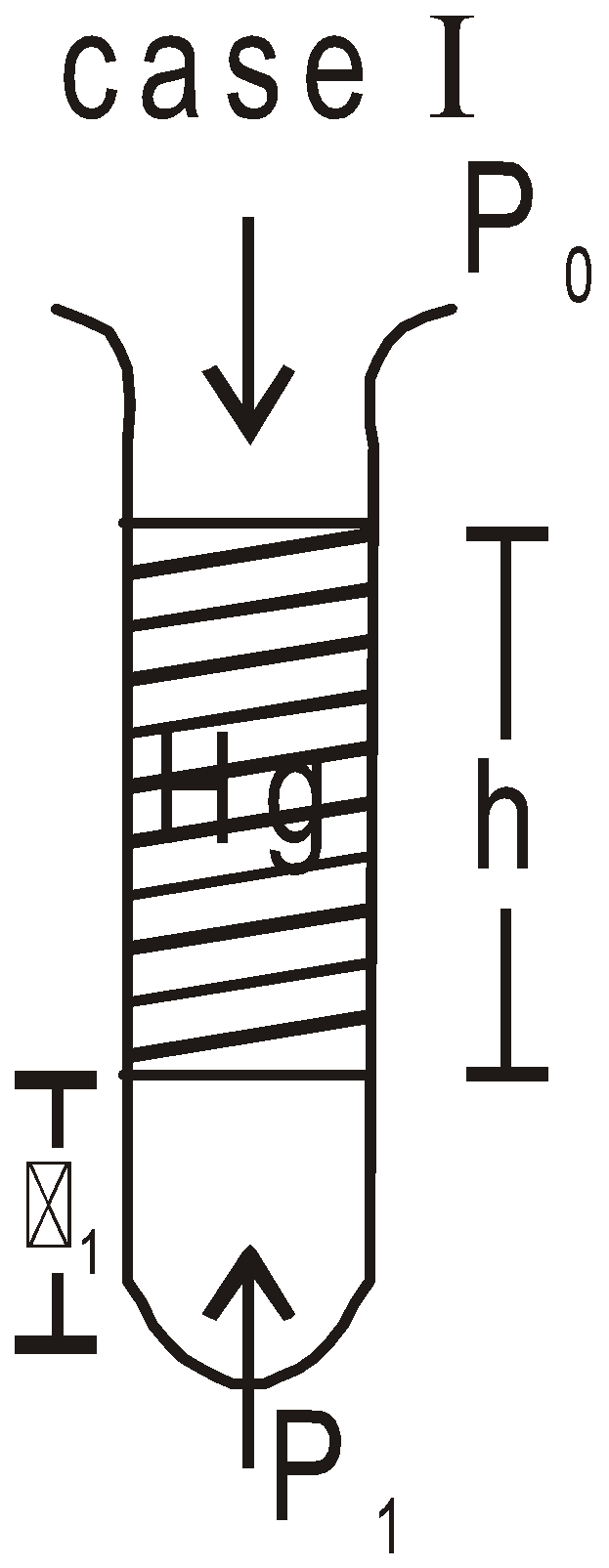
 (h 1 λ 1 + h 2 λ 2 )
Text Solution
Verified by ExpertsB
(i) P 1 = 70 + 20 = 90 cm of Hg,
P 2 = (70 + 5) cm of Hg ⇒ 90 × 20 = 75 × (5 + x) ⇒ x = 19 cm.
(ii) P 1 = 75 cm of Hg, V 1 = 24 × A
P 2 = 75 + 10 +  = 100 cm of Hg

⇒ 75 × 24 = 100 × x
x = 18 cm
(iii) Case Ι Case ΙΙ
P 1 = (P 0 + h) P 2 = (P 0 – h)
P 1 V 1 = P 2 V 2
Now in both the cases, the gas is the same and temperature is also constant, hence Boyles law can be applied.
λ 1 A (P 0 + h) = λ 2 A (P 0 – h)
P 0 =  cm of Hg column.
Prepare Smarter with CGP Edu
Get practice questions, solutions, and test series in one place.
Write a Review
Share your experience with this question and solution.
Commentary
Send your comment, doubt, correction, or feedback to admin.
Similar Questions
Explore conceptually related problems