The concentration of potassium ions inside a biological cell is at least twenty times higher than the outside. The resulting potential difference across the cell is important in several processes such as transmission of nerve impulses and maintaining the ion balance. A simple model for such a concentration cell involving a metal M is :
M(s) | M + (aq ; 0.05 molar) || M + (aq ; 1 molar) | M(s)
For the above electrolytic cell, the magnitude of the cell potential is | E cell | = 70 mV.
Now answer the following two questions :
(i) For the above cell :
Text Solution
Verified by ExpertsCHECK THE SOLUTION.
(i) M (s) | M + (aq, 0.05 M) || M + (aq, 1 M) | M(s)
Anode : M (s) ⎯→ M + (aq) + e –
Cathode : M + (aq) + e – ⎯→ M (s)
M + (aq) | c  M + (aq) | a
E cell = E° cell –  log
log 
= 0 –  log
log 
= + ve = 70 mV and hence Δ G = – nFE cell = – ve.
(ii) E cell =  log
log  =
=  log
log 
= 70 mV +  log 20 = 140 mV.
(iii) 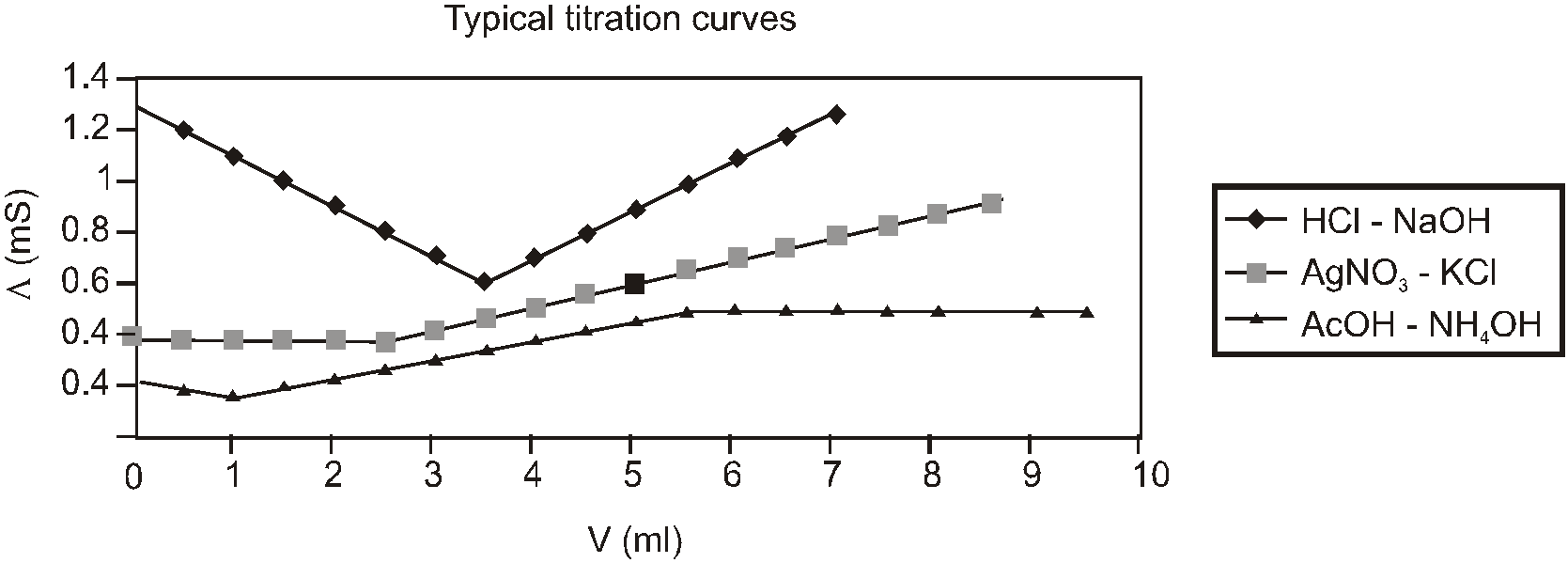
(iv) E = Eº –  log
log 
= 1.67 –  log
log  = 1.67 –
  log10 7
= 1.67 –  × 7 = 1.67 – 0.105 = 1.565 = 1.57 V.
Prepare Smarter with CGP Edu
Get practice questions, solutions, and test series in one place.
Write a Review
Share your experience with this question and solution.
Commentary
Send your comment, doubt, correction, or feedback to admin.
Similar Questions
Explore conceptually related problems