Published by:
CGP EDU Academic Team
Published on: August 13, 2026
Let  .
.
List I | List II | ||
(P) | For each there exists a such that | (I) | True |
(Q) | There exists a such that has no solution in the set of complex numbers. | (II) | False |
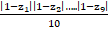
(R) | equals | (III) | 1 |
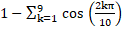
(S) | equals | (IV) | 2 |


Text Solution
Verified by ExpertsThe correct answer is:
C
(P) 
Hence for each  there exists
  such that
  (True)
(Q)  for
for  &
&
 for
for  (False)
(R)  are roots of the equation
  other then unity, hence

Substituting  , we get
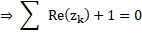
(S)  sum of real parts of roots of
  except 1


──────────────────────────────────────────────────────────────────────────────────────────
Prepare Smarter with CGP Edu
Get practice questions, solutions, and test series in one place.
Write a Review
Share your experience with this question and solution.
Commentary
Send your comment, doubt, correction, or feedback to admin.
Similar Questions
Explore conceptually related problems
Let . Then the value of at is
Let z = x + iy be a complex number where x and y are integers. Then the area of the rectangle whose…
Let and be two distinct complex numbers and let for some real number with . If denotes the pr…
Let ω be the complex number cos + i sin . Then the number of distinct complex numbers z satisfyin…
Match the statements in List I with those in List II [Note: Here takes the values in the complex p…
If z is any complex number satisfying |z – 3 – 2i| 2, then the minimum value of |2z – 6 + 5i| is