For what values of  , then equation

(i) both roots are smaller than 2 ?
(ii) both roots are greater than 2?
(iii) both roots lie in the interval  ?
?
(iv) exactly one root lie in the interval  ?
?
(v) one root is smaller than 1 and the other root is greater than 1 ?
(vi) one root is greater than 3 and the other root is smaller than 2?
(vii) atleast one root lies in the interval  ?
?
(viii) atleast one root is greater than 2 ?
(ix) atleast one root is smaller than 2?
(x) roots  and
and  , such that both 2 and 3 lie between
  and
and  ?
?
Text Solution
Verified by Experts(iv) (iii); (viii) (II)





or 

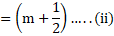
and let

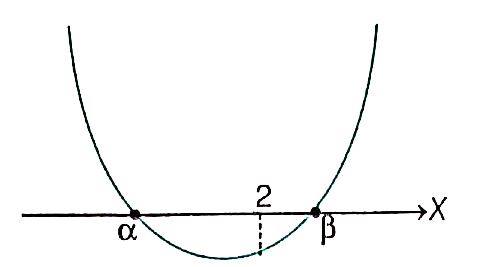
(i) Both roots are smaller than 2 .
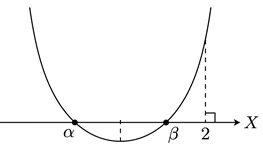
Consider the following cases:
Case I 
 [from Eq. (i)]
Case II  -coordinate of vertex
  .
.
 [from Eq. (ii)]
or 
Case III 



Combining all cases, we get

(ii) Both roots are greater than 2 .
Consider the following cases:
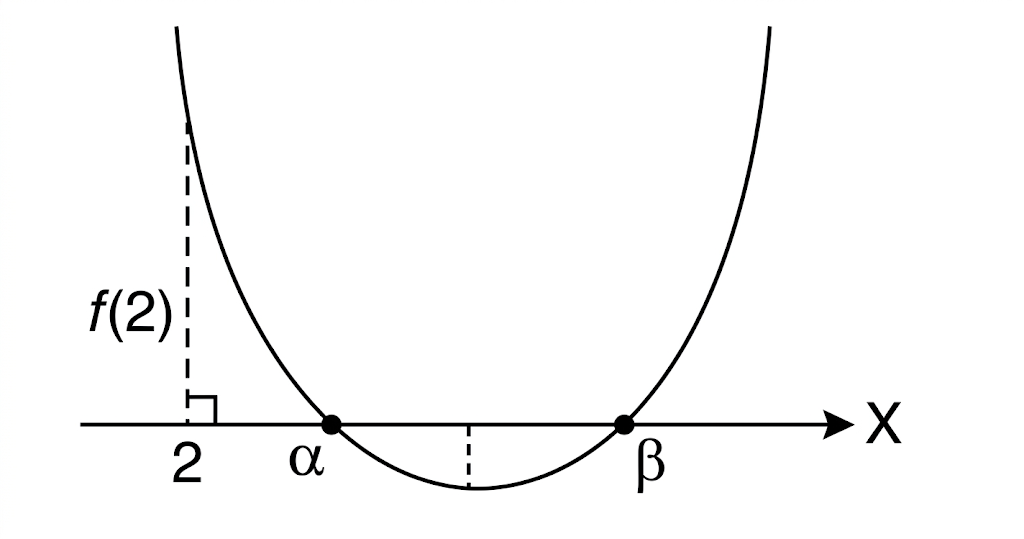
Case I 
 [from Eq. (i)]
Case II  -coordinate of vertex
 [from Eq. (ii)]

Case III 
 from part (i)
Combining all cases, we get
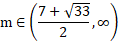
(iii) Both roots lie in the interval  .
.
Consider the following cases:
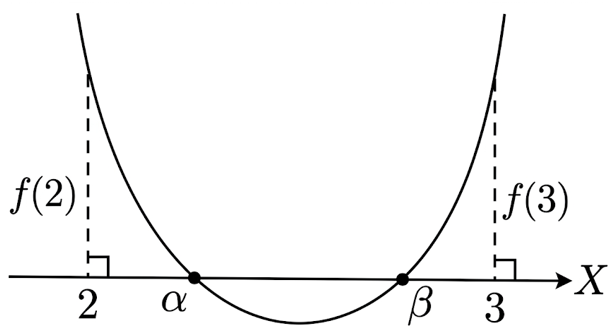
Case I 
 [from Eq. (i)]
Case II 
[from part (i)]
Case III 

or 

Case IV  -coordinate of vertex
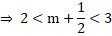 or
or  or
or 
Combining all cases, we get

(iv) Exactly one root lie in the interval  .
.
Consider the following cases:
Case I D > 0
 [from Eq. (i)]
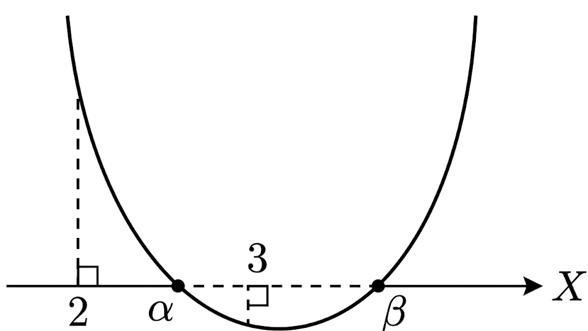
Case II 



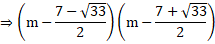

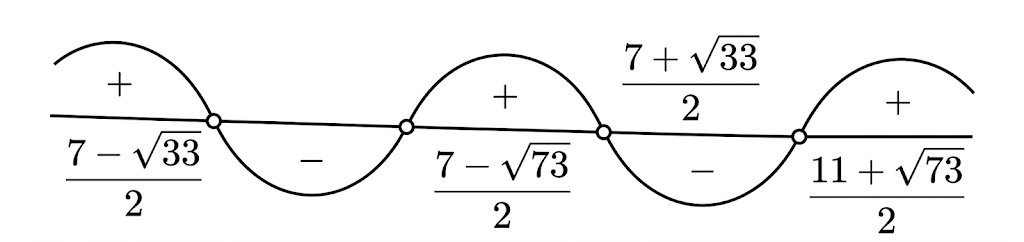

Combining all cases, we get

(v) One root is smaller than 1 and the other root is greater than 1.
Consider the following cases:
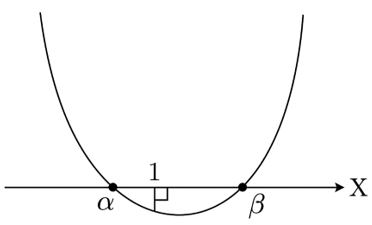
Case I 
 [from Eq. (i)]
Case II 
 [from Eq. (iii)]


Combining both cases, we get

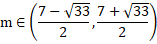
(vi) One root is greater than 3 and the other root is smaller than 2.
Consider the following cases:
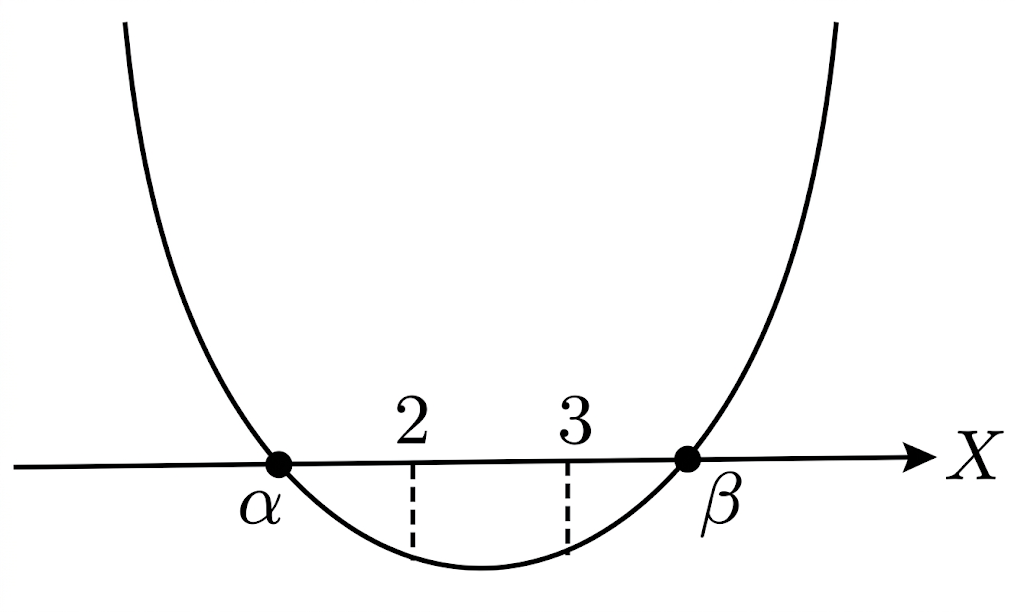

 [from Eq. (i)]
Case II 

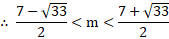
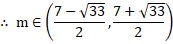
Case III 

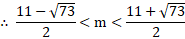
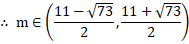
Combining all cases, we get
(vii) Atleast one root lies in the interval  .
.
i.e. part (iv)  (iii)
(iii)

(viii) Atleast one root is greater than 2 .
i.e. (Exactly one root is greater than 2  (Both roots are greater than 2)
or  Exactly one root is greater than 2
  b)…(i)
Consider the following cases:
Case I 
 [from Eq. (i)]
Case II 

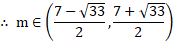
Combining both cases, we get
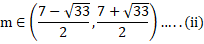
Finally from Eqs. (I) and (II), we get

(ix) Atleast one root is smaller than 2.
i.e. (Exactly one root is smaller than 2  (Both roots are smaller than 2) or part (viii) (II)
  (i)
(i)
We get, 
(x) Both 2 and 3 lie between  and
and  .
.
Consider the following cases:

 [from Eq. (i)]
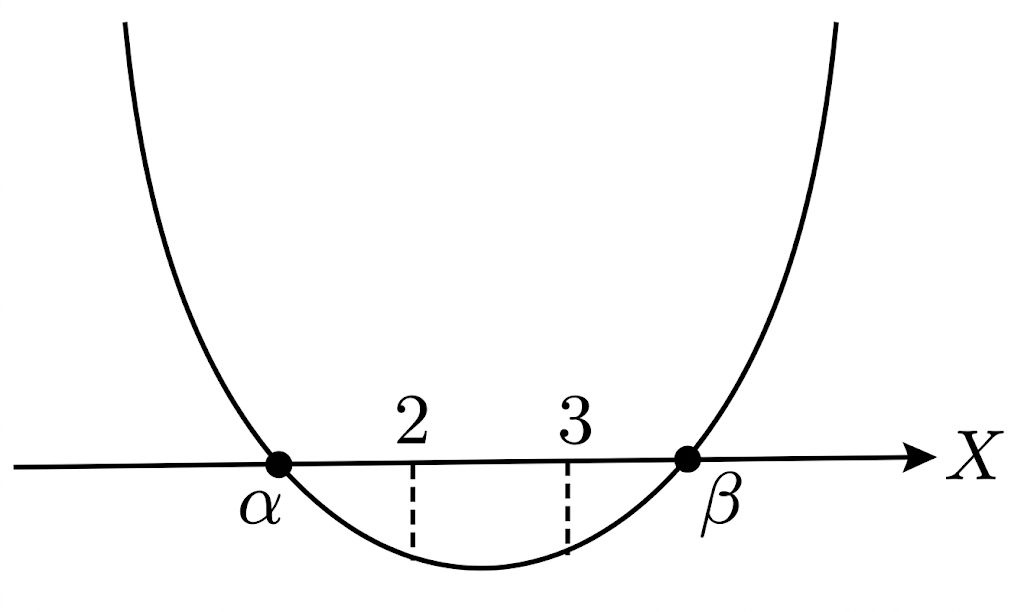
Case II 

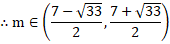
Case III 

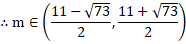
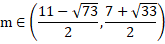
Combining all cases, we get
──────────────────────────────────────────────────────────────────────────────────────────
Prepare Smarter with CGP Edu
Get practice questions, solutions, and test series in one place.
Write a Review
Share your experience with this question and solution.
Commentary
Send your comment, doubt, correction, or feedback to admin.
Similar Questions
Explore conceptually related problems