For any two vectors  and
and  , if
, if 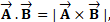 the magnitude of
  is equal to
A

B

C

D

Text Solution
Verified by ExpertsThe correct answer is:
D
 ⇒ ⇒
⇒ ⇒  ∴ ∴
∴ ∴ 

Prepare Smarter with CGP Edu
Get practice questions, solutions, and test series in one place.
Write a Review
Share your experience with this question and solution.
Commentary
Send your comment, doubt, correction, or feedback to admin.
Similar Questions
Explore conceptually related problems
If a vector making angles a , b , and g respectively with the X, Y and Z axes respectively. …
If the resultant of n forces of different magnitudes acting at a point is zero, then the minimum va…
Can the resultant of 2 vectors be zero
The sum of the magnitudes of two forces acting at point is 18 and the magnitude of their resultant …
A vector is turned without a change in its length through a small angle The value of and are re…
Find the resultant of three vectors and shown in the following figure. Radius of the circle is R.