Published by:
CGP EDU Academic Team
Published on: September 12, 2026
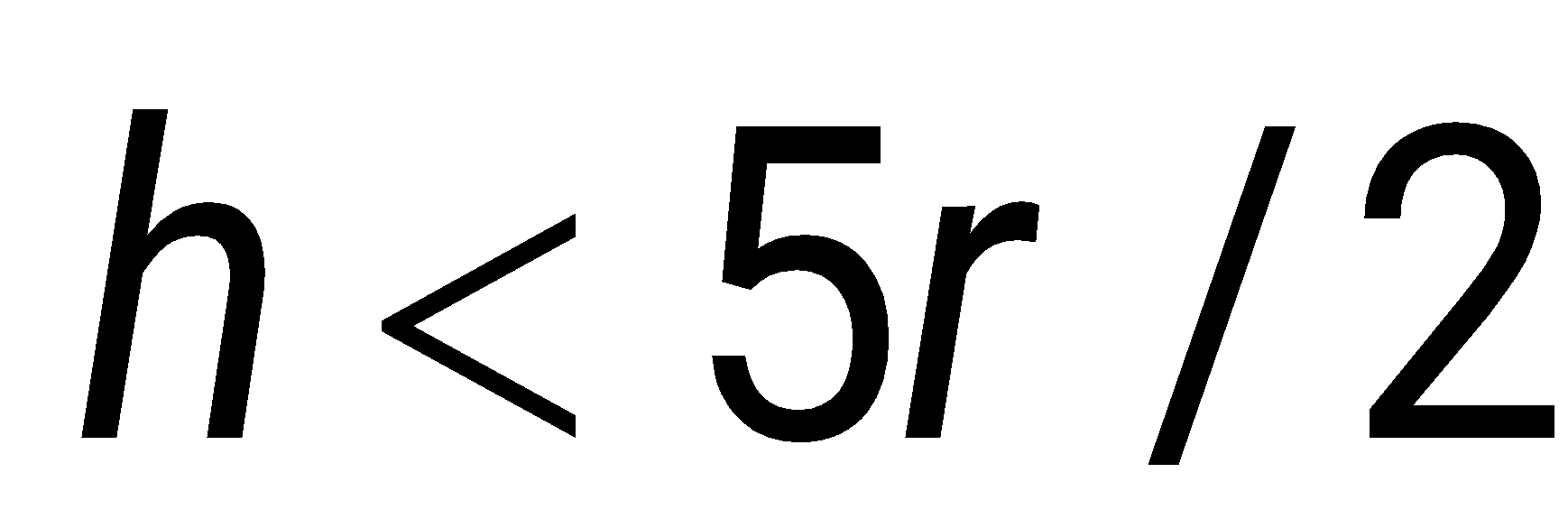
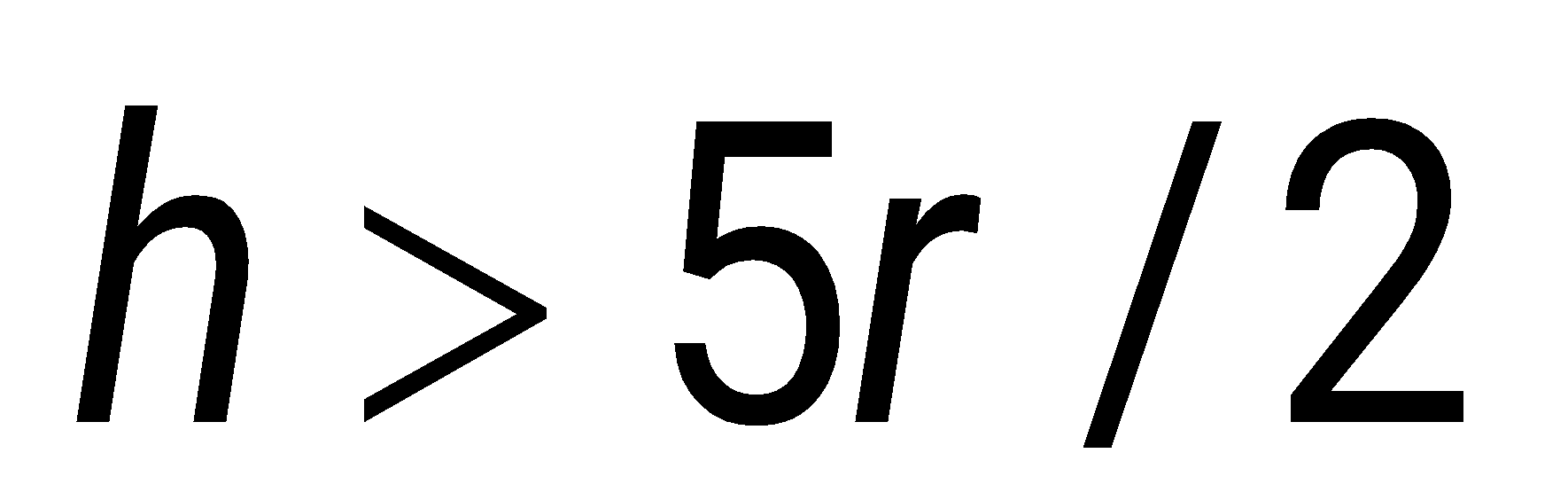
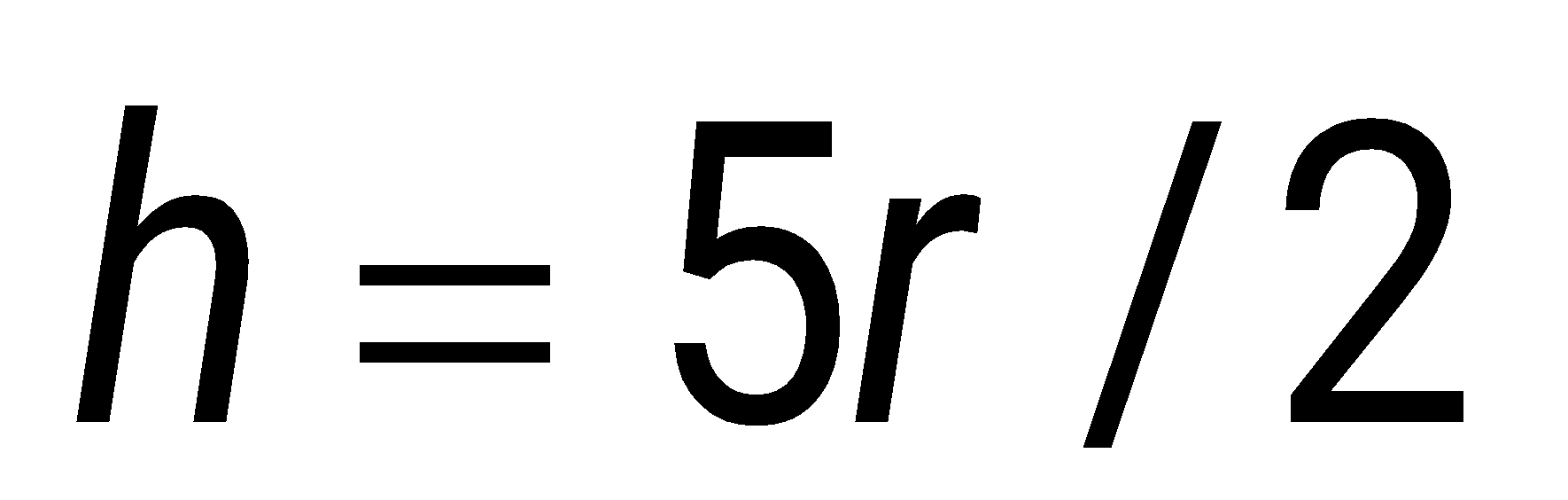
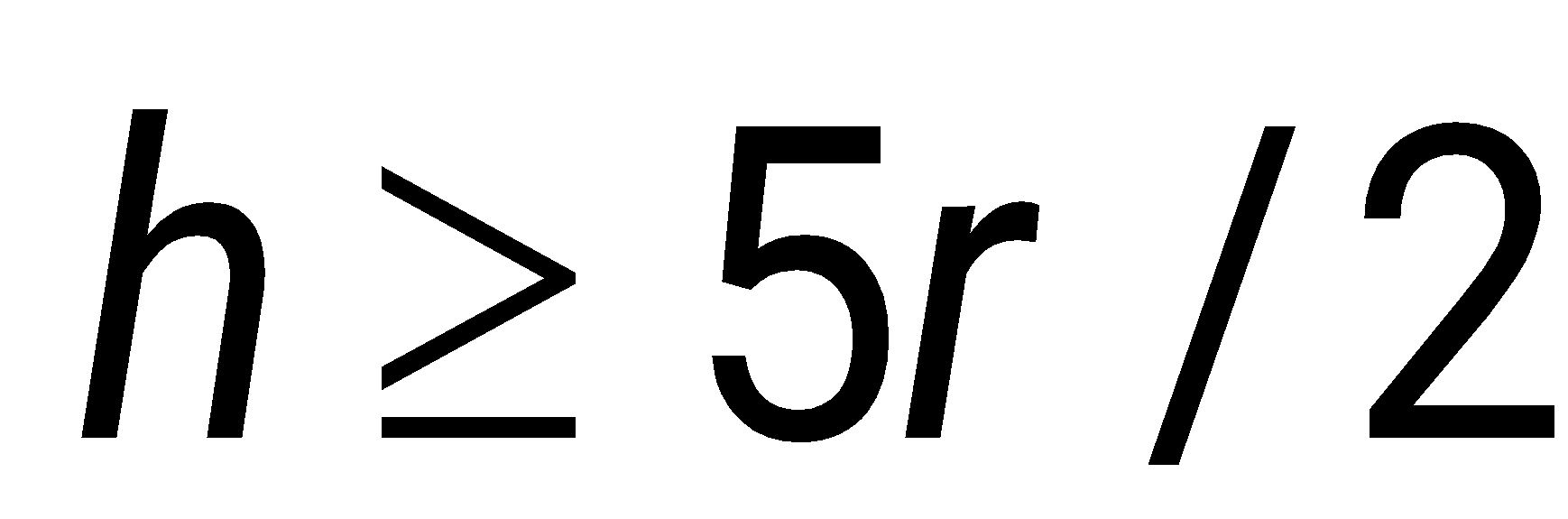
A block follows the path as shown in the figure from height h . If radius of circular path is r , then relation that holds good to complete full circle is
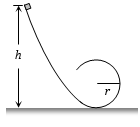
Text Solution
Verified by ExpertsThe correct answer is:
A
To determine the necessary condition for a block to complete a full circular motion starting from a height \( h \) with a radius of curvature \( r \), we can analyze the forces acting on the block and the energy conservation principle regarding potential and kinetic energy.
1. **Energy Conservation**: At the initial height \( h \), the block possesses potential energy and no kinetic energy. The potential energy can be expressed as:
\[ PE = mgh \]
where \( m \) is the mass of the block, \( g \) is the acceleration due to gravity, and \( h \) is the height.
2. **Kinetic Energy at the Bottom**: When the block reaches the bottom of the circular path, its potential energy is converted into kinetic energy. Hence, the kinetic energy \( KE \) at the bottom will be:
\[ KE = \frac{1}{2} mv^2 \]
where \( v \) is the velocity of the block at the bottom.
3. **Equalizing Energies**: Setting the potential energy at the top equal to the kinetic energy at the bottom gives:
\[ mgh = \frac{1}{2} mv^2 \]
Simplifying this leads to:
\[ v^2 = 2gh \]
4. **Centripetal Force Requirement**: For the block to complete the circular motion, it must maintain a minimum speed at the top of the circle to provide the necessary centripetal force. At the top of the circle, the gravitational force must counteract the centripetal force requirement:
\[ mg = \frac{mv^2}{r} \]
For simplification, we can ignore \( m \) since it cancels out:
\[ g = \frac{v^2}{r} \]
Rearranging gives us:
\[ v^2 = rg \]
5. **Combining Equations**: Now we equate the two expressions for \( v^2 \):
\[ 2gh = rg \]
Simplifying gives:
\[ 2h = r \]
or
\[ h = \frac{r}{2} \]
Therefore, the condition for the block to complete the full circular path is that the height \( h \) must be equal to half the radius of the path, which corresponds to **Option A**.
1. **Energy Conservation**: At the initial height \( h \), the block possesses potential energy and no kinetic energy. The potential energy can be expressed as:
\[ PE = mgh \]
where \( m \) is the mass of the block, \( g \) is the acceleration due to gravity, and \( h \) is the height.
2. **Kinetic Energy at the Bottom**: When the block reaches the bottom of the circular path, its potential energy is converted into kinetic energy. Hence, the kinetic energy \( KE \) at the bottom will be:
\[ KE = \frac{1}{2} mv^2 \]
where \( v \) is the velocity of the block at the bottom.
3. **Equalizing Energies**: Setting the potential energy at the top equal to the kinetic energy at the bottom gives:
\[ mgh = \frac{1}{2} mv^2 \]
Simplifying this leads to:
\[ v^2 = 2gh \]
4. **Centripetal Force Requirement**: For the block to complete the circular motion, it must maintain a minimum speed at the top of the circle to provide the necessary centripetal force. At the top of the circle, the gravitational force must counteract the centripetal force requirement:
\[ mg = \frac{mv^2}{r} \]
For simplification, we can ignore \( m \) since it cancels out:
\[ g = \frac{v^2}{r} \]
Rearranging gives us:
\[ v^2 = rg \]
5. **Combining Equations**: Now we equate the two expressions for \( v^2 \):
\[ 2gh = rg \]
Simplifying gives:
\[ 2h = r \]
or
\[ h = \frac{r}{2} \]
Therefore, the condition for the block to complete the full circular path is that the height \( h \) must be equal to half the radius of the path, which corresponds to **Option A**.
Prepare Smarter with CGP Edu
Get practice questions, solutions, and test series in one place.
Write a Review
Share your experience with this question and solution.
Commentary
Send your comment, doubt, correction, or feedback to admin.
Similar Questions
Explore conceptually related problems
In a circus stuntman rides a motorbike in a circular track of radius R in the vertical plane. The m…
A block of mass m at the end of a string is whirled round in a vertical circle of radius R. The cri…
A sphere is suspended by a thread of length l. What minimum horizontal velocity has to be imparted …
A bottle of soda water is grasped by the neck and swing briskly in a vertical circle. Near which po…
A bucket tied at the end of a 1.6 m long string is whirled in a vertical circle with constant speed…
A wheel is subjected to uniform angular acceleration about its axis. Initially its angular velocity…