Published by:
CGP EDU Academic Team
Published on: September 12, 2026
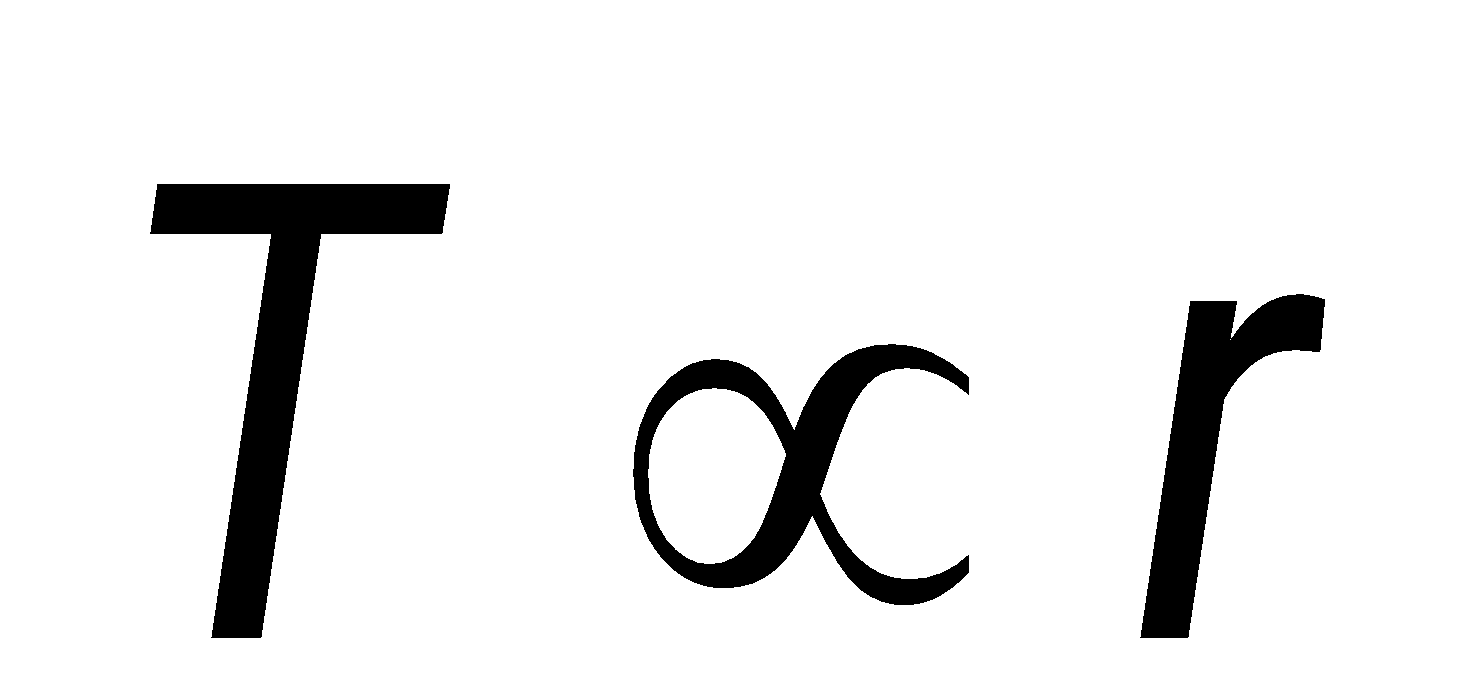
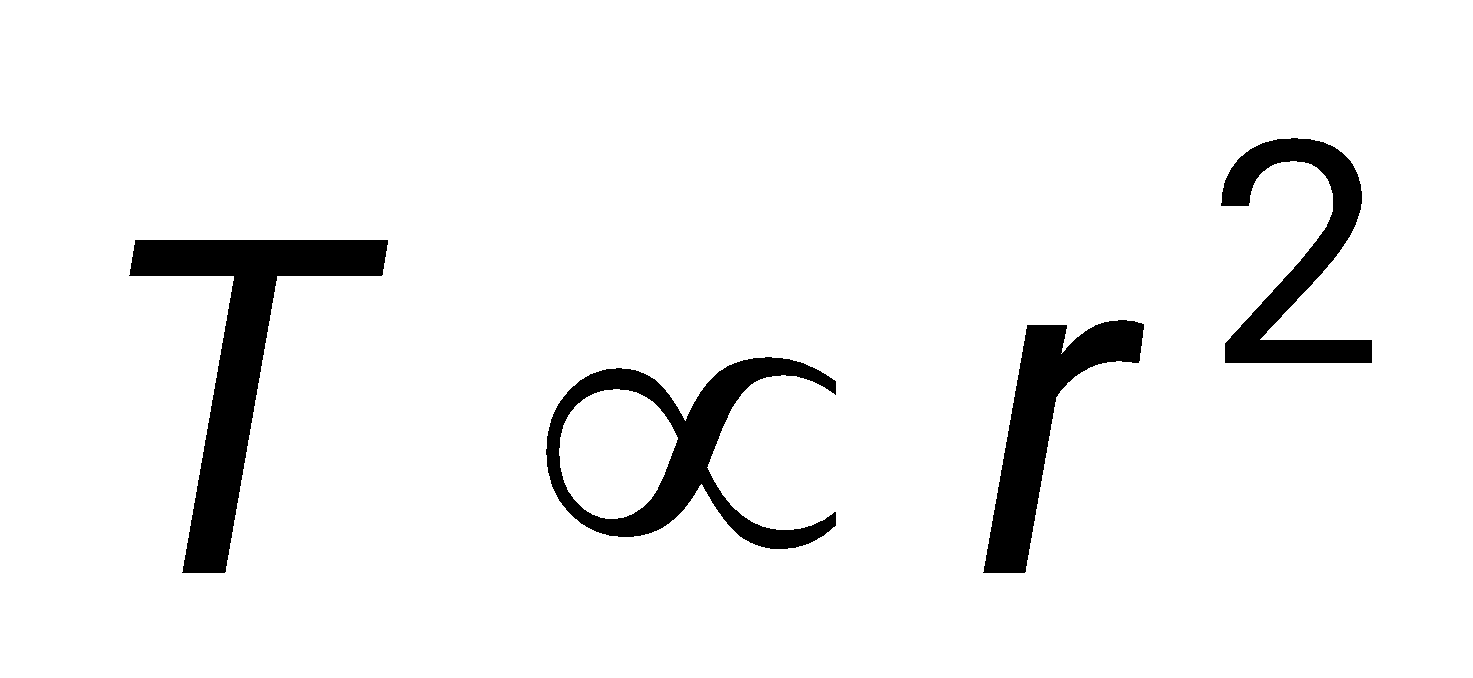
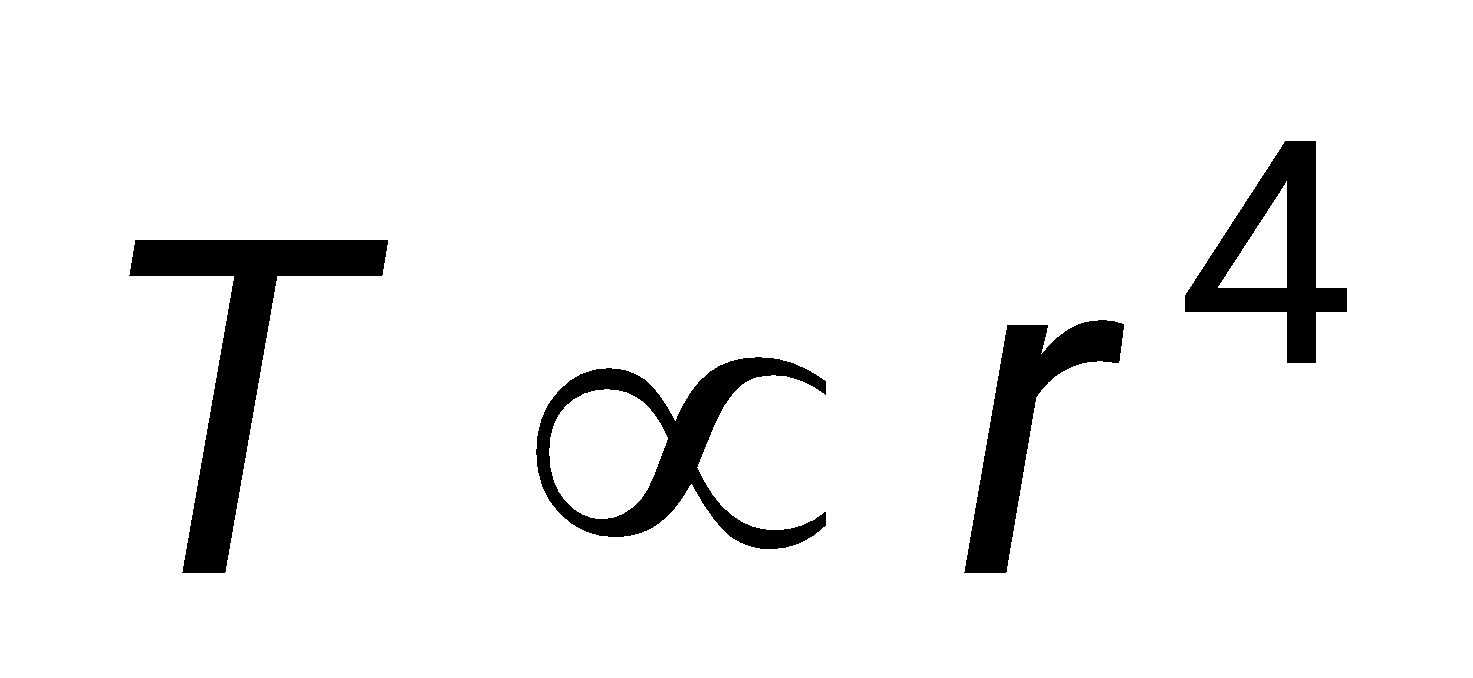
If a body describes a circular motion under inverse square field, the time taken to complete one revolution T is related to the radius of the circular orbit as
Text Solution
Verified by ExpertsThe correct answer is:
A
Step 1: In circular motion under an inverse square law field, such as gravitational or electrostatic fields, the centripetal force required for circular motion is provided by the force due to the field.
Step 2: The gravitational force is given as:
\[ F = \frac{GMm}{r^2} \]
where G is the gravitational constant, M is the mass creating the field, m is the mass in circular motion, and r is the radius of the orbit.
Step 3: The centripetal force required for circular motion is:
\[ F_c = \frac{mv^2}{r} \]
Step 4: Equating centripetal force to the gravitational force gives:
\[ \frac{mv^2}{r} = \frac{GMm}{r^2} \]
Cancelling m from both sides:
\[ v^2 = \frac{GM}{r} \]
Step 5: The circumference of the circular path is given by:
\[ C = 2\pi r \] and the time T for one revolution is related to speed as:
\[ T = \frac{C}{v} = \frac{2\pi r}{v} \]
Step 6: Substituting v from earlier step:
\[ T = \frac{2\pi r}{\sqrt{\frac{GM}{r}}} = 2\pi \sqrt{\frac{r^3}{GM}} \]
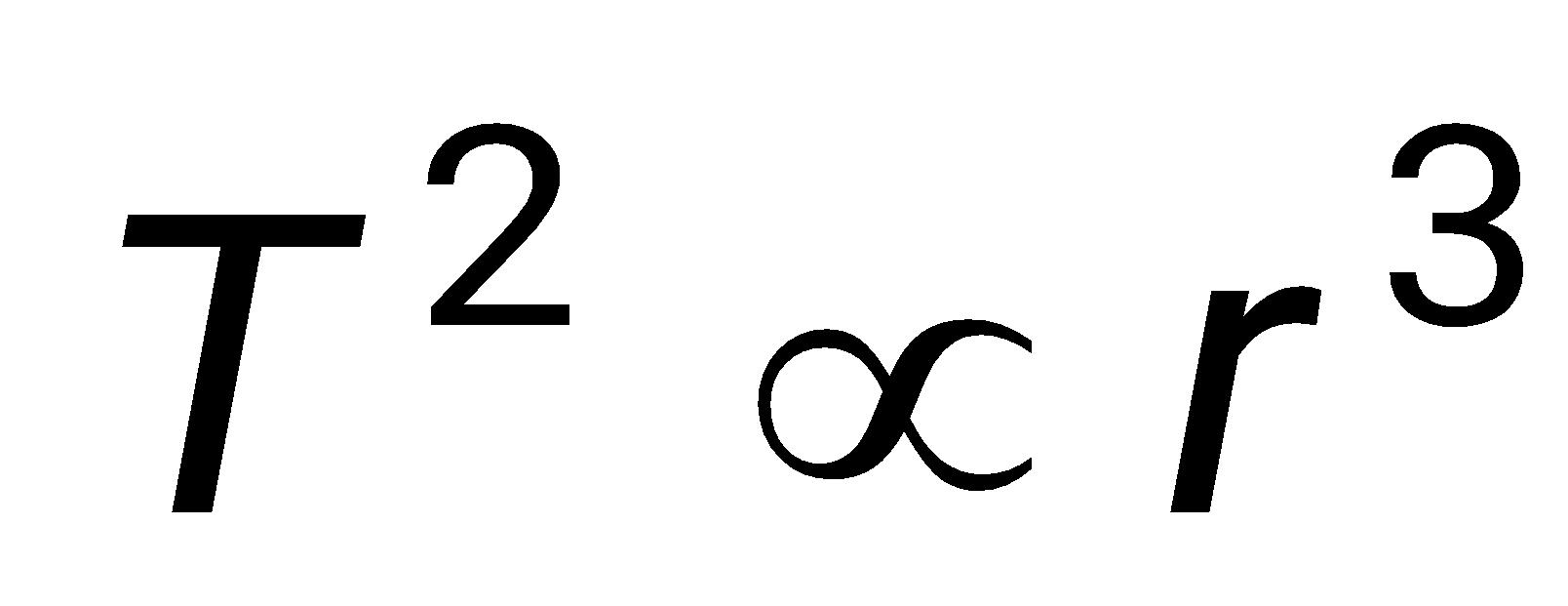
Therefore, the relationship is of the form:
\[ T^2 \propto r^3 \]
which corresponds to Option A.
Step 2: The gravitational force is given as:
\[ F = \frac{GMm}{r^2} \]
where G is the gravitational constant, M is the mass creating the field, m is the mass in circular motion, and r is the radius of the orbit.
Step 3: The centripetal force required for circular motion is:
\[ F_c = \frac{mv^2}{r} \]
Step 4: Equating centripetal force to the gravitational force gives:
\[ \frac{mv^2}{r} = \frac{GMm}{r^2} \]
Cancelling m from both sides:
\[ v^2 = \frac{GM}{r} \]
Step 5: The circumference of the circular path is given by:
\[ C = 2\pi r \] and the time T for one revolution is related to speed as:
\[ T = \frac{C}{v} = \frac{2\pi r}{v} \]
Step 6: Substituting v from earlier step:
\[ T = \frac{2\pi r}{\sqrt{\frac{GM}{r}}} = 2\pi \sqrt{\frac{r^3}{GM}} \]
Therefore, the relationship is of the form:
\[ T^2 \propto r^3 \]
which corresponds to Option A.
Prepare Smarter with CGP Edu
Get practice questions, solutions, and test series in one place.
Write a Review
Share your experience with this question and solution.
Commentary
Send your comment, doubt, correction, or feedback to admin.
Similar Questions
Explore conceptually related problems
The distance of Neptune and Saturn from sun are nearly 10 13 and 10 12 meters respectively. Assumin…
The figure shows the motion of a planet around the sun in an elliptical orbit with sun at the focus…
The period of a satellite in a circular orbit of radius R is T, the period of another satellite in …
Orbit of a planet around a star is
If the earth is at one-fourth of its present distance from the sun, the duration of the year will be
The earth revolves about the sun in an elliptical orbit with mean radius $9.3 \times 10^{7} \, m$ i…