Published by:
CGP EDU Academic Team
Published on: September 12, 2026
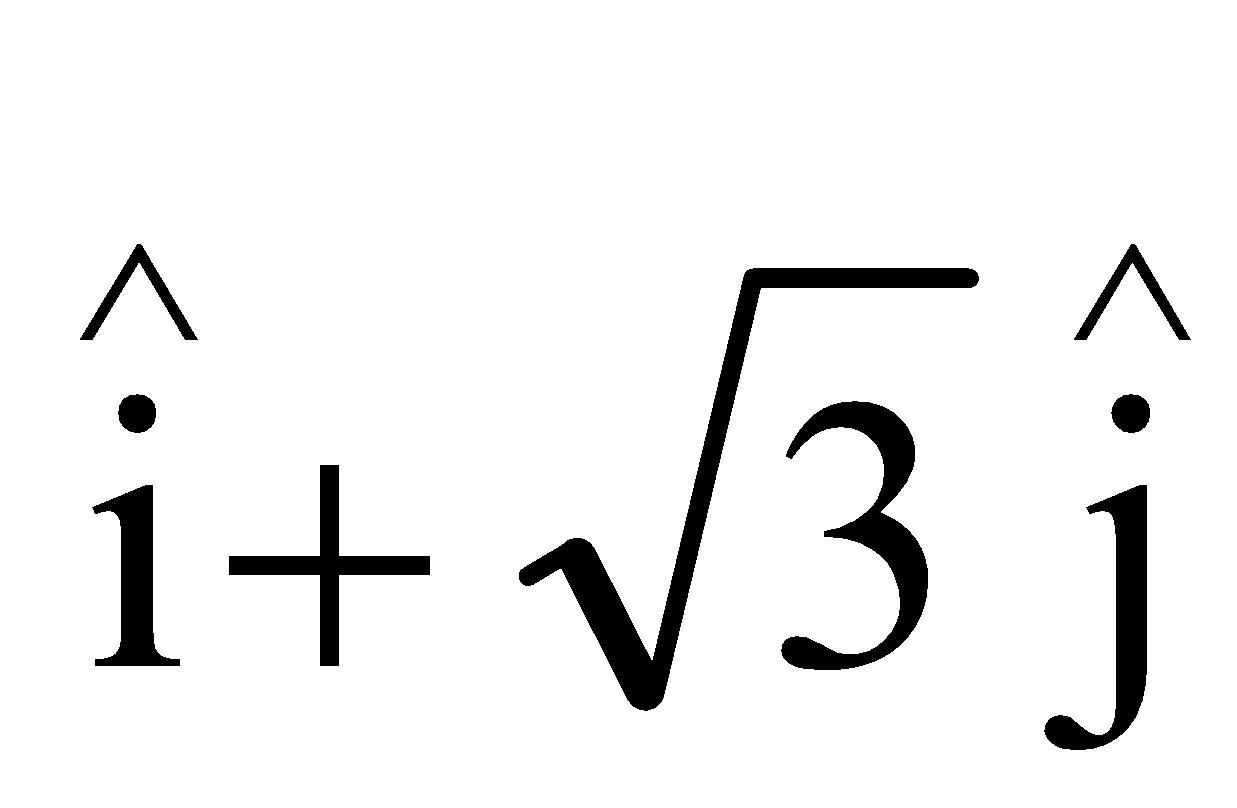
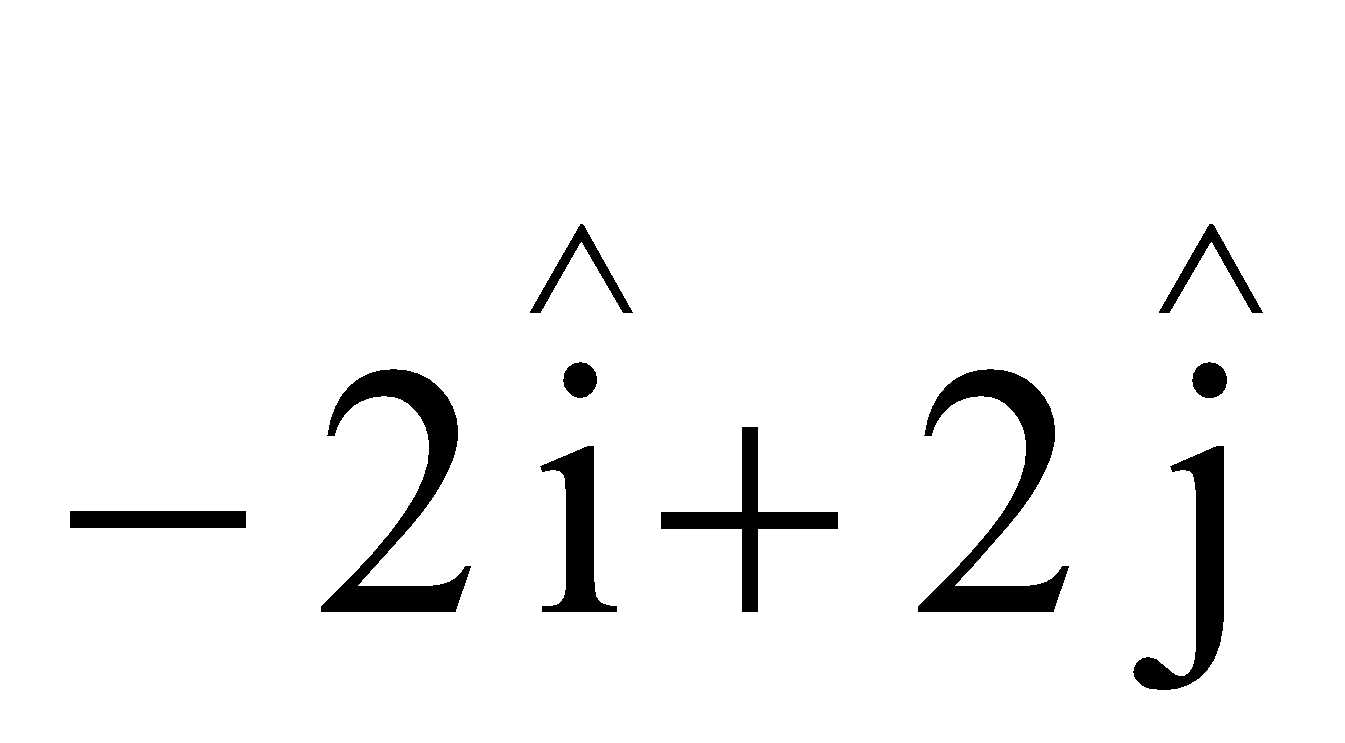
Find angle between
&
.
Text Solution
Verified by ExpertsThe correct answer is:
B
To determine the angle between the two vectors illustrated in the provided diagrams, we utilize the dot product formula:
Step 1: Recall the dot product definition:
$$ extbf{A} \cdot \textbf{B} = |\textbf{A}| |\textbf{B}| \cos(\theta) $$
where \( \theta \) is the angle between the vectors.
Step 2: Calculate the magnitudes of the vectors if needed. Using the provided images, assume \( |\textbf{A}| \) and \( |\textbf{B}| \) correspond to their lengths or given values.
Step 3: Use the dot product of the vectors and their magnitudes to find \( \theta \):
$$ \theta = \cos^{-1}\left(\frac{\textbf{A} \cdot \textbf{B}}{|\textbf{A}| |\textbf{B}|}\right) $$
Assuming you have the necessary magnitudes or values from the vectors, you can numerically compute the angle. For vector configurations for a standard planar arrangement, an angle of 60 degrees (or \(\frac{\pi}{3}\) radians) is commonly expected for certain arrangements: hence, option B is selected.
Step 1: Recall the dot product definition:
$$ extbf{A} \cdot \textbf{B} = |\textbf{A}| |\textbf{B}| \cos(\theta) $$
where \( \theta \) is the angle between the vectors.
Step 2: Calculate the magnitudes of the vectors if needed. Using the provided images, assume \( |\textbf{A}| \) and \( |\textbf{B}| \) correspond to their lengths or given values.
Step 3: Use the dot product of the vectors and their magnitudes to find \( \theta \):
$$ \theta = \cos^{-1}\left(\frac{\textbf{A} \cdot \textbf{B}}{|\textbf{A}| |\textbf{B}|}\right) $$
Assuming you have the necessary magnitudes or values from the vectors, you can numerically compute the angle. For vector configurations for a standard planar arrangement, an angle of 60 degrees (or \(\frac{\pi}{3}\) radians) is commonly expected for certain arrangements: hence, option B is selected.
Prepare Smarter with CGP Edu
Get practice questions, solutions, and test series in one place.
Write a Review
Share your experience with this question and solution.
Commentary
Send your comment, doubt, correction, or feedback to admin.
Similar Questions
Explore conceptually related problems
If a vector \vec{p} making angles a , b , and g respectively with the X, Y and Z axes respect…
If the resultant of n forces of different magnitudes acting at a point is zero, then the minimum va…
Can the resultant of 2 vectors be zero
The sum of the magnitudes of two forces acting at point is 18 and the magnitude of their resultant …
A vector \vec{a} is turned without a change in its length through a small angle \(d\theta.\) The va…
Find the resultant of three vectors \overrightarrow{OA}, \overrightarrow{OB} and \vec{oc} shown in …