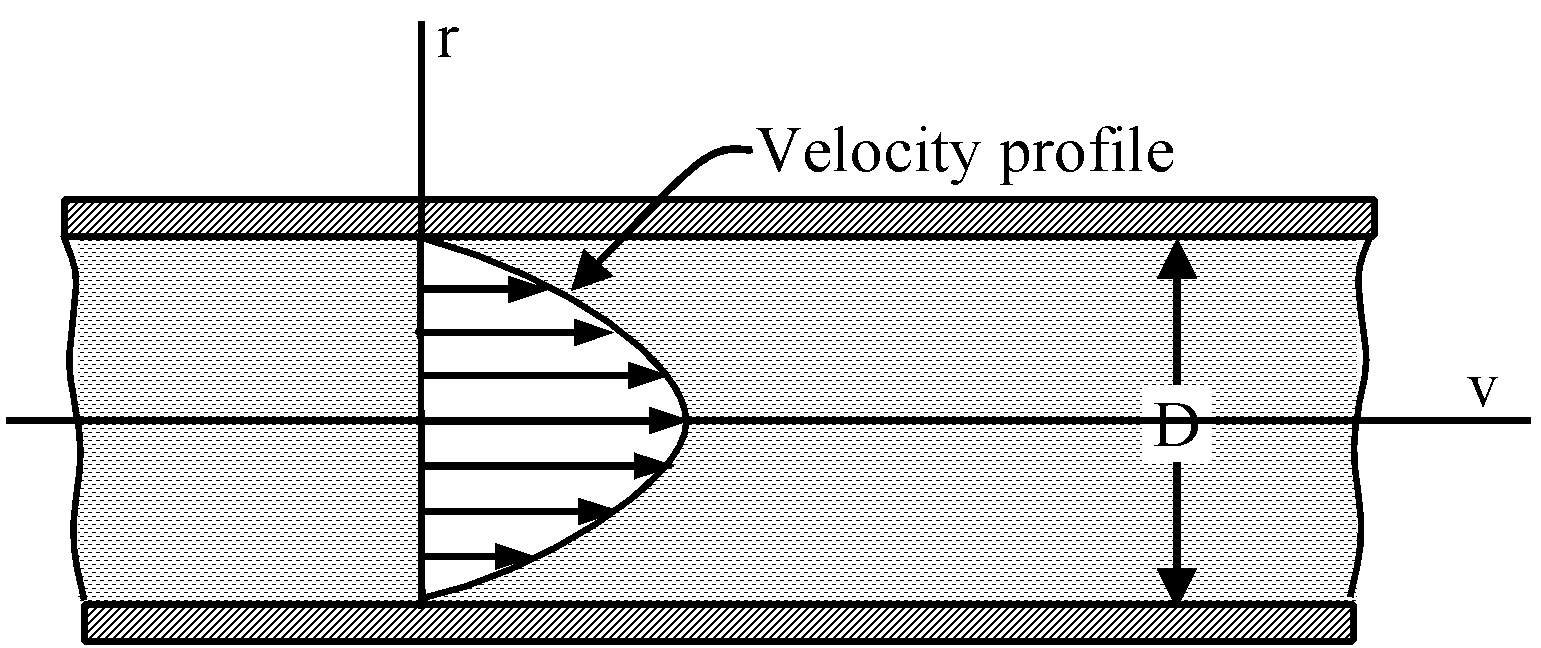
Water is moving through a pipe. The velocity profile at some section is shown in Fig. and is given mathematically as v = (β/4µ) (d 2 /4 – r 2 ), where v = velocity of water at any position r, β = a constant, µ = viscosity of water, d = pipe diameter, and r = radial distance from centerline. What is the shear stress at the wall of the pipe due to the water? What is the shear stress at a position r = d/4? If the given profile persists a distance L along the pipe, what drag is induced on the pipe by the water in the direction of flow over this distance
Text Solution
Verified by ExpertsA
The velocity profile is given as:
$$v = \frac{\beta}{4\mu}\left(\frac{d^2}{4} - r^2\right)$$
where \(v\) is the velocity at a radial distance \(r\) from the centerline, \(\beta\) is a constant, \(\mu\) is the viscosity of water, \(d\) is the diameter of the pipe.
Step 2: Shear Stress at the Wall
The shear stress \(\tau\) at any point in a fluid can be calculated using the formula:
$$\tau = \mu \frac{dv}{dr}$$
We first need to calculate \(\frac{dv}{dr}\).
Step 3: Differentiate the Velocity Profile
Differentiate the velocity equation with respect to \(r\):
$$\frac{dv}{dr} = \frac{\beta}{4\mu} \cdot (-2r) = -\frac{\beta r}{2\mu}$$
Step 4: Calculate Shear Stress at the Wall (r = d/2)
At the wall of the pipe, \(r = \frac{d}{2}\):
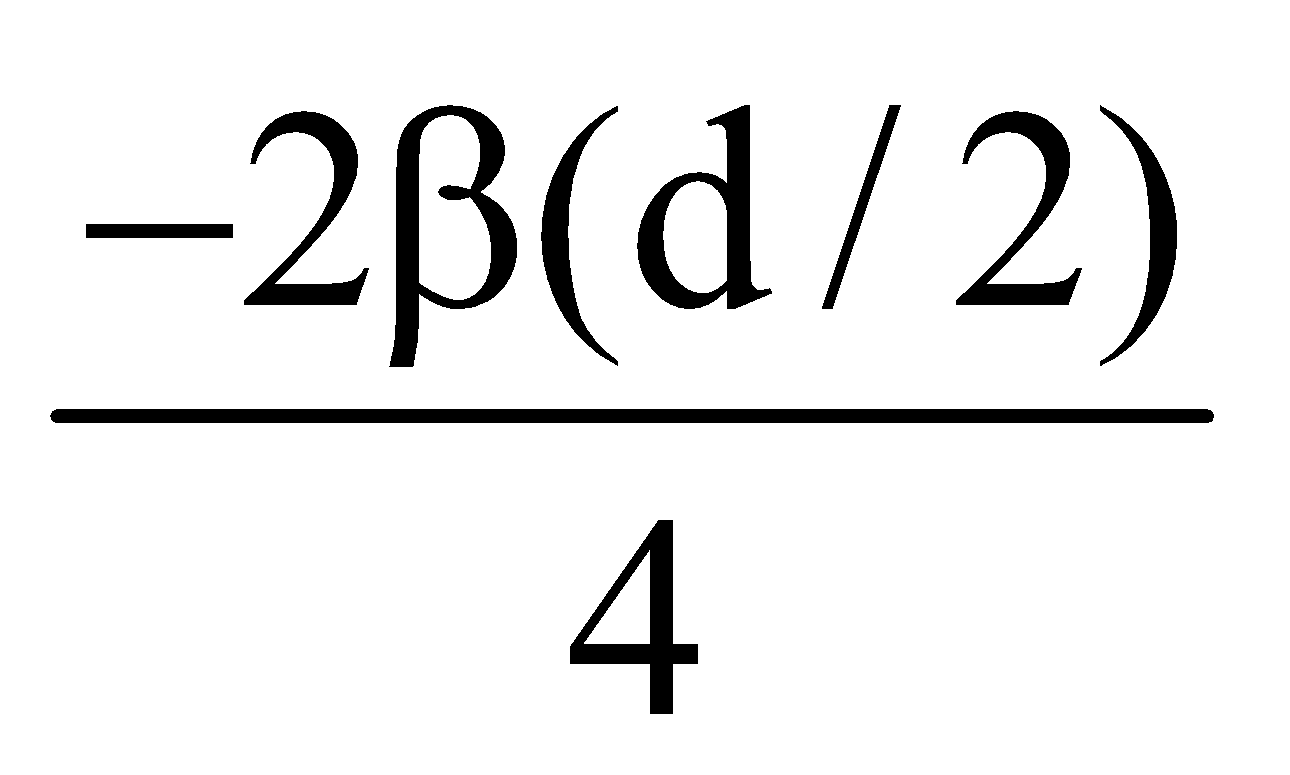
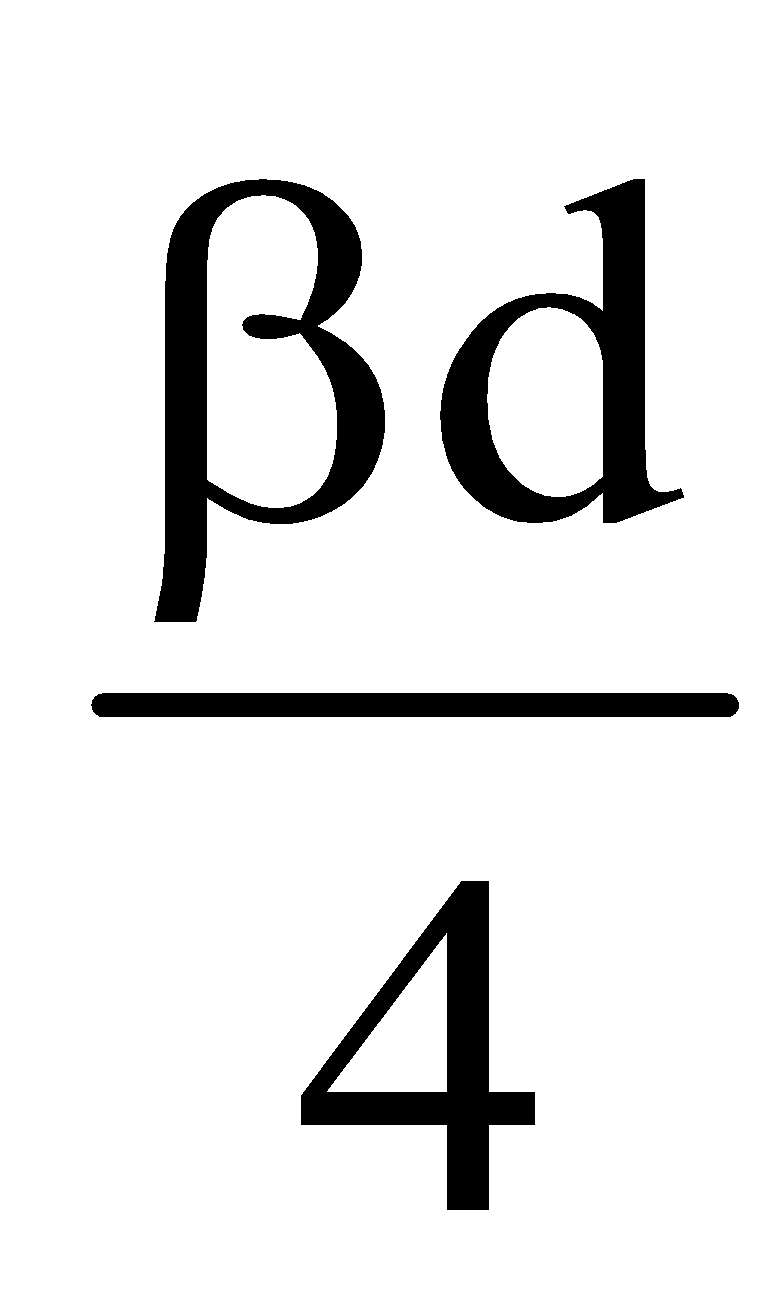
$$\frac{dv}{dr}\bigg|_{r=\frac{d}{2}} = -\frac{\beta (\frac{d}{2})}{2\mu} = -\frac{\beta d}{4\mu}$$
Now substituting into the shear stress equation:
$$\tau_w = \mu \left(-\frac{\beta d}{4\mu}\right) = -\frac{\beta d}{4}$$
Step 5: Calculate Shear Stress at r = d/4
At \(r = \frac{d}{4}\):
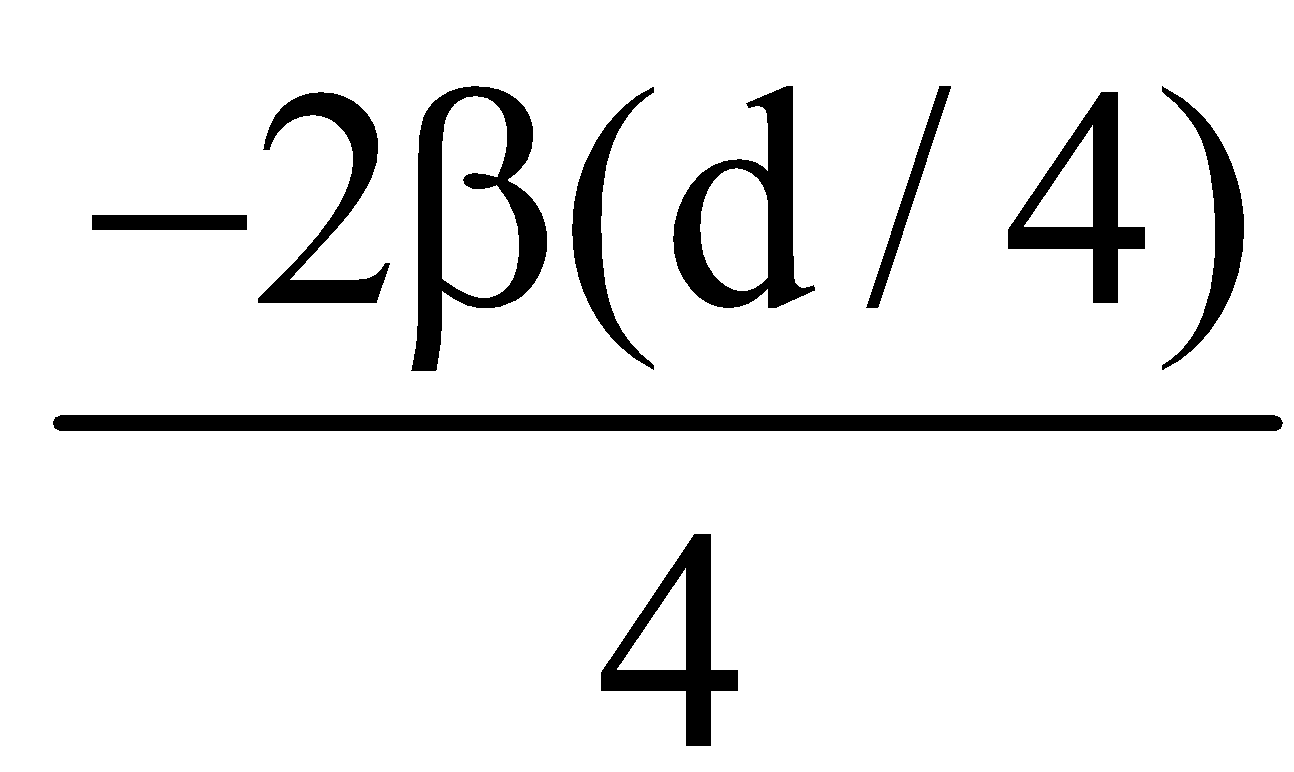
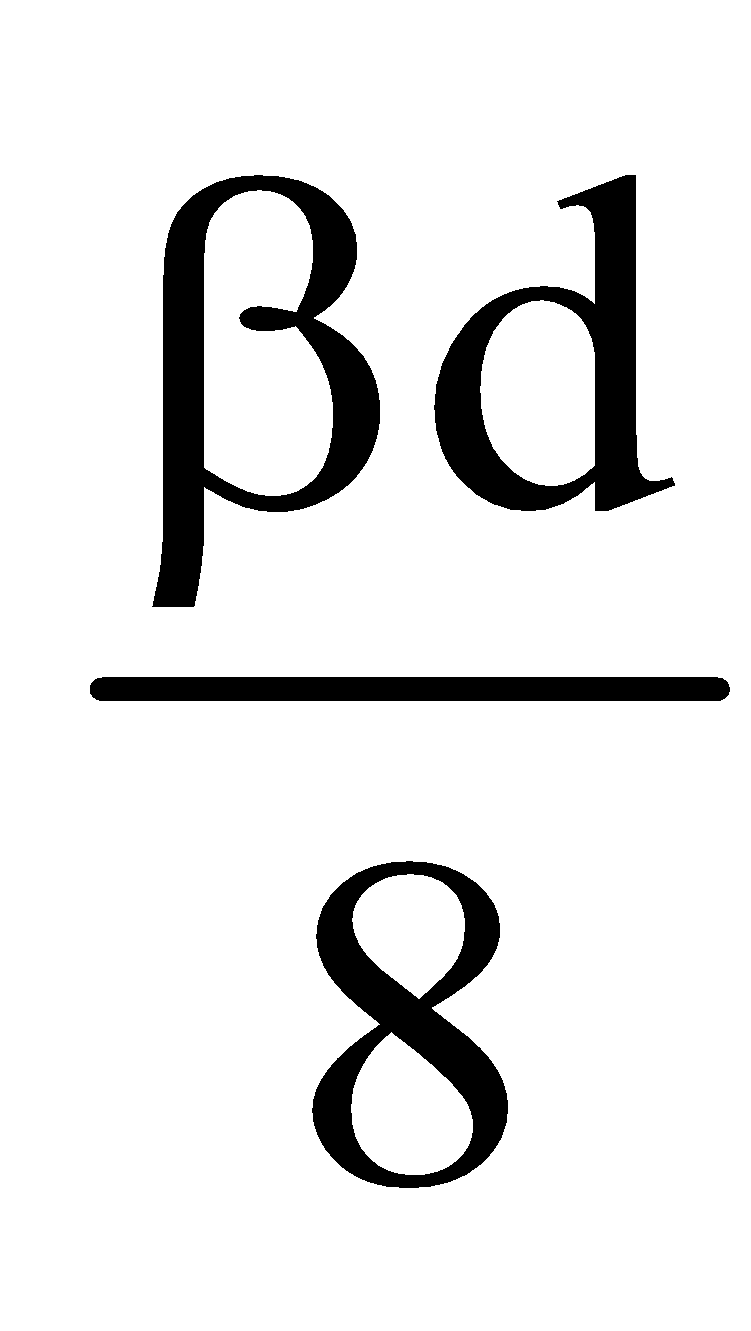
$$\frac{dv}{dr}\bigg|_{r=\frac{d}{4}} = -\frac{\beta (\frac{d}{4})}{2\mu} = -\frac{\beta d}{8\mu}$$
Now substituting into the shear stress equation:
$$\tau_{d/4} = \mu \left(-\frac{\beta d}{8\mu}\right) = -\frac{\beta d}{8}$$
Step 6: Calculate the Drag on the Pipe
The drag force is given by:
$$F_d = \tau_w \cdot A$$
where \(A\) is the surface area of the pipe segment. The surface area of the pipe for length \(L\) is:
$$A = \pi d L$$
Substituting the shear stress of the wall:
$$F_d = \left(-\frac{\beta d}{4}\right) \cdot \pi d L$$
Therefore the drag induced on the pipe by the water in the direction of flow over distance \(L\) is:
$$F_d = -\frac{\beta \pi d^2 L}{4}$$
Since drag is a force in the direction of flow, we can present the answer in magnitude.
Final Summary
Shear Stress at the wall: \(\tau_w = -\frac{\beta d}{4}\), Shear Stress at \(r = \frac{d}{4}\): \(\tau_{d/4} = -\frac{\beta d}{8}\), and Drag:
$$F_d = -\frac{\beta \pi d^2 L}{4}$$
Thus, the answers are provided for the shear stresses and the drag.
Prepare Smarter with CGP Edu
Get practice questions, solutions, and test series in one place.
Write a Review
Share your experience with this question and solution.
Commentary
Send your comment, doubt, correction, or feedback to admin.
Similar Questions
Explore conceptually related problems