Published by:
CGP EDU Academic Team
Published on: September 12, 2026
The specific heat capacity of a material is given as C = AT, where A is a constant, T is temperature. The substance is heated from 27ºC to 127ºC. Unit of A is J/kg.K 2 . Then match quantities in column I to that in column II.
Column-I | Column-I |
(i) Mean specific heat in the range27ºC to 127ºC is | [A] 400 A |
(ii) Actual specific heat at 127ºC is | [B] 350 A |
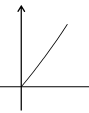
(iii) Graph of specific heat versus temperature is | [C] |
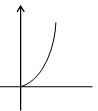
(iv) Graph of amount of heat transferred versus temperature is | [D] |

Correct Matrix Matching
Text Solution
Verified by ExpertsThe correct answer is:
C
Step 1: The specific heat capacity is given by the formula \( C = AT \).
Step 2: To find the mean specific heat from 27ºC to 127ºC, we first find the average temperature in degrees Kelvin:
\( T_{avg} = \frac{T_1 + T_2}{2} = \frac{(27 + 273) + (127 + 273)}{2} = \frac{300 + 400}{2} = 350 K\).
The mean specific heat over this range is then calculated as:
\( C_{mean} = A \cdot T_{avg} = 350A \).
This matches with option B.
Step 3: The actual specific heat at 127ºC corresponds to temperature of 400 K:
\( C_{actual} = A \cdot (127 + 273) = A \cdot 400\).
This matches with option A.
Step 4: The graph of specific heat versus temperature is a straight line, starting at the origin and rising linearly; this corresponds to the shape shown in the provided images for option C.
Step 5: The graph of heat transferred versus temperature is quadratic, reflecting the nature of energy absorption at varying temperatures; this corresponds to option D.
Therefore, the correct match is (i) 350A, (ii) 400A, (iii) C for the graph of specific heat, and (iv) D for the graph of heat transferred.
Step 2: To find the mean specific heat from 27ºC to 127ºC, we first find the average temperature in degrees Kelvin:
\( T_{avg} = \frac{T_1 + T_2}{2} = \frac{(27 + 273) + (127 + 273)}{2} = \frac{300 + 400}{2} = 350 K\).
The mean specific heat over this range is then calculated as:
\( C_{mean} = A \cdot T_{avg} = 350A \).
This matches with option B.
Step 3: The actual specific heat at 127ºC corresponds to temperature of 400 K:
\( C_{actual} = A \cdot (127 + 273) = A \cdot 400\).
This matches with option A.
Step 4: The graph of specific heat versus temperature is a straight line, starting at the origin and rising linearly; this corresponds to the shape shown in the provided images for option C.
Step 5: The graph of heat transferred versus temperature is quadratic, reflecting the nature of energy absorption at varying temperatures; this corresponds to option D.
Therefore, the correct match is (i) 350A, (ii) 400A, (iii) C for the graph of specific heat, and (iv) D for the graph of heat transferred.
Prepare Smarter with CGP Edu
Get practice questions, solutions, and test series in one place.
Write a Review
Share your experience with this question and solution.
Commentary
Send your comment, doubt, correction, or feedback to admin.
Similar Questions
Explore conceptually related problems
When an ideal diatomic gas is heated at constant pressure, the fraction of the heat energy supplied…
$1 \mathrm{cm}^3$ of water at its boiling point absorbs 540 calories of heat to become steam with a…
Two identical containers A and B with frictionless pistons contain the same ideal gas at the same t…
A closed hollow insulated cylinder is filled with gas at $0^\circ C$ and also contains an insulated…
A mono atomic gas is supplied the heat Q very slowly keeping the pressure constant. The work done b…
A gas mixture consists of 2 moles of oxygen and 4 moles argon at temperature T. Neglecting all vibr…