Published by:
CGP EDU Academic Team
Published on: September 12, 2026
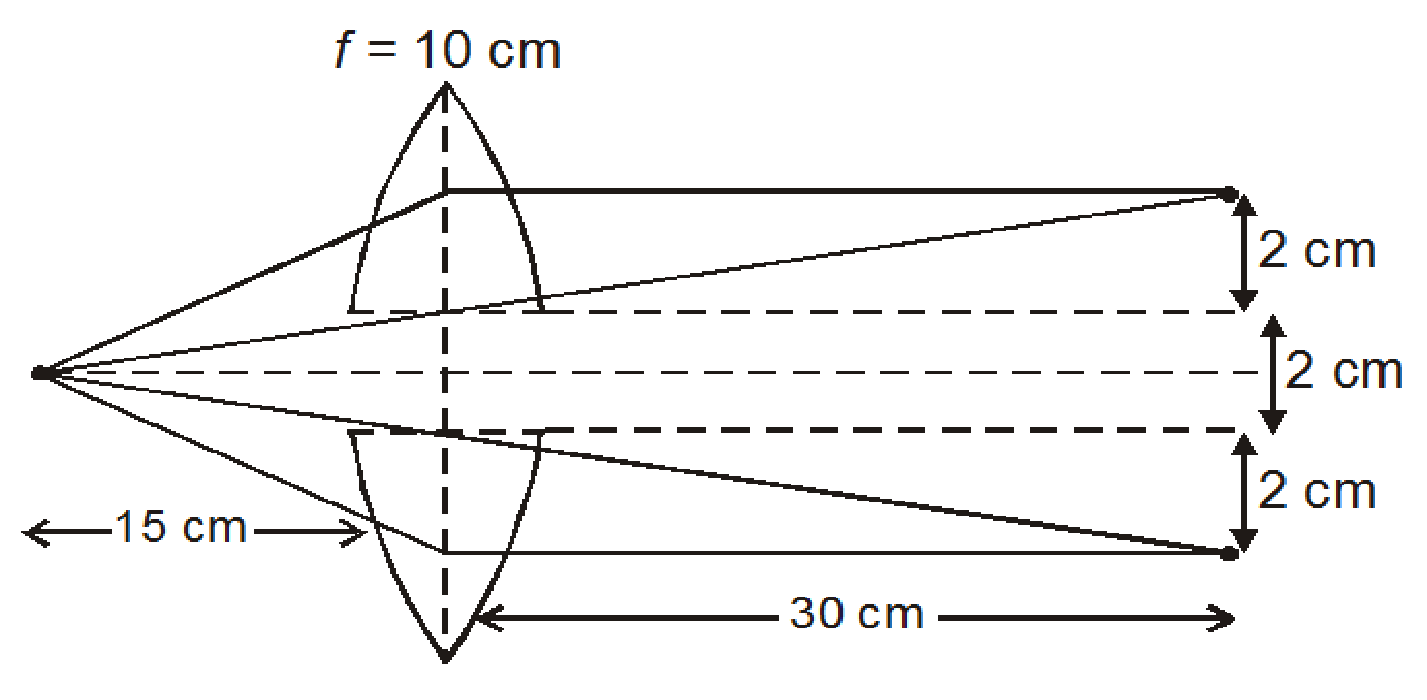
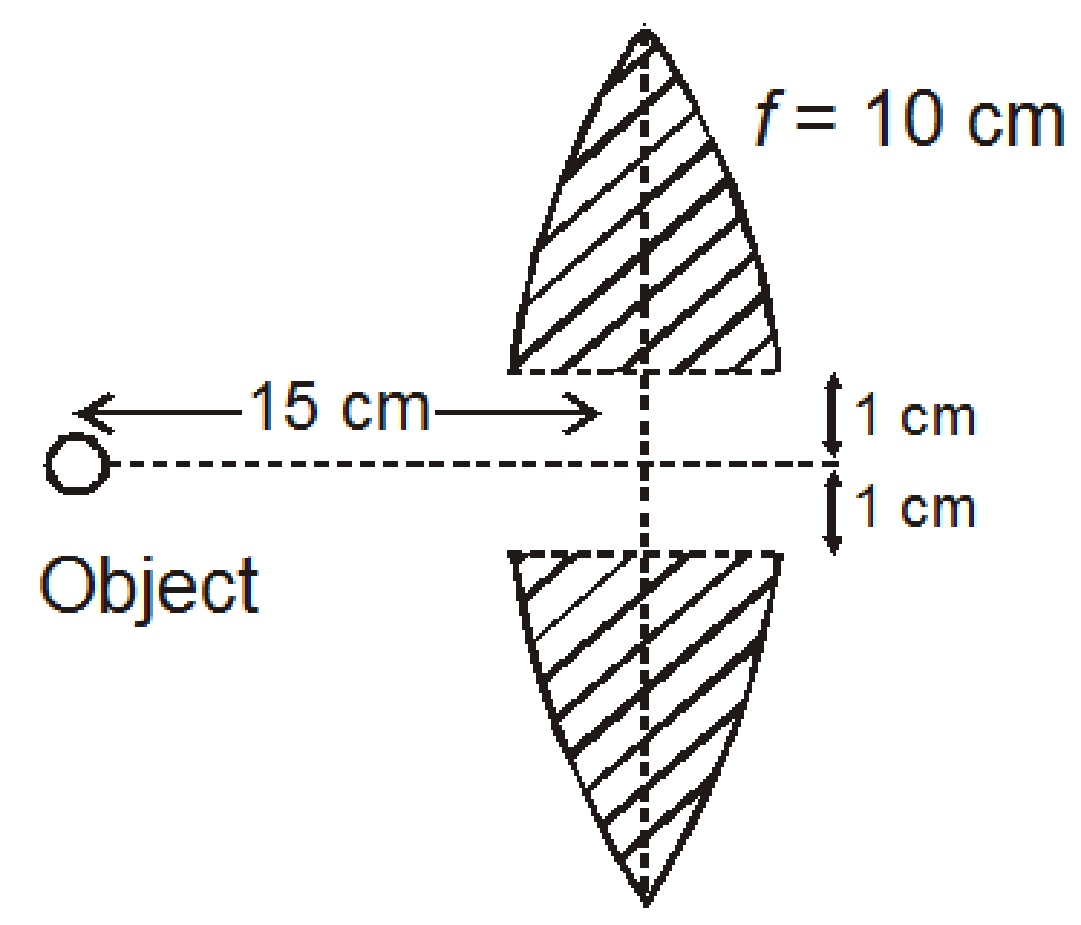
A point object is placed as shown. The two pieces are of the same lens of focal length 10 cm. Find the distance (in cm) between the two images formed by two pieces of the lens. "
Text Solution
Verified by ExpertsThe correct answer is:
D
Step 1: We have a convex lens with a focal length (f) of 10 cm. The object distance (u) from one of the pieces of the lens is 15 cm.
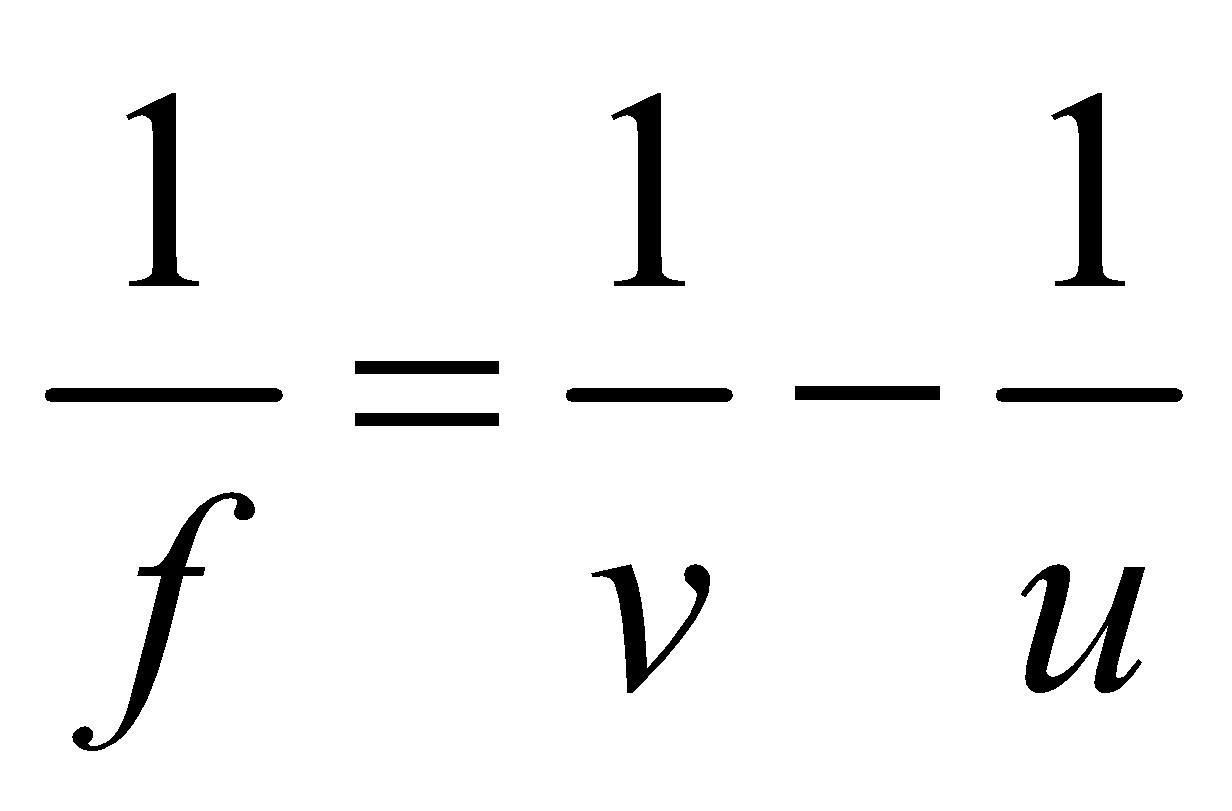
Step 2: Using the lens formula, \( \frac{1}{f} = \frac{1}{v} - \frac{1}{u} \), we can rearrange it to find the image distance (v).
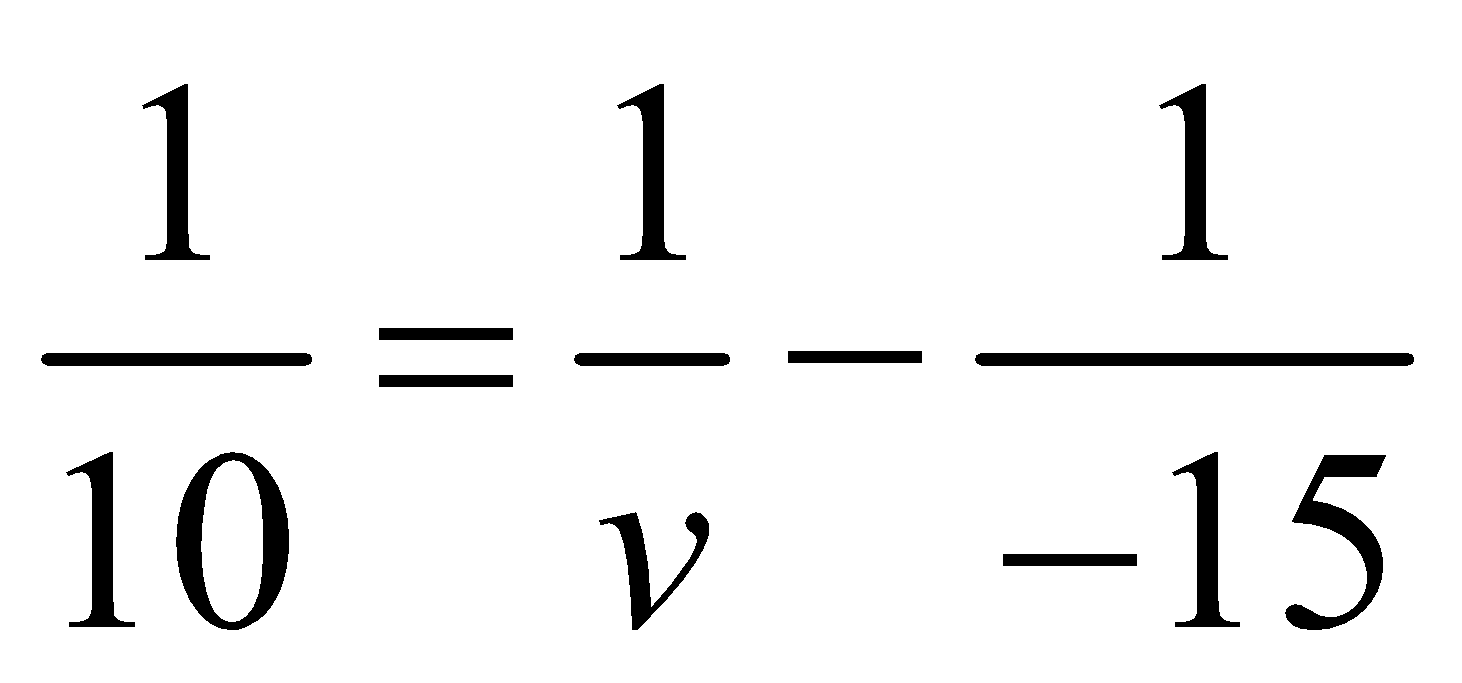
Step 3: For the first piece of the lens, substituting the values: \( \frac{1}{10} = \frac{1}{v_1} - \frac{1}{-15} \) \( \Rightarrow \frac{1}{v_1} = \frac{1}{10} - \frac{1}{15} \).
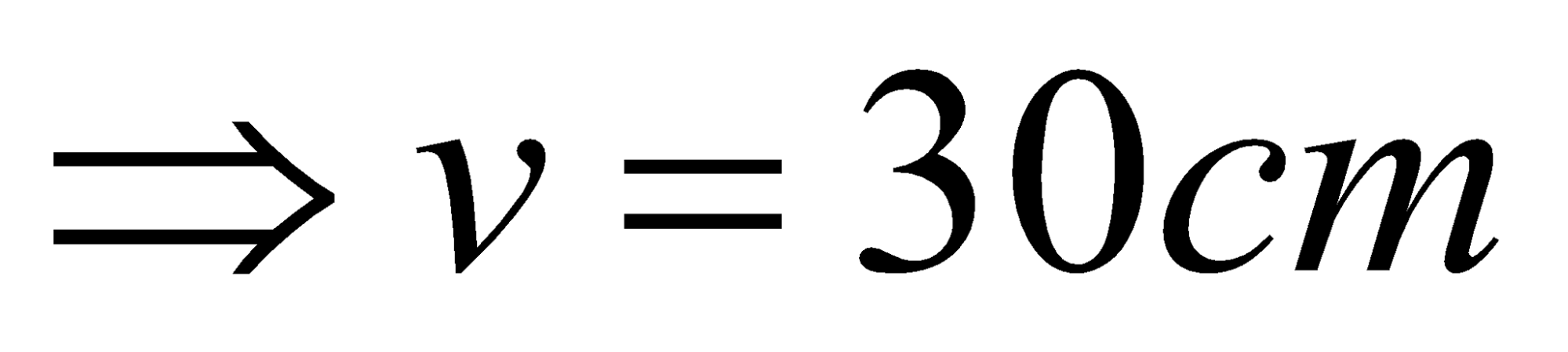
Step 4: Finding a common denominator (30), we have: \( \frac{1}{v_1} = \frac{3 - 2}{30} = \frac{1}{30} \). So, \( v_1 = 30 \text{ cm} \) (real image on the opposite side).
Step 5: For the second piece of the lens, since it is displaced by 2 cm (1 cm for each piece), the object distance is now \( 15 \text{ cm} - 2 \text{ cm} = 13 \text{ cm} \). Thus, for the second piece:
\( \frac{1}{10} = \frac{1}{v_2} - \frac{1}{-13} \) \( \Rightarrow \frac{1}{v_2} = \frac{1}{10} - \frac{1}{13} \).
Step 6: Again, finding a common denominator (130), we have: \( \frac{1}{v_2} = \frac{13 - 10}{130} = \frac{3}{130} \). Thus, \( v_2 \approx 43.33 \text{ cm} \).
Step 7: The distance between the two images formed is: \( v_2 - v_1 = 43.33 \text{ cm} - 30 \text{ cm} \approx 13.33 \text{ cm} \).
Therefore, the distance between the two images is approximately 13.33 cm. Since we are looking for the options in whole number, the nearest option is 13 cm (if available). Hence, D is correct.
Step 2: Using the lens formula, \( \frac{1}{f} = \frac{1}{v} - \frac{1}{u} \), we can rearrange it to find the image distance (v).
Step 3: For the first piece of the lens, substituting the values: \( \frac{1}{10} = \frac{1}{v_1} - \frac{1}{-15} \) \( \Rightarrow \frac{1}{v_1} = \frac{1}{10} - \frac{1}{15} \).
Step 4: Finding a common denominator (30), we have: \( \frac{1}{v_1} = \frac{3 - 2}{30} = \frac{1}{30} \). So, \( v_1 = 30 \text{ cm} \) (real image on the opposite side).
Step 5: For the second piece of the lens, since it is displaced by 2 cm (1 cm for each piece), the object distance is now \( 15 \text{ cm} - 2 \text{ cm} = 13 \text{ cm} \). Thus, for the second piece:
\( \frac{1}{10} = \frac{1}{v_2} - \frac{1}{-13} \) \( \Rightarrow \frac{1}{v_2} = \frac{1}{10} - \frac{1}{13} \).
Step 6: Again, finding a common denominator (130), we have: \( \frac{1}{v_2} = \frac{13 - 10}{130} = \frac{3}{130} \). Thus, \( v_2 \approx 43.33 \text{ cm} \).
Step 7: The distance between the two images formed is: \( v_2 - v_1 = 43.33 \text{ cm} - 30 \text{ cm} \approx 13.33 \text{ cm} \).
Therefore, the distance between the two images is approximately 13.33 cm. Since we are looking for the options in whole number, the nearest option is 13 cm (if available). Hence, D is correct.
Prepare Smarter with CGP Edu
Get practice questions, solutions, and test series in one place.
Write a Review
Share your experience with this question and solution.
Commentary
Send your comment, doubt, correction, or feedback to admin.
Similar Questions
Explore conceptually related problems
A large temple has a depression in one wall. On the floor plan, it appears as an indentation having…
A point object is placed on the principal axis of a concave mirror, at a distance of 15 cm from the…
A point source of light is placed at a distance h below the surface of a large deep lake. Neglectin…
A lens forms a real image of an object at a distance of 20 cm. It is observed that on placing anoth…
An object is placed at a distance of 40 cm from a convex lens of focal length 20 cm. On the far sid…
A glass prism is immersed in water as shown in the figure. When a beam of light incident is inciden…