A cylindrical isotropic solid of coefficient of linear expansion α and density ρ floats in a liquid of coefficient of volume expansion γ and density d as shown in the diagram
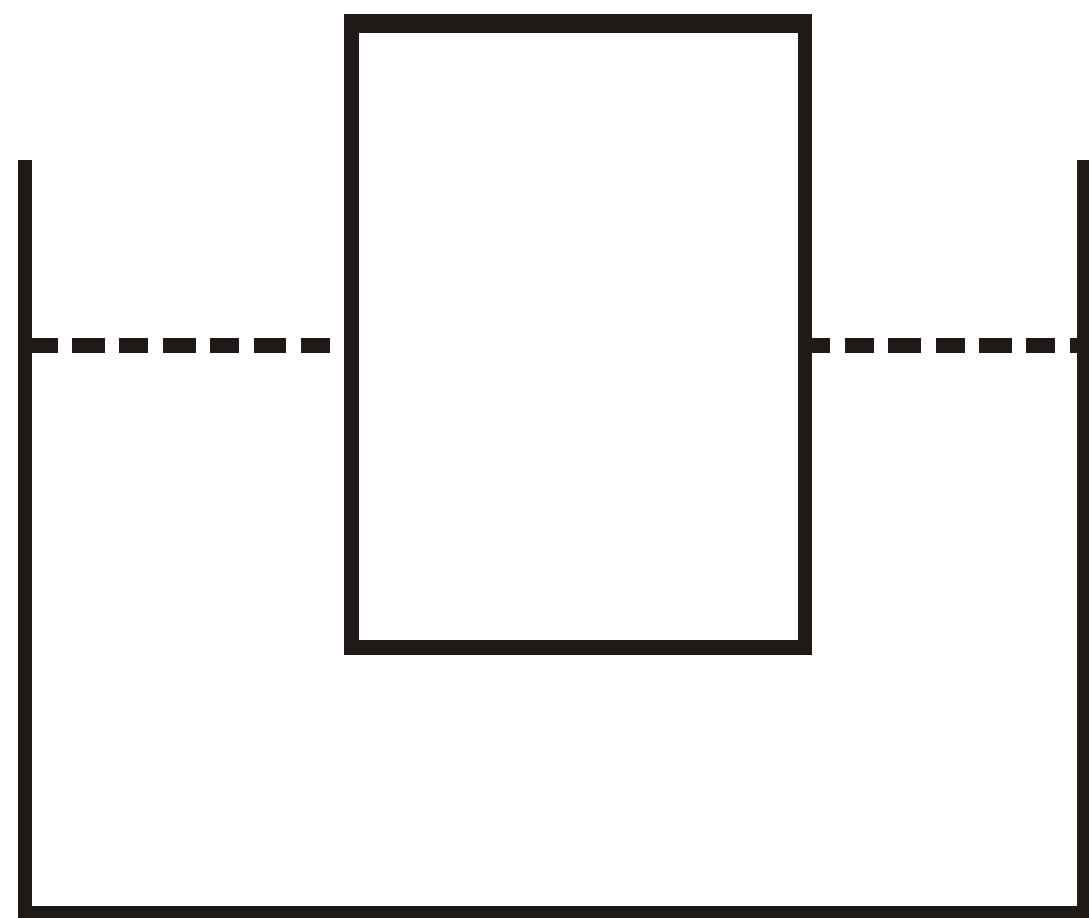
Column I | Column II | ||
(a) | volume of cylinder inside the liquid remains constant | (p) | γ = 0 |
(b) | volume of cylinder outside the liquid remains constant | (q) | γ = 2α |
(c) | Height of cylinder outside the liquid remains constant | (r) | γ = 3α |
(d) | Height of cylinder inside the liquid remain constant | (s) | γ = (2α + α ) |


Text Solution
Verified by ExpertsCHECK THE SOLUTION.
– (p); – (r); – (s); – (q)
Sol. Buoyant force = Mg = constant = 
V sub =  .
.
volume of displace fluid = constant
∴ density of fluid must be constant.
(V solid – V sub ) = constant
⇒  = constant V × 3 α × Δ T =
γ = 
Ah in d liquid = A (h in +h out ) ρ solid = M (mass of solid)
h out =  – h in =
  –
–  = constant
 –
–  =
= 
γ = 2 α + α 
Ah in d liquid g = Buoyant force = constant = Mg
A 0 (1 + 2 α Δ T) h in  = constant
h in =  (1 + ( γ – 2 α ) Δ T)
γ = 2 α
Prepare Smarter with CGP Edu
Get practice questions, solutions, and test series in one place.
Write a Review
Share your experience with this question and solution.
Commentary
Send your comment, doubt, correction, or feedback to admin.
Similar Questions
Explore conceptually related problems