Water which wets the walls of a vertical capillary tube rises to a height H within it. Three 'gallows',
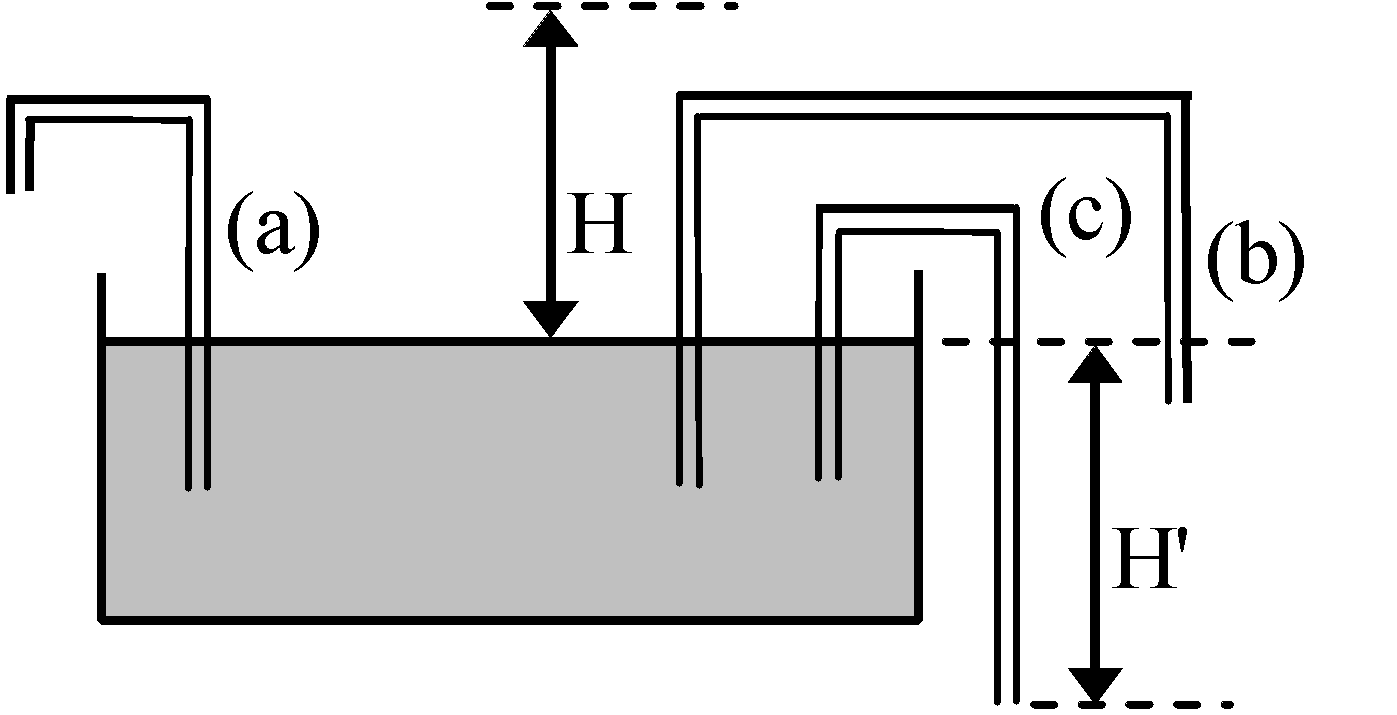 Does the water flow out at the other ends of the capillary tubes?
Text Solution
Verified by ExpertsCHECK THE SOLUTION.
Sol. In case , it is clear that the water cannot flow out of the tube. If it could, a perpetuum mobile (perpetual motion machine) could be established using a paddle rotated ad infinitum by the outflowing water.
Cases and are not so simple. The ends of both tubes are lower than the water level and the water pressures there are consequently lower than the atmospheric pressure. In each case, the water wells to such an extent that the pressure corresponding to its radius of curvature equals the pressure difference between it and the air. The water surfaces corresponding to cases , and are shown in the figure.
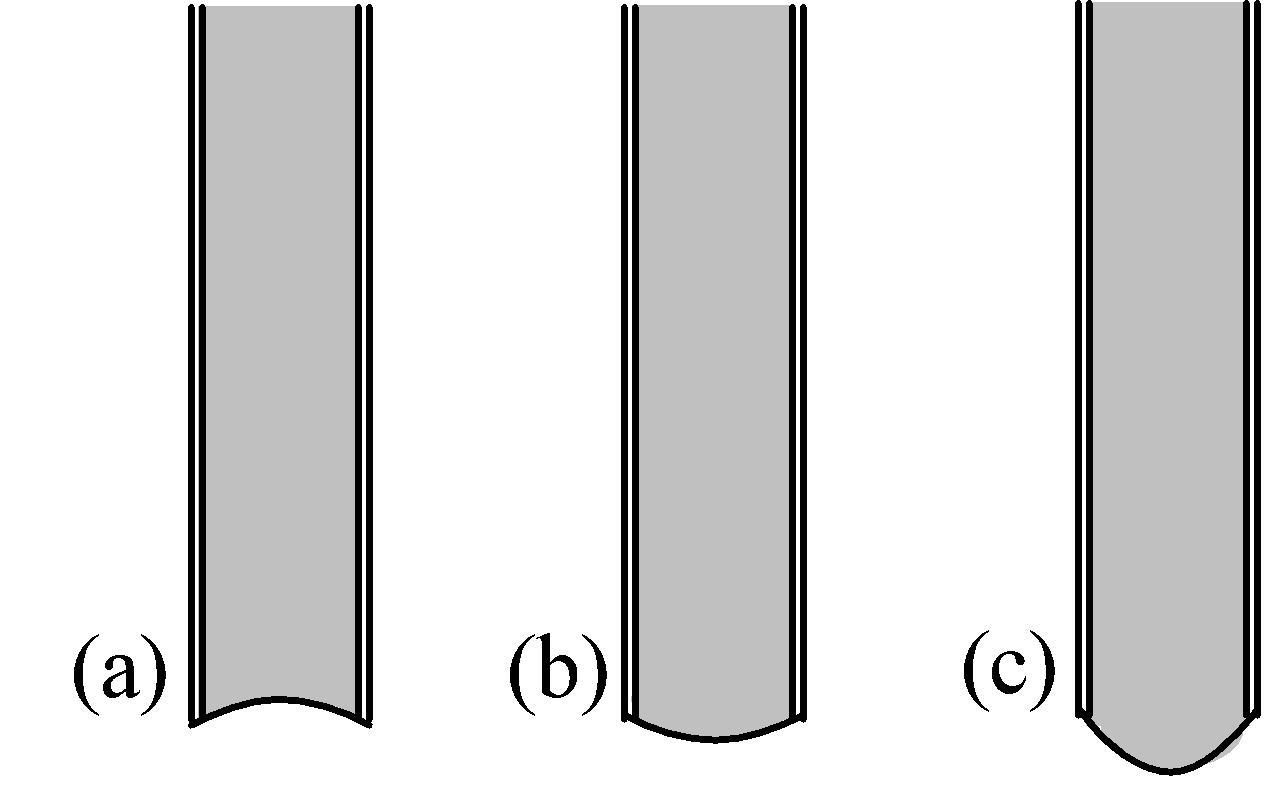
The greatest curvature (smallest radius of curvature) occurs for the hemispherical shape and corresponds to the pressure of a column of water of height H, since this is the height reached by the water in a vertical tube. If the air–water pressure difference is greater than ρ gH, then surface tension cannot hold the water in the tube and it flows out. This is what happens in tube (assuming that the figure is to scale and H' > H); on the other hand, water does not flow out of tube
Prepare Smarter with CGP Edu
Get practice questions, solutions, and test series in one place.
Write a Review
Share your experience with this question and solution.
Commentary
Send your comment, doubt, correction, or feedback to admin.
Similar Questions
Explore conceptually related problems