Published by:
CGP EDU Academic Team
Published on: September 13, 2026
Statement I: In simple harmonic motion, kinetic energy and potential energy become equal when the displacement is  times the amplitude.
Statement II: In simple harmonic motion, kinetic energy is zero when potential energy is maximum.
In the light of the above statements, choose the most appropriate answer from the options given below
Text Solution
Verified by ExpertsThe correct answer is:
D
Both Statement I and Statement II are correct.
In simple harmonic motion, if 

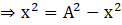

Also,  constant, if PE is maximum, then KE is zero.
Prepare Smarter with CGP Edu
Get practice questions, solutions, and test series in one place.
Write a Review
Share your experience with this question and solution.
Commentary
Send your comment, doubt, correction, or feedback to admin.
Similar Questions
Explore conceptually related problems
Statement I: If the amplitude of a simple harmonic oscillator is doubled, its total energy also bec…
Statement I: x - equation of a particle in SHM is given as At time , potential energy is minimum…
Statement I: The graph of potential energy and kinetic energy of a particle in SHM with respect to …
This question consist of two statements, choose the most appropriate answer from the options given …
Given below are two statements:
Statement I: A second's pendulum has a time period of 1 second. St…