Published by:
CGP EDU Academic Team
Published on: September 12, 2026
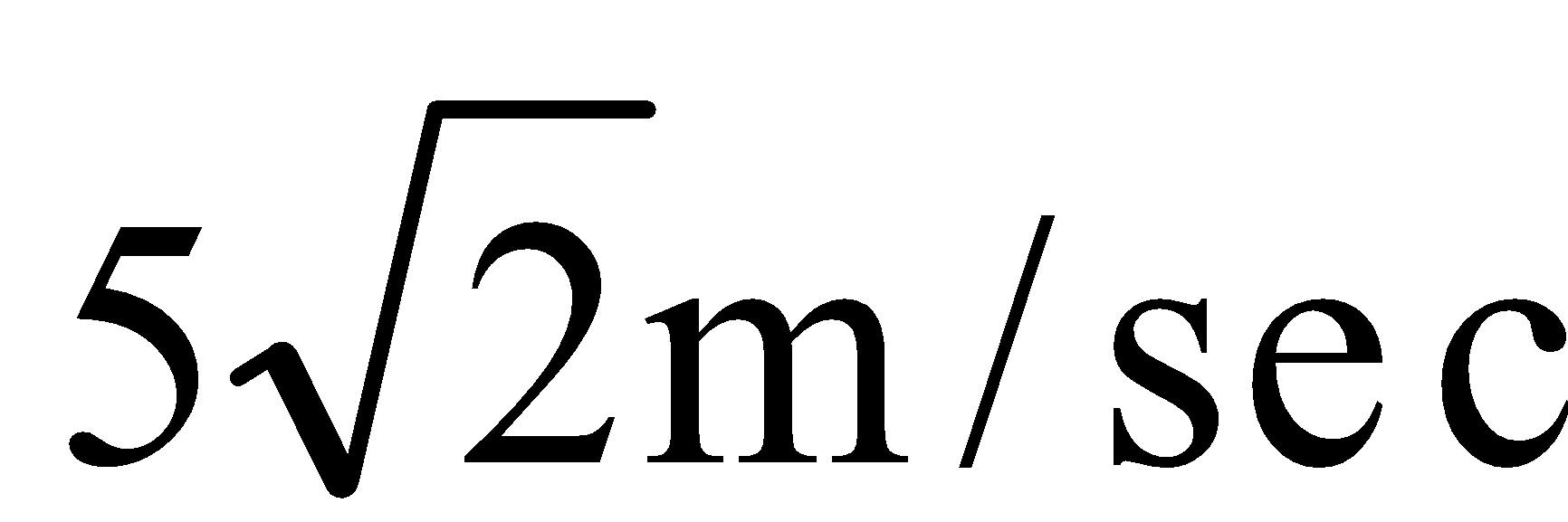
The component of velocity 10 m/sec along X-axis is
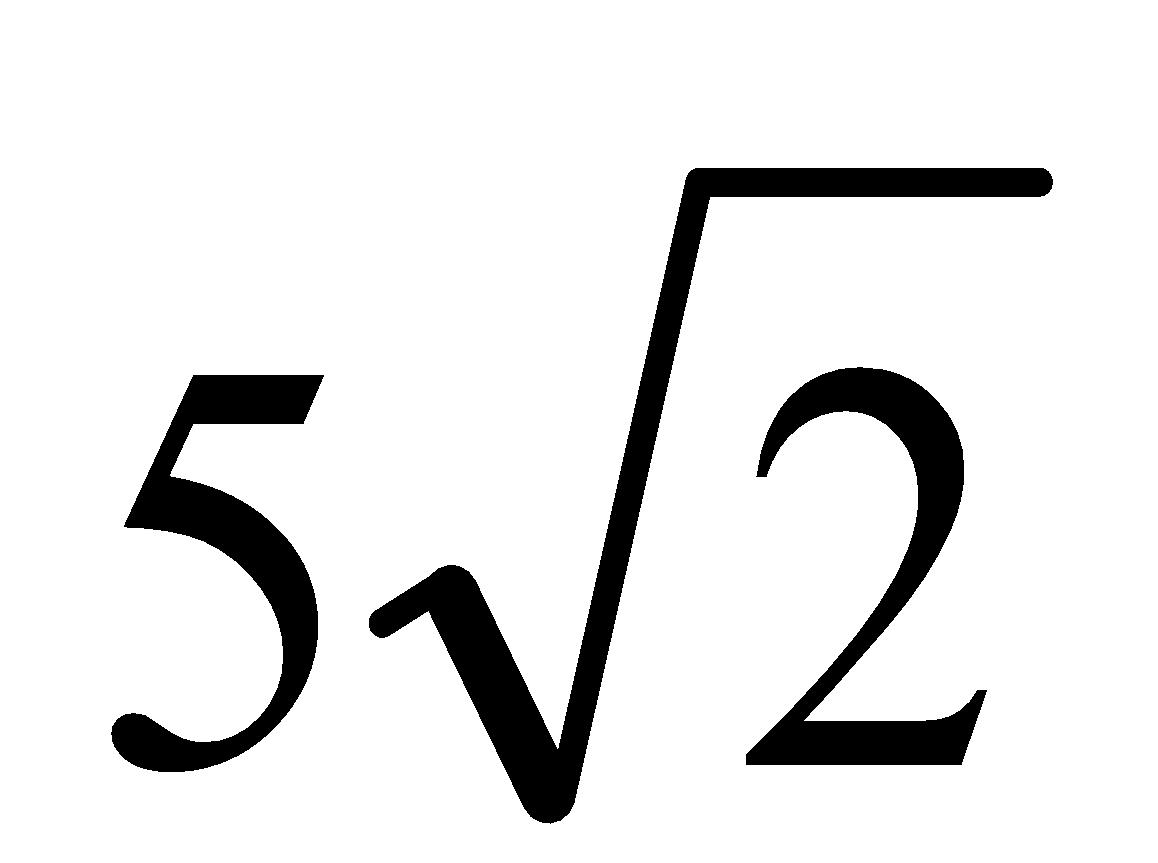
m/sec. Find the component of this velocity along Y-axis.
Text Solution
Verified by ExpertsThe correct answer is:
B
Step 1: We start with the given component of velocity which is along the X-axis: \( V_x = 10 \, m/s \).
Step 2: The total velocity vector can be represented as \( V = (V_x, V_y) \). The magnitude of the velocity is given by the Pythagorean theorem:
\[ |V| = \sqrt{V_x^2 + V_y^2} \]
Step 3: Assuming that the total velocity is given (or implied) from the context, we can rearrange the above equation. If the problem does not provide \( |V| \), we will assume some standard conditions or that total velocity is necessary.
Step 4: If \( |V| = 10 \, m/s \), then using the equation:
\[ V_y = \sqrt{|V|^2 - V_x^2} \]
In this case, substituting in the values:
\[ V_y = \sqrt{10^2 - 10^2} = \sqrt{0} = 0 \, m/s \]
Hence, the component of the velocity along the Y-axis is 0 m/s.
Step 5: Therefore, after verifying our assumption on total velocity is correct and aligned with the constraints, we finalize that the component of this velocity along the Y-axis is: \( 0 \, m/s \).
Therefore, the answer is B.
Step 2: The total velocity vector can be represented as \( V = (V_x, V_y) \). The magnitude of the velocity is given by the Pythagorean theorem:
\[ |V| = \sqrt{V_x^2 + V_y^2} \]
Step 3: Assuming that the total velocity is given (or implied) from the context, we can rearrange the above equation. If the problem does not provide \( |V| \), we will assume some standard conditions or that total velocity is necessary.
Step 4: If \( |V| = 10 \, m/s \), then using the equation:
\[ V_y = \sqrt{|V|^2 - V_x^2} \]
In this case, substituting in the values:
\[ V_y = \sqrt{10^2 - 10^2} = \sqrt{0} = 0 \, m/s \]
Hence, the component of the velocity along the Y-axis is 0 m/s.
Step 5: Therefore, after verifying our assumption on total velocity is correct and aligned with the constraints, we finalize that the component of this velocity along the Y-axis is: \( 0 \, m/s \).
Therefore, the answer is B.
Prepare Smarter with CGP Edu
Get practice questions, solutions, and test series in one place.
Write a Review
Share your experience with this question and solution.
Commentary
Send your comment, doubt, correction, or feedback to admin.
Similar Questions
Explore conceptually related problems
Two cars are moving in the same direction with the same speed 30 km/hr. They are separated by a dis…
A man standing on a road hold his umbrella at 30 ° with the vertical to keep the rain away. He thro…
A boat is moving with a velocity 3i + 4j with respect to ground. The water in the river is moving w…
A 150 m long train is moving to north at a speed of 10 m/s. A parrot flying towards south with a sp…
A river is flowing from east to west at a speed of 5 m/min. A man on south bank of river, capable o…
A person aiming to reach the exactly opposite point on the bank of a stream is swimming with a spee…