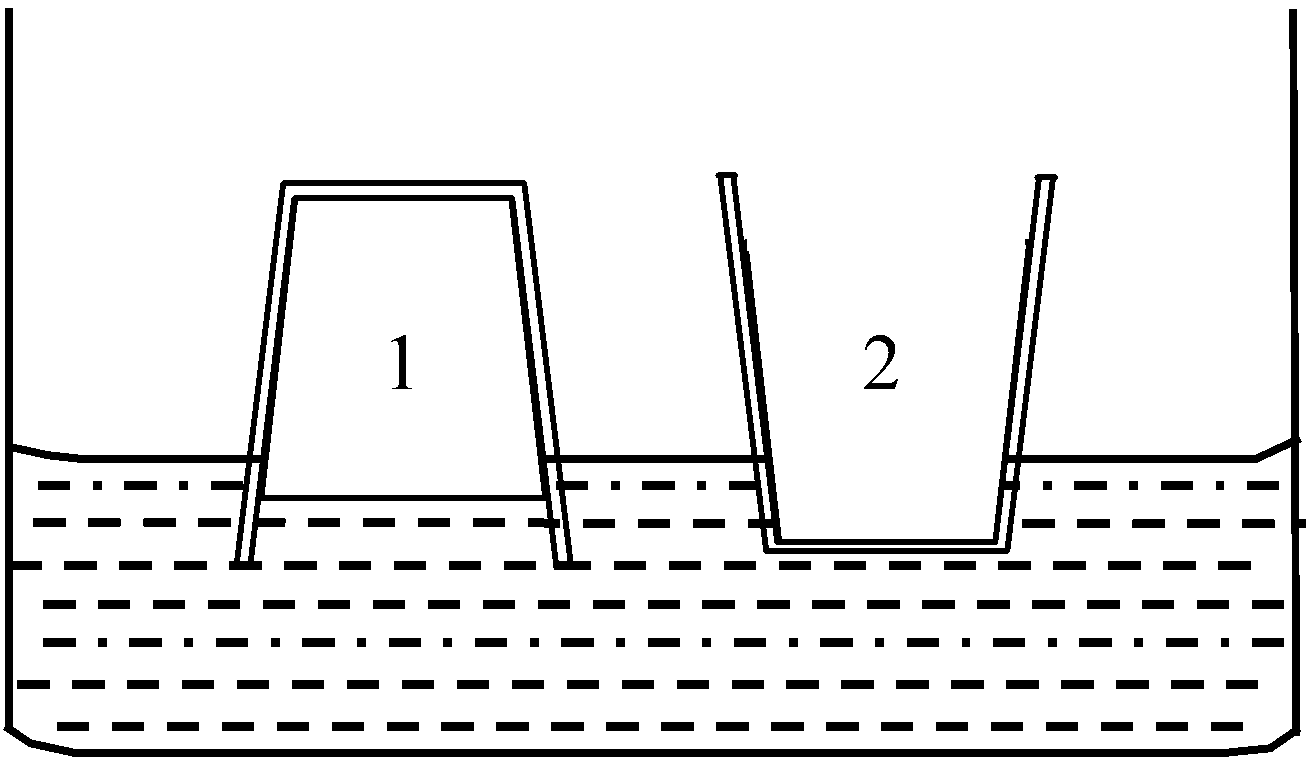
An open beaker is lowered into a vessel containing water, once bottom upwards, and once bottom downwards (Fig.), both times to the same depth. In which of the two cases will the work which must be expended on dipping the beaker into the water be greater? (The water does not spill out of the vessel, nor does it flow over into the beaker when dipped in bottom downwards.)
Text Solution
Verified by ExpertsCHECK THE SOLUTION.
Sol. When the beaker is dipped into the water, the force which must be applied to it to achieve this will increase with the depth to which the beaker is dipped, since the upthrust will increase. However this force will not be the same in the two cases. In the first case the air inside the beaker is compressed and the water partly enters the beaker. Thus if the beaker be dipped to the same depth on both occasions, the volume of water displaced will be less in the first case, so the thrust will also be less than in the second case: therefore the force equaling this upthrust that must be applied to dip the beaker in the water is less in the first case, and so is the work done by this force in immersing the beaker to the same depth.
Prepare Smarter with CGP Edu
Get practice questions, solutions, and test series in one place.
Write a Review
Share your experience with this question and solution.
Commentary
Send your comment, doubt, correction, or feedback to admin.
Similar Questions
Explore conceptually related problems