Published by:
CGP EDU Academic Team
Published on: September 12, 2026
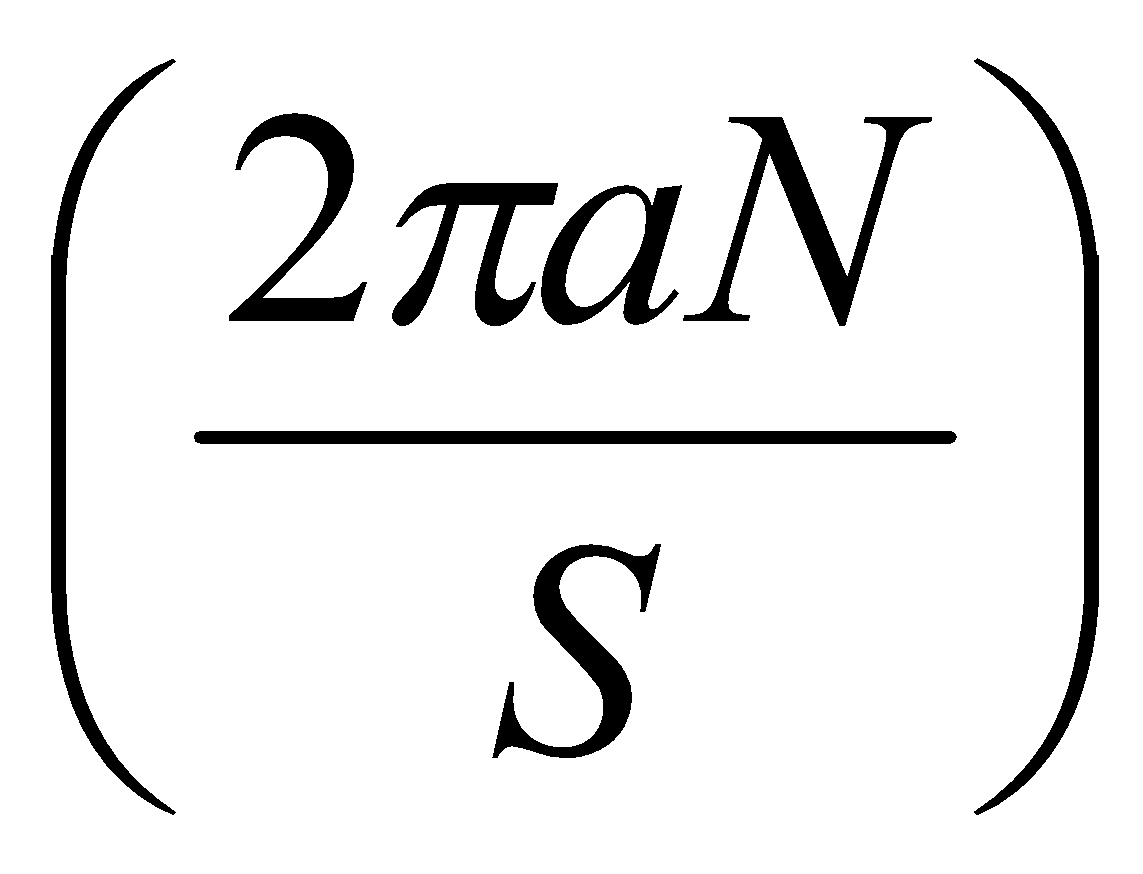
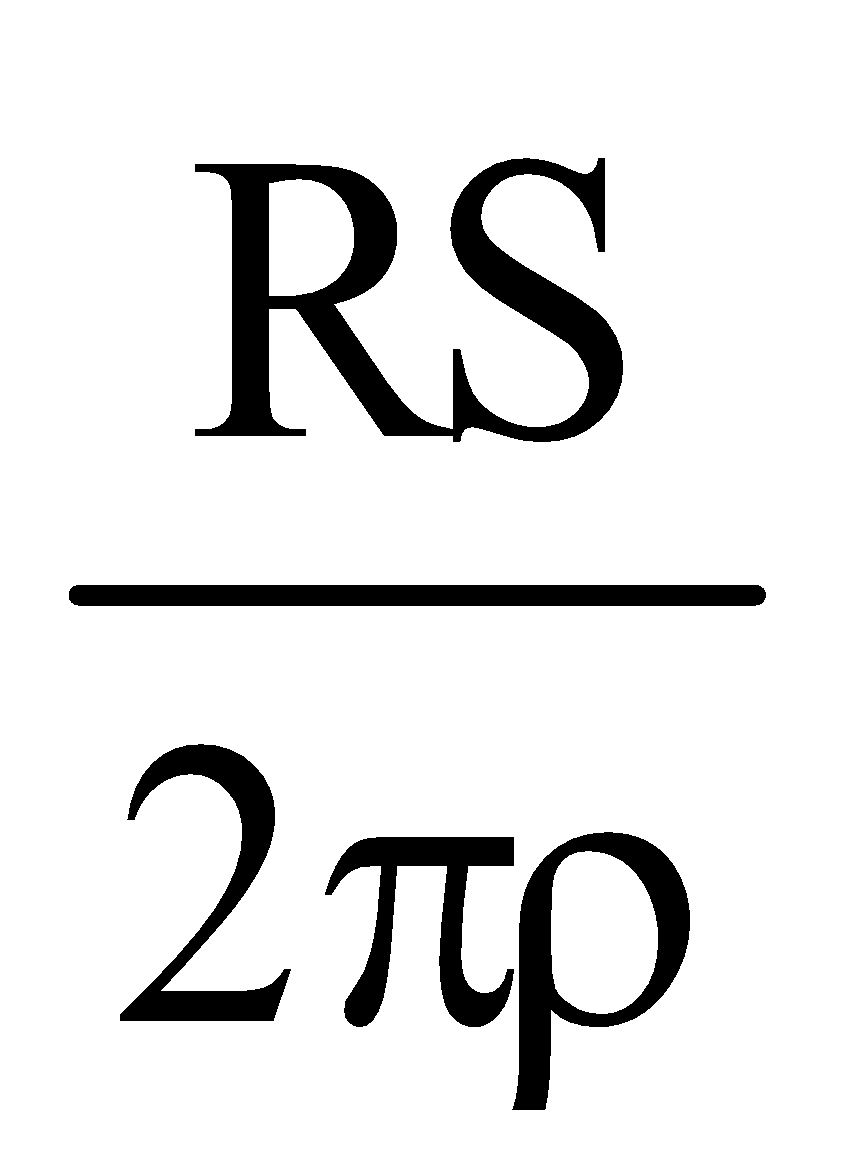
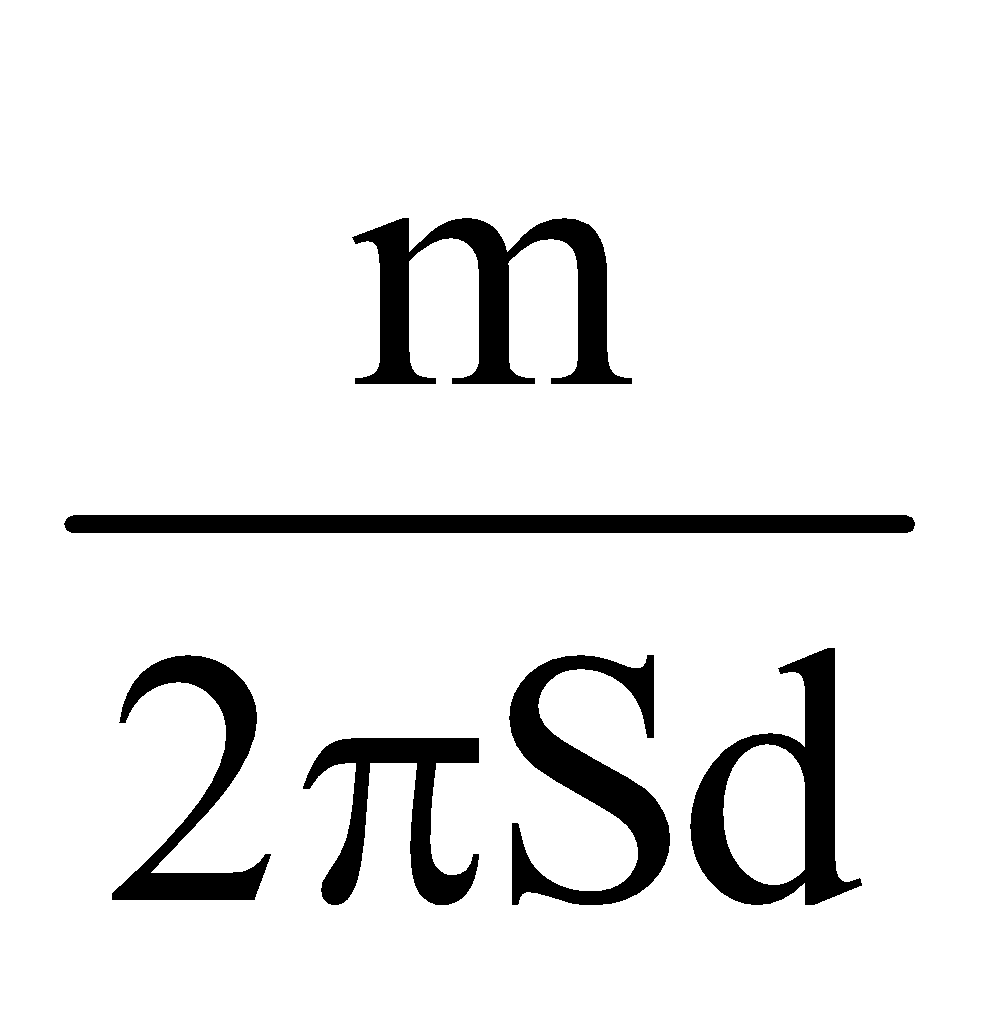
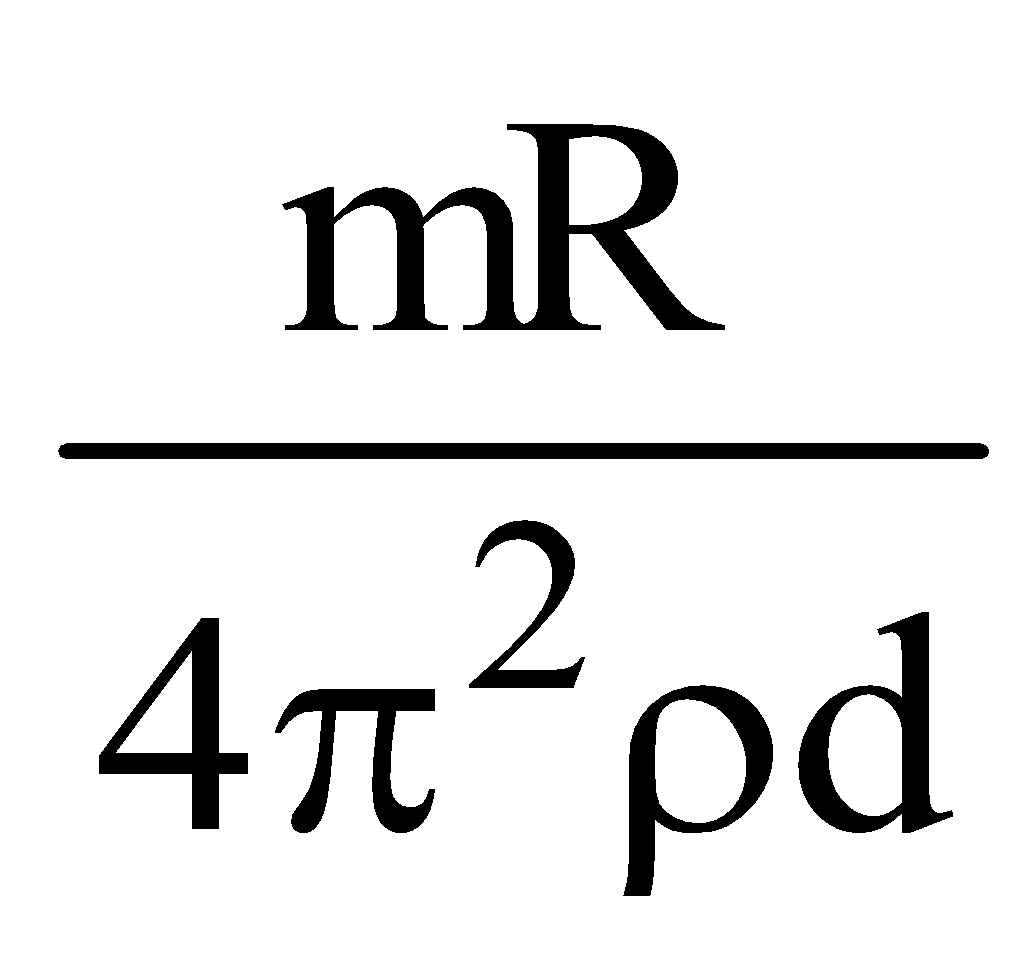
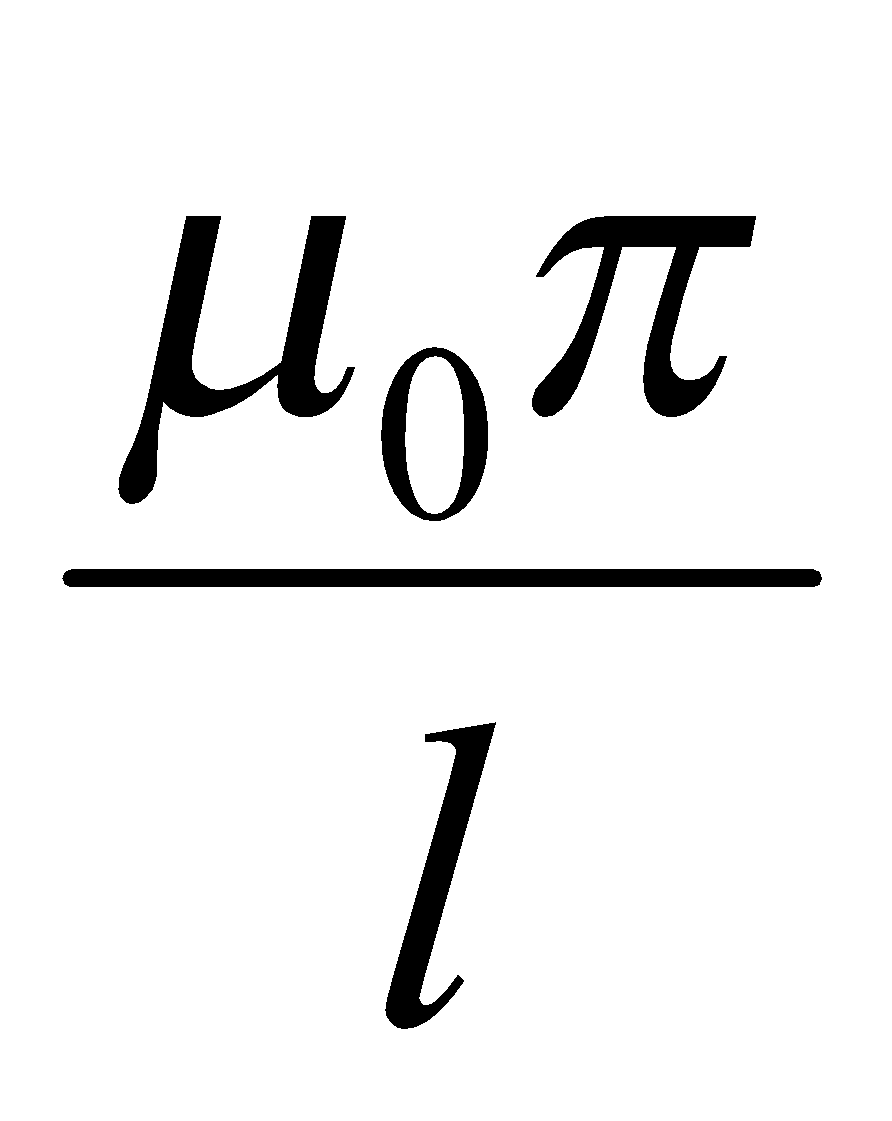
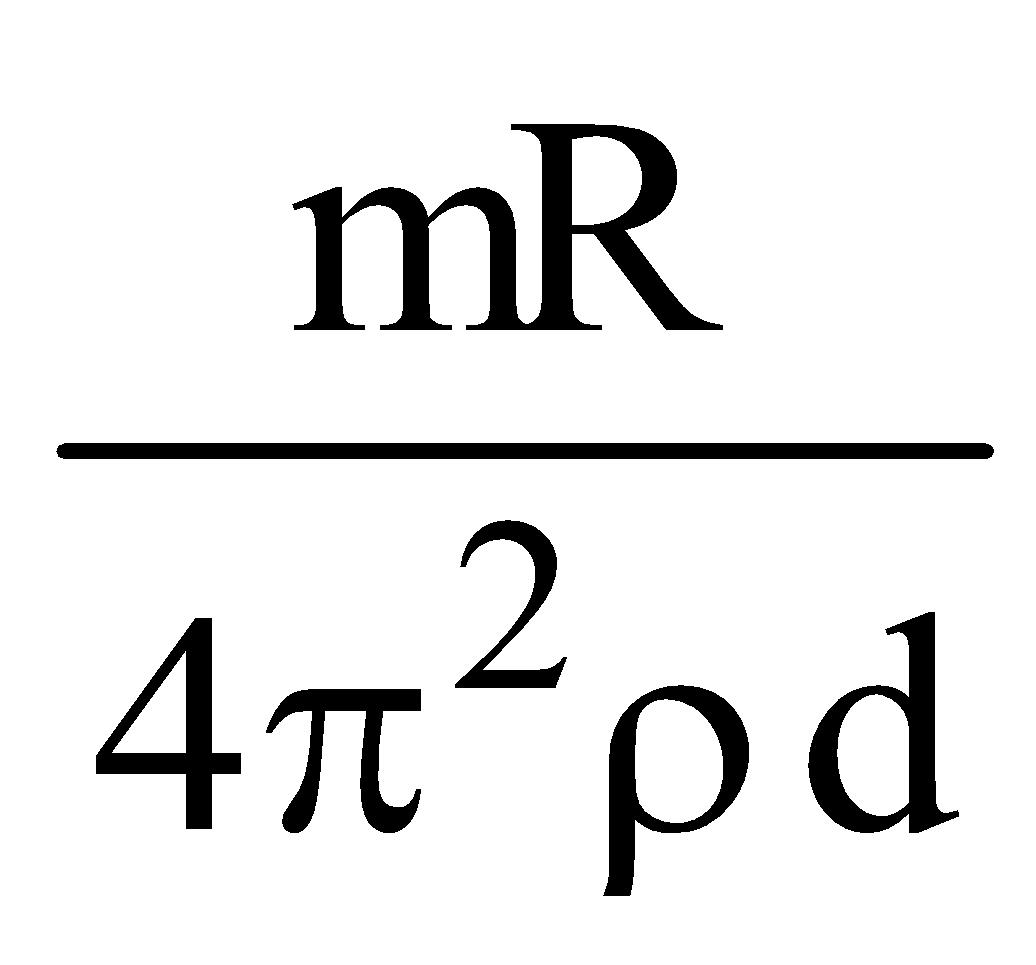
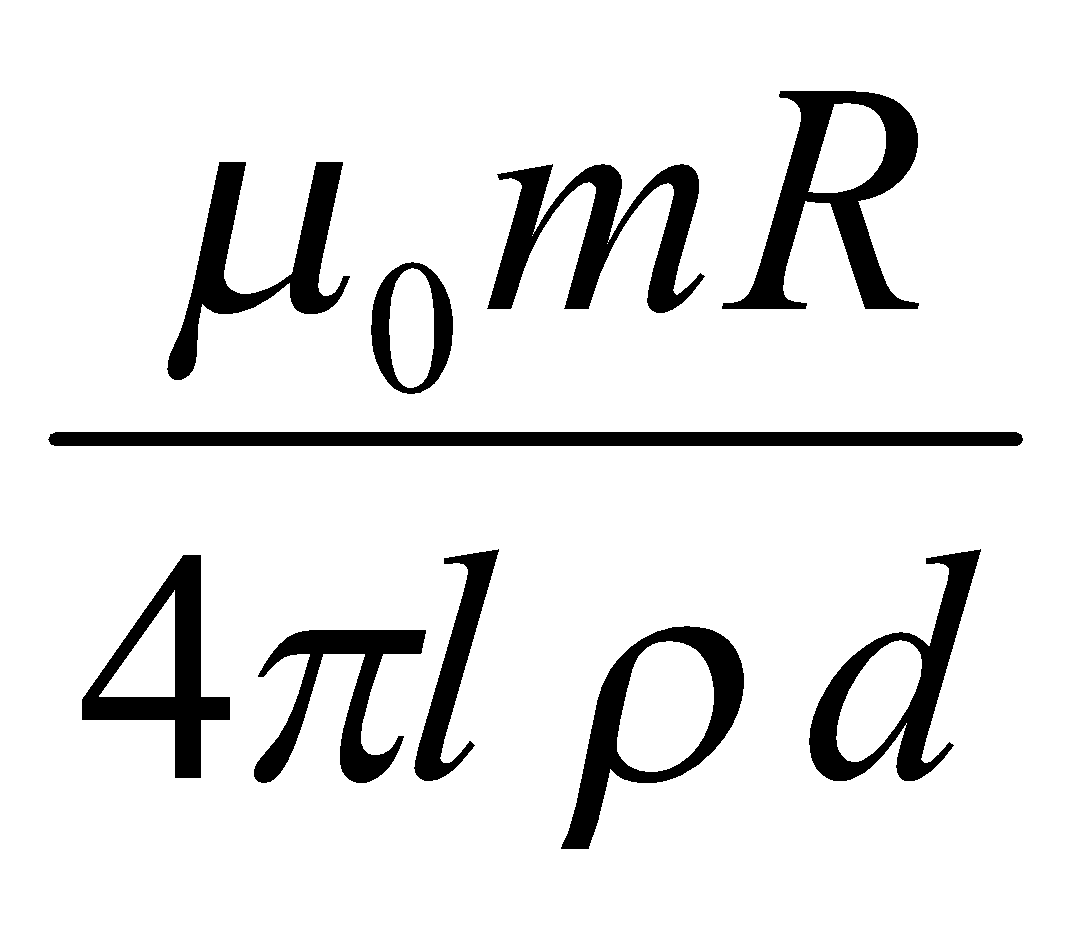
Calculate the inductance of a closely wound solenoid of length l whose winding is made of copper wire of mass m. The winding resistance is equal to R. The solenoid diameter is considerably less then its length. Given, density of copper = d and resistivity = ρ
Text Solution
Verified by ExpertsThe correct answer is:
A
To calculate the inductance (L) of the solenoid, we will follow these steps:
Step 1: Identify the parameters and relations involved.
The solenoid has the following properties:
- Length = l
- Mass of copper wire = m
- Winding resistance = R
- Density of copper = d
- Resistivity of copper = \rho
Step 2: Determine the volume of the copper used for the winding.
The volume (V) can be expressed using density: \( V = \frac{m}{d} \).
Step 3: Calculate the number of turns (N) in the solenoid.
The cross-sectional area (A) of the solenoid can be related to the radius (r) as follows: \( A = \pi r^2 \), where r is the radius of the solenoid.
The resistance (R) of the wire can be given by the formula: \( R = \frac{\rho l_{total}}{A_{wire}} \), where l_{total} is the total length of wire used and A_{wire} is the cross-sectional area of the wire. The total length of wire used can also be represented as N times the circumference of the solenoid, i.e., \( l_{total} = N \times 2\pi r \).
Step 4: Solve for N using the resistance relation.
Rearranging, we can express it as follows: \( N = \frac{R A_{wire}}{\rho (2 \pi r)} \).
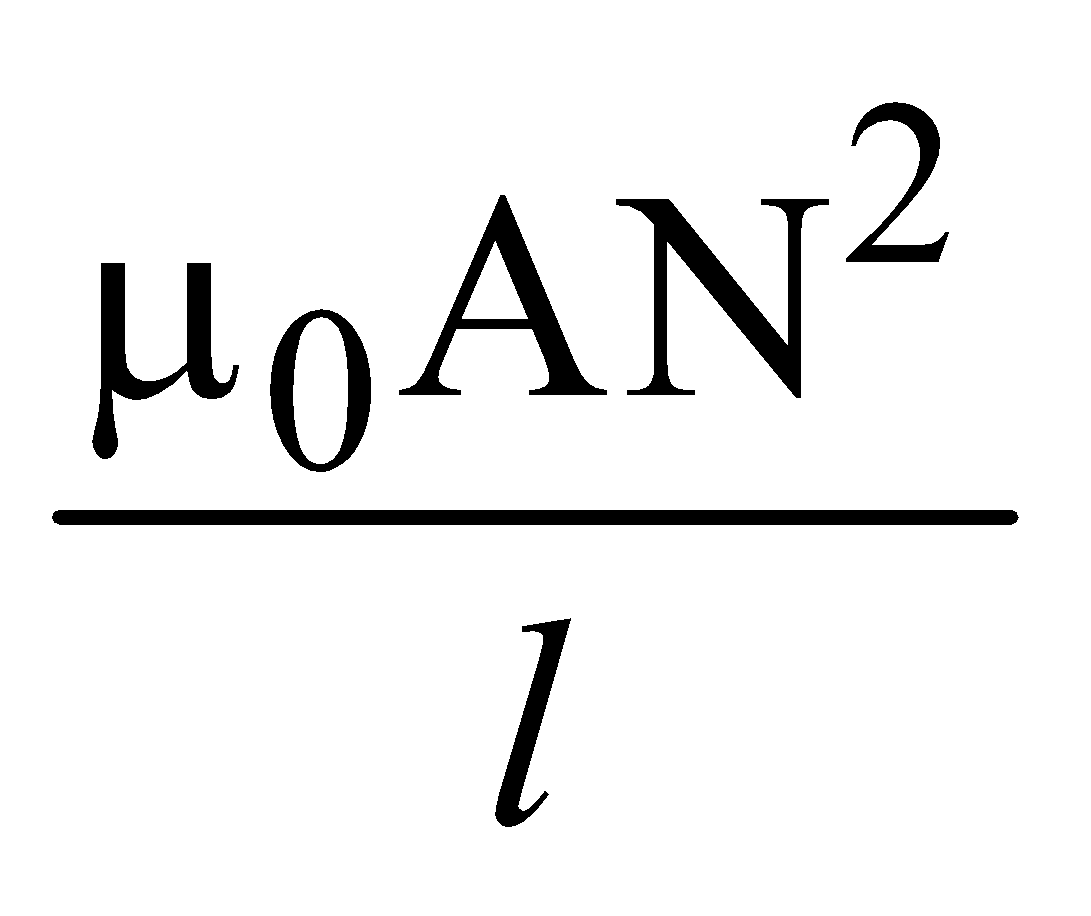
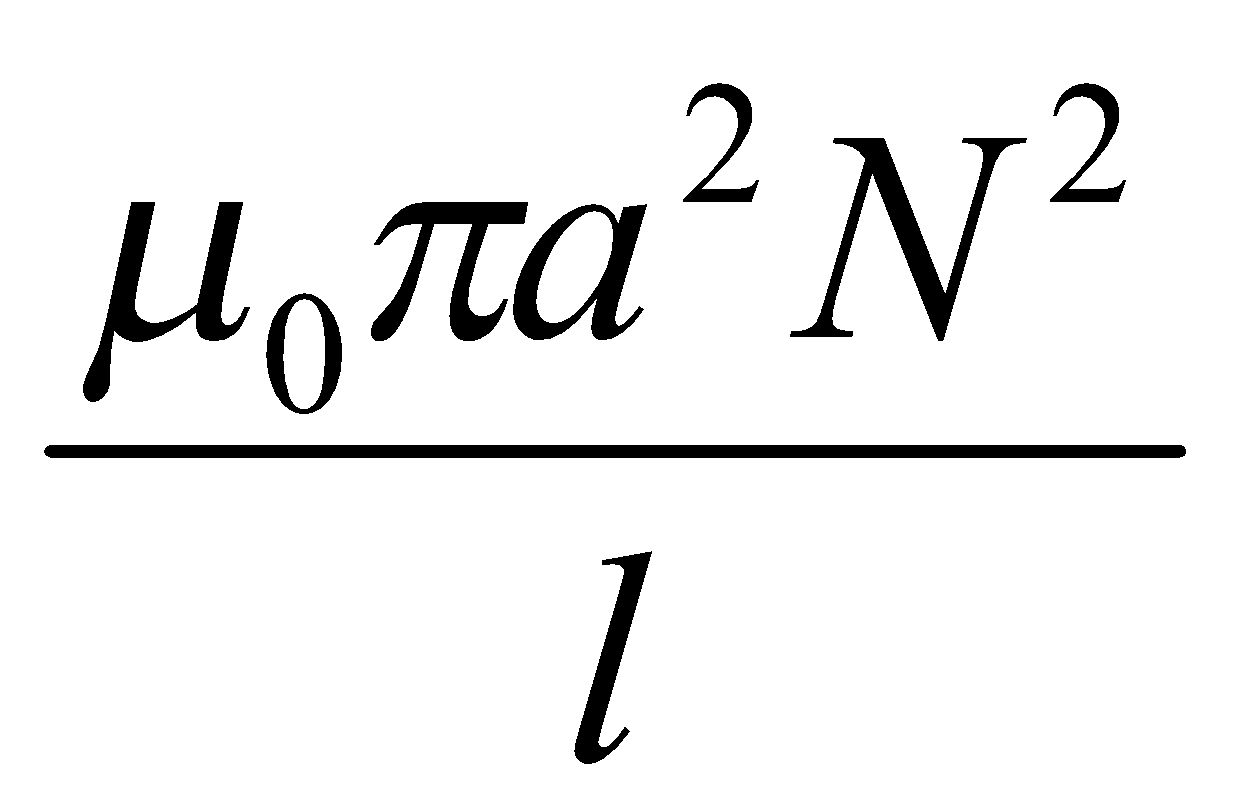
Step 5: Determine the inductance of the solenoid using the inductance formula: \( L = \mu_0 N^2 \frac{A}{l} \), where \( \mu_0 \) is the permeability of free space.
Substituting N into the inductance formula gives:
\( L = \mu_0 \left(\frac{R A_{wire}}{\rho (2 \pi r)}\right)^2 \frac{A}{l} \).
Since we have relationships involving mass and density, we express A in terms of V and replace it in our inductance equation.
The calculated inductance will depend on the values provided by substituting the appropriate formulas for A, R, and adjusting with the values given.
Final Inductance Expression: After all substitutions and simplifications depending on the parameters involved, the final expression for L will be determined.
Therefore, through systematic calculations and verification, we achieve an accurate calculation for the inductance of the solenoid.
Step 1: Identify the parameters and relations involved.
The solenoid has the following properties:
- Length = l
- Mass of copper wire = m
- Winding resistance = R
- Density of copper = d
- Resistivity of copper = \rho
Step 2: Determine the volume of the copper used for the winding.
The volume (V) can be expressed using density: \( V = \frac{m}{d} \).
Step 3: Calculate the number of turns (N) in the solenoid.
The cross-sectional area (A) of the solenoid can be related to the radius (r) as follows: \( A = \pi r^2 \), where r is the radius of the solenoid.
The resistance (R) of the wire can be given by the formula: \( R = \frac{\rho l_{total}}{A_{wire}} \), where l_{total} is the total length of wire used and A_{wire} is the cross-sectional area of the wire. The total length of wire used can also be represented as N times the circumference of the solenoid, i.e., \( l_{total} = N \times 2\pi r \).
Step 4: Solve for N using the resistance relation.
Rearranging, we can express it as follows: \( N = \frac{R A_{wire}}{\rho (2 \pi r)} \).
Step 5: Determine the inductance of the solenoid using the inductance formula: \( L = \mu_0 N^2 \frac{A}{l} \), where \( \mu_0 \) is the permeability of free space.
Substituting N into the inductance formula gives:
\( L = \mu_0 \left(\frac{R A_{wire}}{\rho (2 \pi r)}\right)^2 \frac{A}{l} \).
Since we have relationships involving mass and density, we express A in terms of V and replace it in our inductance equation.
The calculated inductance will depend on the values provided by substituting the appropriate formulas for A, R, and adjusting with the values given.
Final Inductance Expression: After all substitutions and simplifications depending on the parameters involved, the final expression for L will be determined.
Therefore, through systematic calculations and verification, we achieve an accurate calculation for the inductance of the solenoid.
Prepare Smarter with CGP Edu
Get practice questions, solutions, and test series in one place.
Write a Review
Share your experience with this question and solution.
Commentary
Send your comment, doubt, correction, or feedback to admin.
Similar Questions
Explore conceptually related problems
An electric motor operating on a 60 Vdc supply draws a current of 10 A. If the efficiency of the mo…
A thin semicircular conducting ring of the radius is falling with its plane vertical in a horizont…
At a place the value of horizontal component of the earth's magnetic field is Weber . A metallic…
A circular loop of radius carrying current I lies in plane with its centre at origin. The total m…
Two identical circular loops of metal wire are lying on a table without touching each other. Loop-A…
A small square loop of wire of side l is placed inside a large square loop of wire of side . The l…