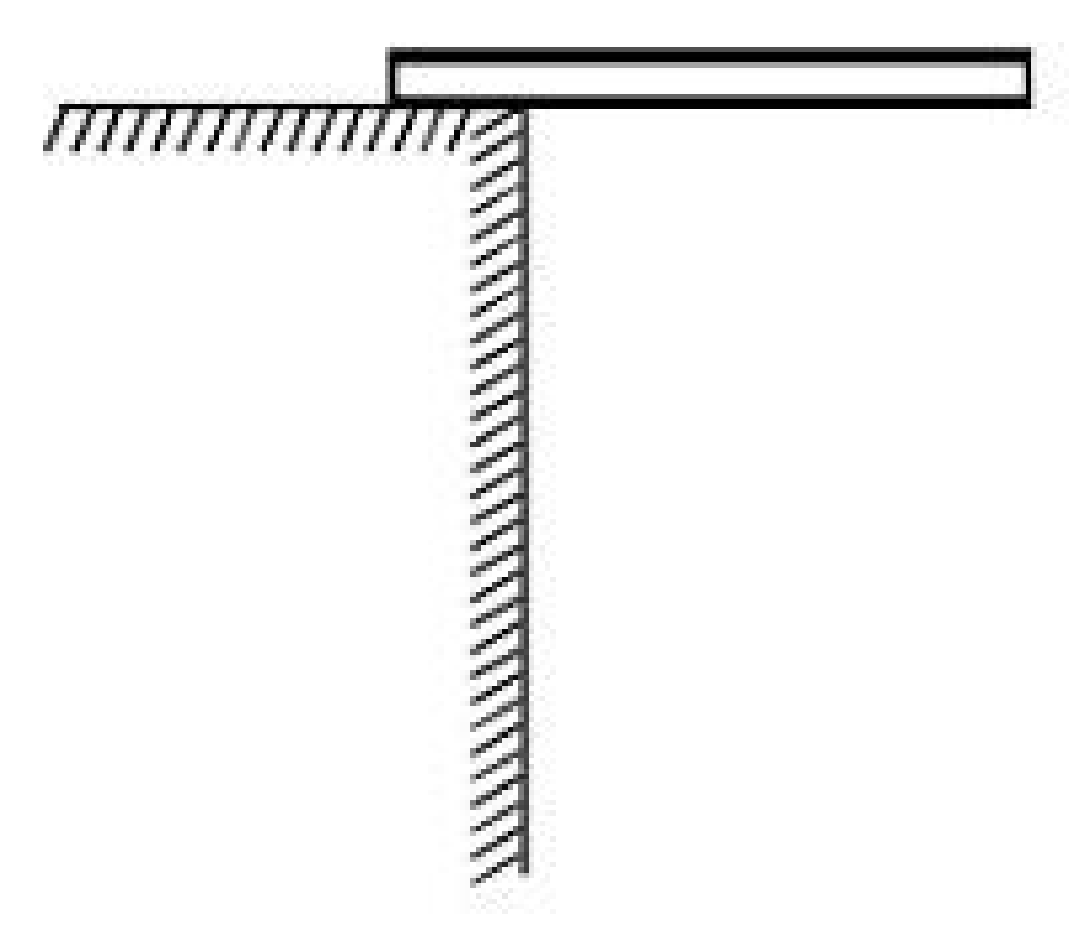
One-fourth length of a uniform rod is placed on a rough horizontal surface and it starts rotating about the edge as soon as we release it. The rod starts slipping on the edge when it has turned through an angle  . If the coefficient of friction between rod and surface is
  , and it satisfies the relation x tan
  , then what is the value of x? [Take g = 10 rn/s 2 ]
Text Solution
Verified by ExpertsThe correct answer is:
CHECK THE SOLUTION.
13


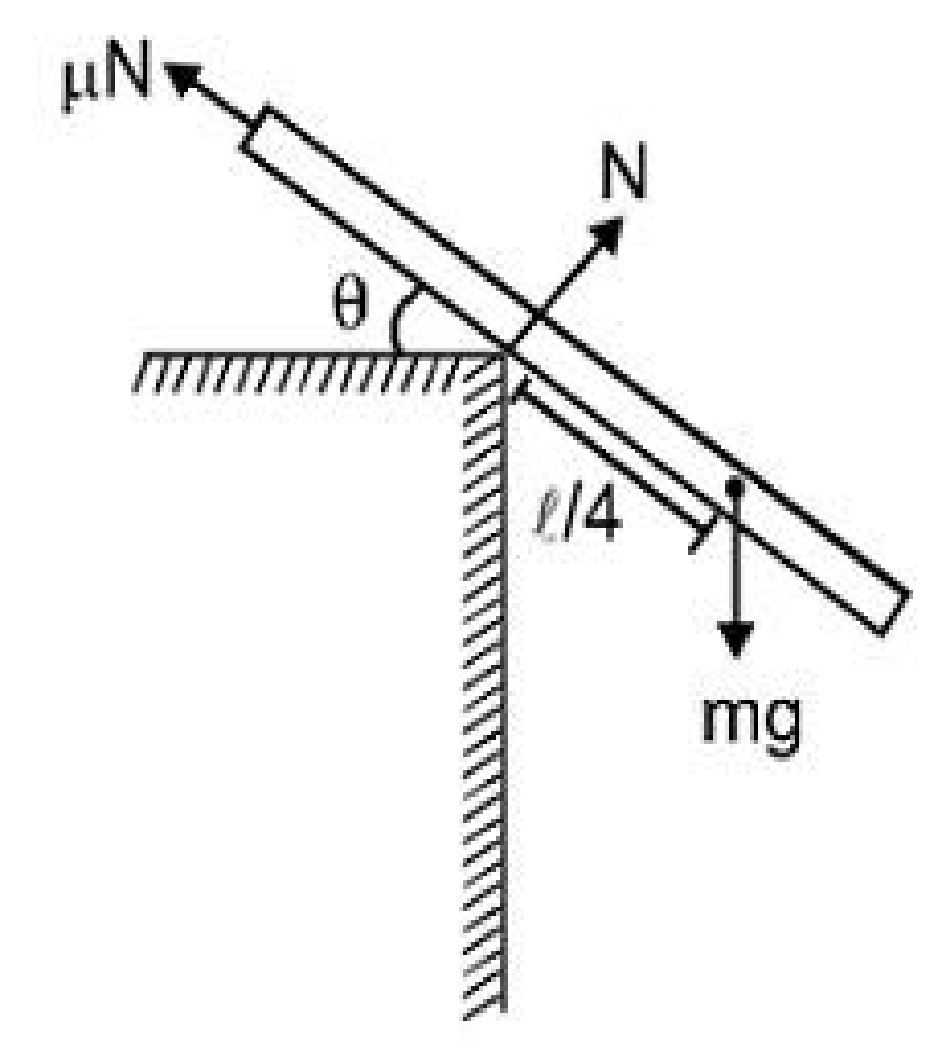


Solving,

Prepare Smarter with CGP Edu
Get practice questions, solutions, and test series in one place.
Write a Review
Share your experience with this question and solution.
Commentary
Send your comment, doubt, correction, or feedback to admin.
Similar Questions
Explore conceptually related problems
When a mass is rotated in a plane about a fixed point, its angular momentum is directed along the-
A chain of mass m forming a circle of radius R is slipped on a smooth round cone with half-angle 9.…
The moment of inertia of a rigid body in terms of its angular momentum L and kinetic energy K is
A solid sphere of radius R and mass M is rolled by a force F acting at the top of the sphere as sho…
A Uniform rod AB is hinged at its end A and the other end of the rod is connected to a block throug…
A circular platform is free to rotate in a horizontal plane about a vertical axis passing through i…