Published by:
CGP EDU Academic Team
Published on: September 11, 2026
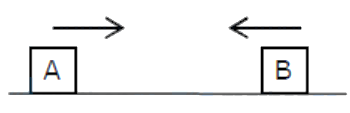
Two cars are approaching each other at an equal speed of
. When they see each other, both blowhorns having frequency of
. The beat frequency heard by each driver will be___
. [Velocity ofsound in air is
]
Text Solution
Verified by ExpertsThe correct answer is:
B
Step 1: Convert the speed of the cars from km/hr to m/s.
Speed of each car = 7.2 km/hr = \frac{7.2 \times 1000}{3600} = 2\, m/s.
Step 2: Use the Doppler effect formula to find the apparent frequency.
The frequency heard by each driver can be found using the formula:
\( f' = f \left( \frac{v + v_0}{v - v_s} \right) \)
Here,
- \( f' \) is the apparent frequency
- \( f = 676 \ Hz \) is the original frequency
- \( v = 340 \ m/s \) is the speed of sound
- \( v_0 = 0 \) (the observer is stationary)
- \( v_s = 2 \ m/s \) (the source is moving towards the observer).
Step 3: Calculate the frequencies heard by both drivers.
Both cars are approaching each other so we use the Doppler effect twice:
1. Frequency heard by the first car:
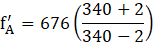
\( f'_{1} = 676 \left( \frac{340 + 0}{340 - 2} \right) = 676 \left( \frac{340}{338} \right) \approx 678.88 \ Hz \)
2. Frequency heard by the second car (similarly, but the roles of observer and source are switched):
\( f'_{2} = 676 \left( \frac{340 + 0}{340 - 2} \right) \approx 678.88 \ Hz \)
Step 4: Calculate the beat frequency.
The beat frequency is the difference between the two frequencies:
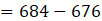
\( f_b = f'_{2} - f'_{1} = 678.88 - 676 = 2.88 \ Hz \approx 2.9 \ Hz \)
Therefore, the beat frequency heard by each driver will be approximately 2.9 Hz. Since beats tend to be approximated by round values, the answer is close to 2 Hz.
Thus the correct answer is B.
Speed of each car = 7.2 km/hr = \frac{7.2 \times 1000}{3600} = 2\, m/s.
Step 2: Use the Doppler effect formula to find the apparent frequency.
The frequency heard by each driver can be found using the formula:
\( f' = f \left( \frac{v + v_0}{v - v_s} \right) \)
Here,
- \( f' \) is the apparent frequency
- \( f = 676 \ Hz \) is the original frequency
- \( v = 340 \ m/s \) is the speed of sound
- \( v_0 = 0 \) (the observer is stationary)
- \( v_s = 2 \ m/s \) (the source is moving towards the observer).
Step 3: Calculate the frequencies heard by both drivers.
Both cars are approaching each other so we use the Doppler effect twice:
1. Frequency heard by the first car:
\( f'_{1} = 676 \left( \frac{340 + 0}{340 - 2} \right) = 676 \left( \frac{340}{338} \right) \approx 678.88 \ Hz \)
2. Frequency heard by the second car (similarly, but the roles of observer and source are switched):
\( f'_{2} = 676 \left( \frac{340 + 0}{340 - 2} \right) \approx 678.88 \ Hz \)
Step 4: Calculate the beat frequency.
The beat frequency is the difference between the two frequencies:
\( f_b = f'_{2} - f'_{1} = 678.88 - 676 = 2.88 \ Hz \approx 2.9 \ Hz \)
Therefore, the beat frequency heard by each driver will be approximately 2.9 Hz. Since beats tend to be approximated by round values, the answer is close to 2 Hz.
Thus the correct answer is B.
Prepare Smarter with CGP Edu
Get practice questions, solutions, and test series in one place.
Write a Review
Share your experience with this question and solution.
Commentary
Send your comment, doubt, correction, or feedback to admin.
Similar Questions
Explore conceptually related problems
A uniform thin rope of length and mass hangs vertically from a rigid support and a block of mass …
The driver of a bus approaching a big wall notices that the frequency of his bus's horn changes fro…
A driver in a car, approaching a vertical wall notices that the frequency of his car horn, has chan…
A sound source S is moving along a straight track with speed v, and is emitting sound of frequency …
A stationary observer receives sound from two identical tuning forks, one of which approaches and t…
The intensity of the light from a bulb incident on a surface is 0.22 W/m 2 . The amplitude of the m…