In the given figure find the accelerations of blocks A and B for the following cases (g = 10 m/s 2 )
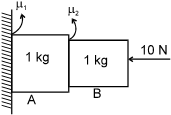
Column - I | Column - II |
(a) µ1 = 0 and µ2 = 0.1 | (p) aA = aB = 9.5 m/s2 |
(b) µ2 = 0 and µ1 = 0.1 | (q) aA = 9 m/s2, aB = 10 m/s2 |
(c) µ1 = 0.1 and µ2 = 1.0 | (r) aA = aB = g = 10 m/s2 |
(d) µ1 = 1.0 and µ2 = 0.1 | (s) aA = 1, aB = 9 m/s2 |
Text Solution
Verified by ExpertsCHECK THE SOLUTION.
- r, - q, - p, - s
Sol. (i) FBD in (case (i)) {µ 1 = 0, µ 2 = 0.1}
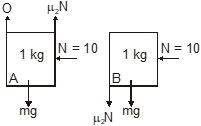
While friction’s work is to oppose the relative motion and here if friction comes then relative motion will
start and without friction there is no relative motion so both the block move together with same
acceleration and friction will not come.
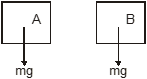
a A = a B = 10 m/s 2
(ii) 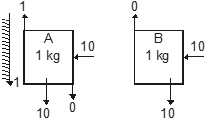
Friction between wall and the block opposes relative motion. Since wall is stationary so friction will try
to stop block A also and maximum friction will act between wall and block while there is no friction
between block.
Note: Friction between wall and block will oppose relative motion between wall and block only.
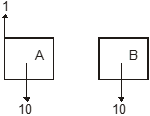
a A = 9 m/s 2 ; a B = 10 m/s 2
(iii) 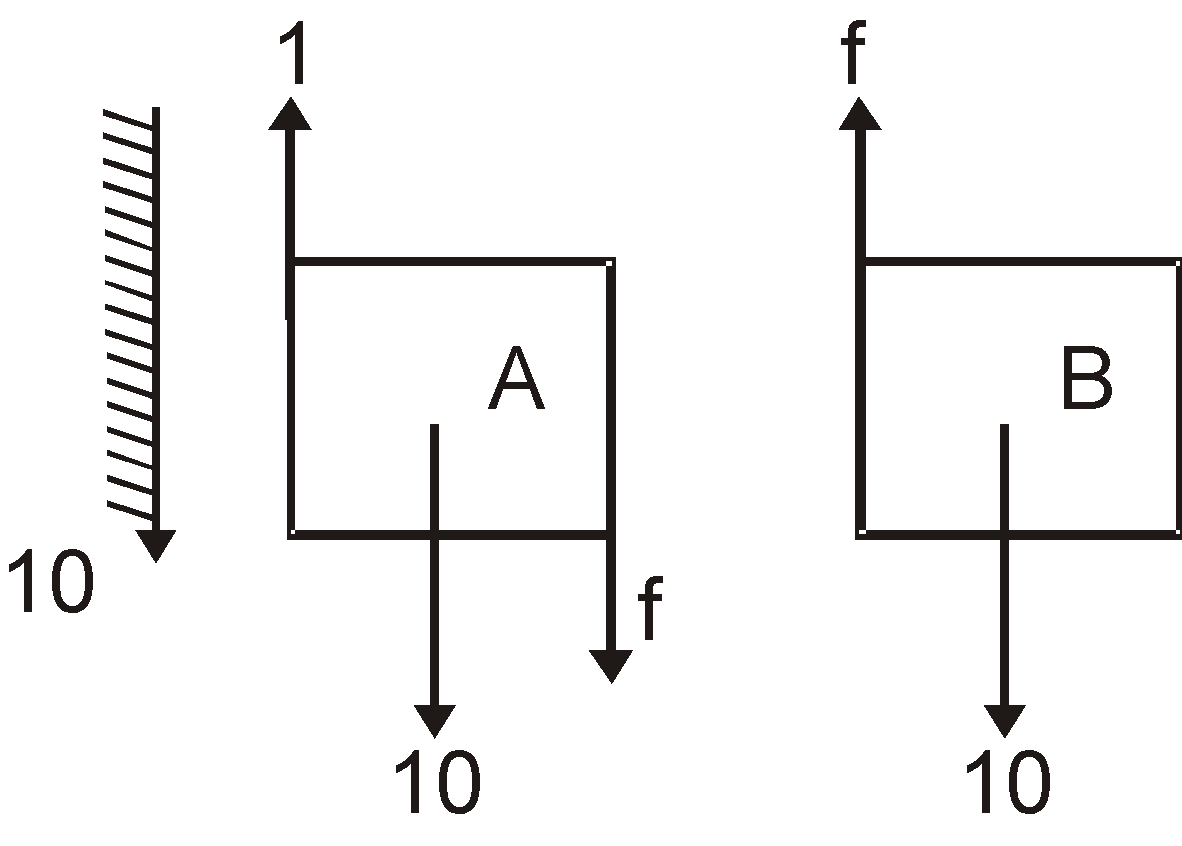
Maximum friction between wall and block will be 1N, but maximum friction available between block A
and B is 10 N but if this will be there then relative motion will increase while friction is to oppose relative
motion. So, friction will come less than 10N so friction will be static.
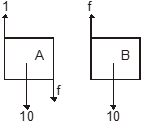
by system (20 – 1) = 2 × a
a =  = 9.5 m/s 2
(iv)
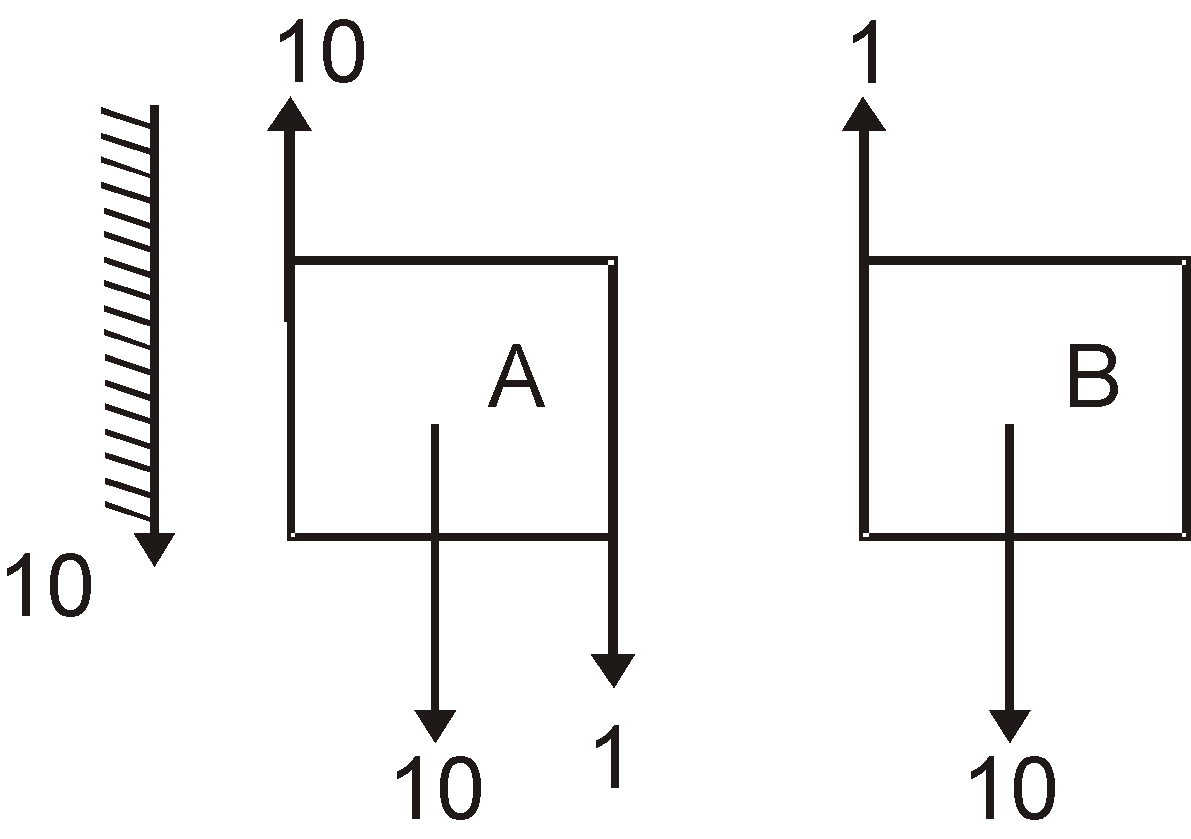
a A =  = 1 m/s 2
a B =  = 9 m/s 2
Prepare Smarter with CGP Edu
Get practice questions, solutions, and test series in one place.
Write a Review
Share your experience with this question and solution.
Commentary
Send your comment, doubt, correction, or feedback to admin.
Similar Questions
Explore conceptually related problems