Published by:
CGP EDU Academic Team
Published on: September 12, 2026
A ceiling fan has a diameter (of the circle through the outer edges of the three blades) of 120 cm and rpm 1500 at full speed. Consider a particle of mass 1g sticking at the outer end of a blade. What is the net force on it, when the fan runs at full speed? Who exerts this force on the particle? How much force does the particle exert on the blade in the plane of motion?
Text Solution
Verified by ExpertsThe correct answer is:
A
Step 1: Calculate the radius of the fan.
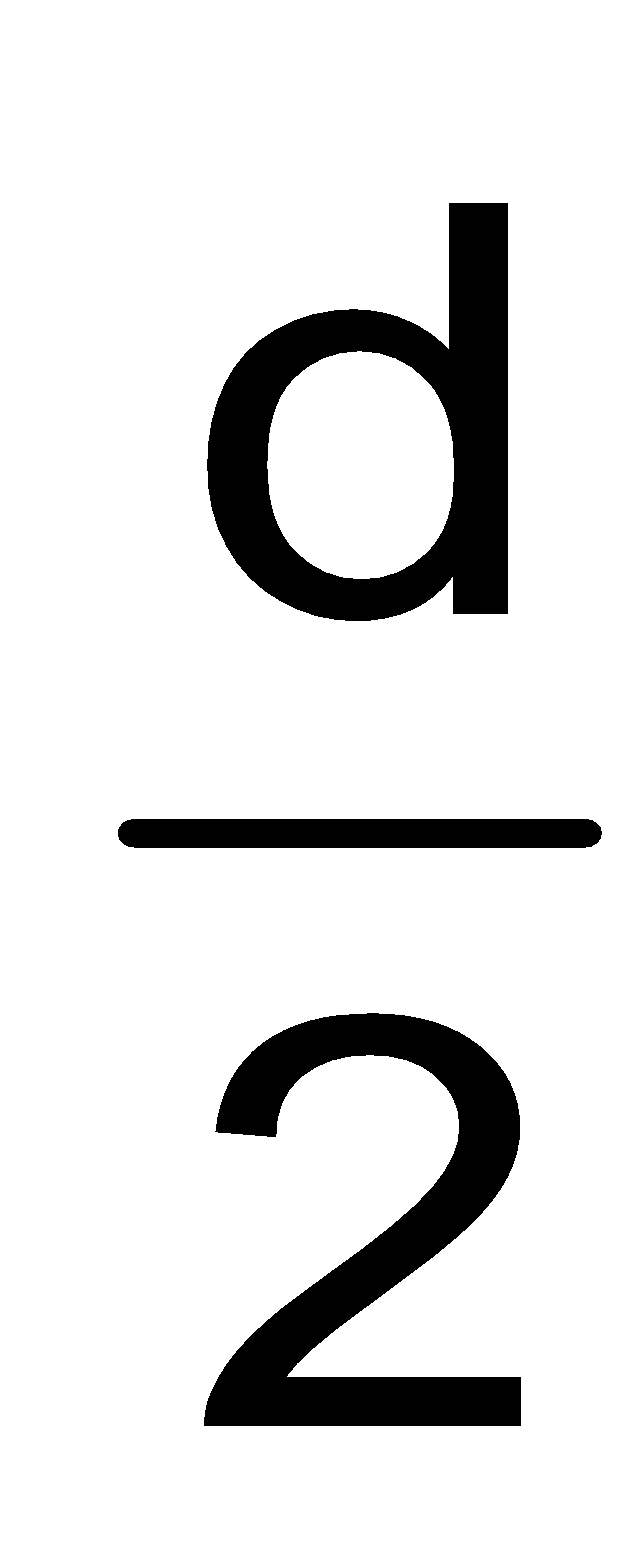
The diameter is 120 cm, thus the radius \( r = \frac{120}{2} = 60 \) cm = 0.6 m.
Step 2: Convert the mass of the particle to kg.
The mass is 1 g = 0.001 kg.
Step 3: Calculate the angular velocity in radians per second.
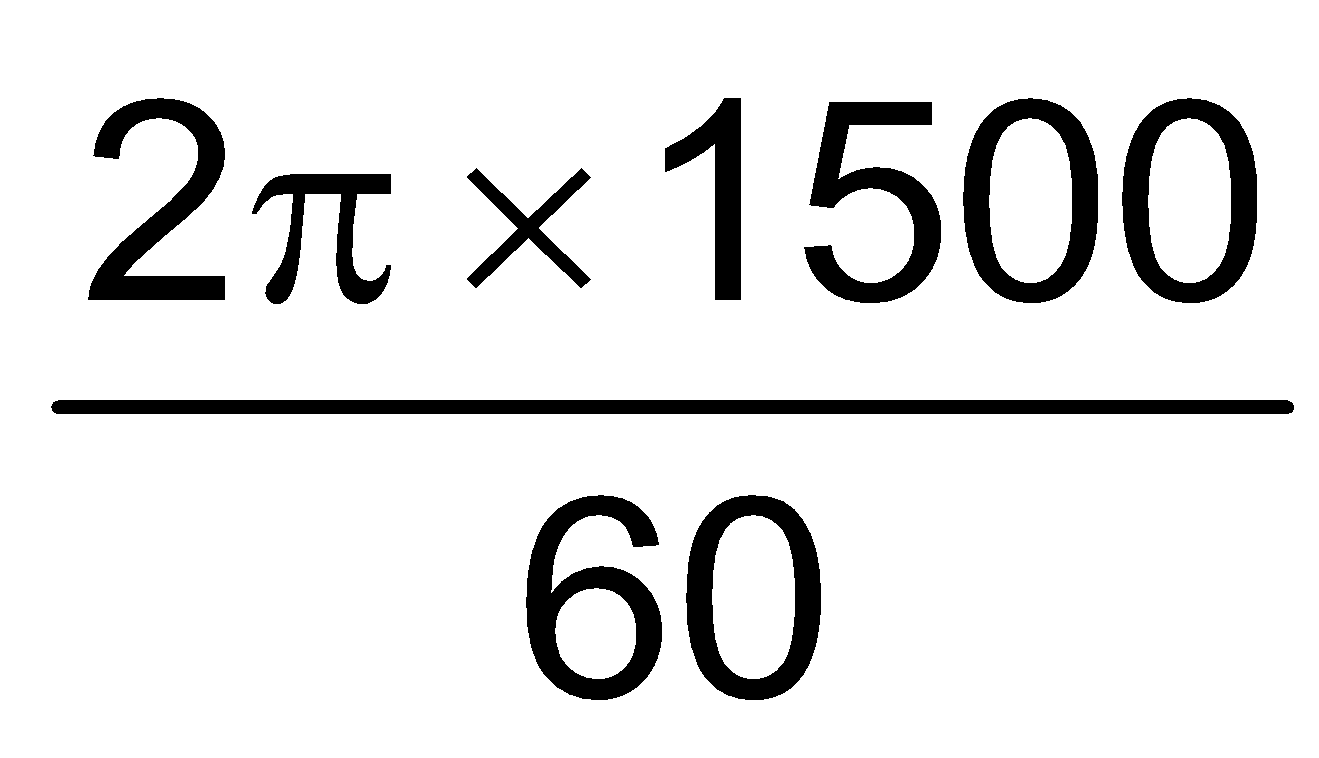
The fan speed is 1500 rpm. Conversion to radians per second:
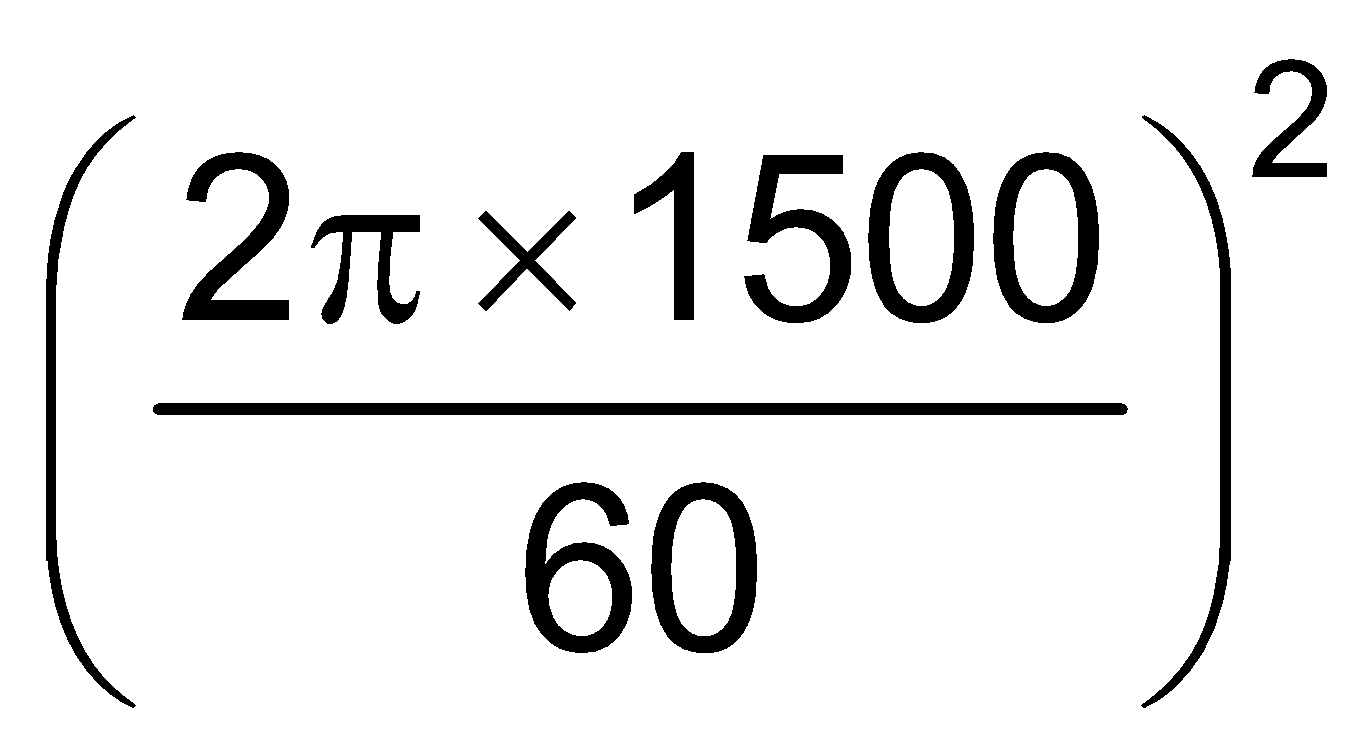
\( \omega = 1500 \times \frac{2\pi}{60} = 157.08 \text{ rad/s} \).
Step 4: Calculate the centripetal acceleration \( a_c \) at the outer end of the blade.
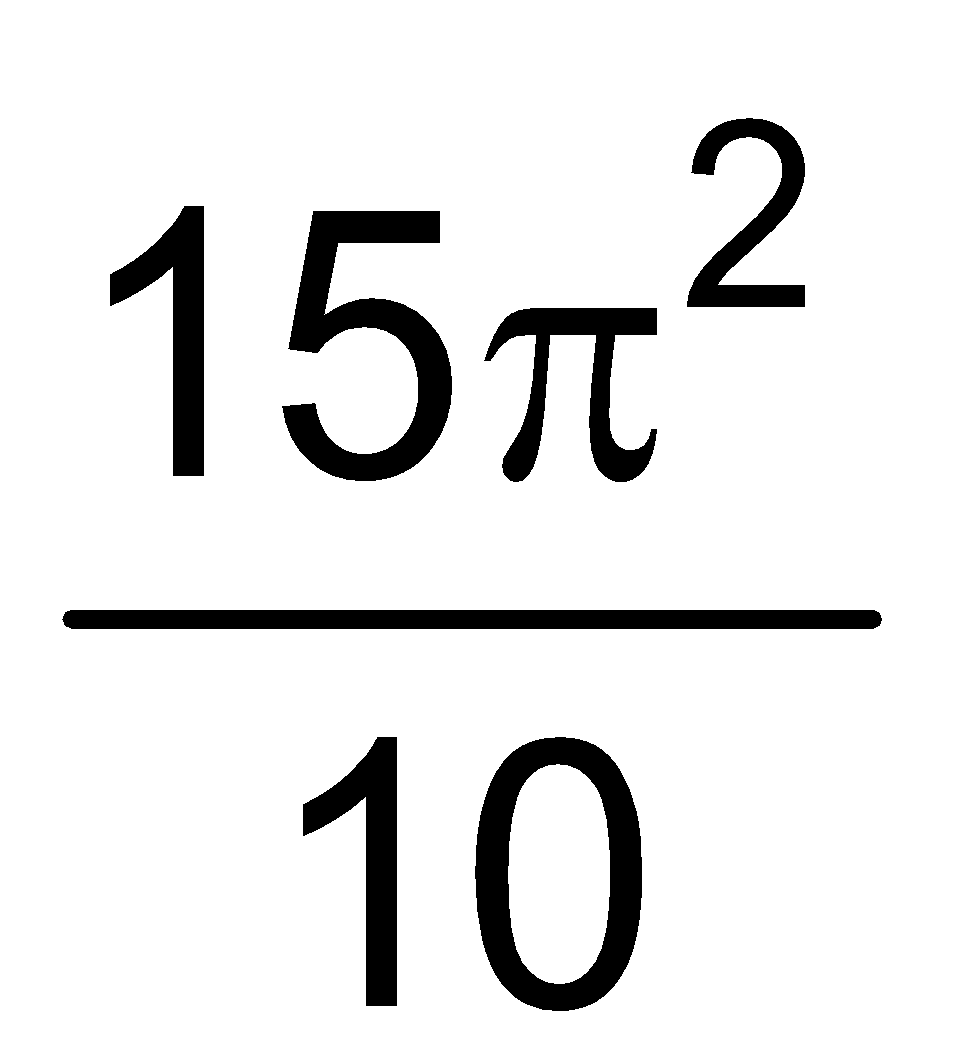
\( a_c = r \omega^2 = 0.6 \times (157.08)^2 \approx 14.81 \text{ m/s}^2 \).
Step 5: Determine the net force acting on the particle using \( F = m \times a_c \).
\( F = 0.001 \times 14.81 = 0.01481 \text{ N} \).
Step 6: Identify the force exerted on the particle.
This force is the centripetal force exerted by the blade on the particle.
Step 7: Calculate the force the particle exerts back on the blade.
By Newton's third law, the particle exerts an equal and opposite force of 0.01481 N on the blade in the plane of motion.
Therefore, the net force on the particle is approximately 0.01481 N. The blade exerts this force, and the particle also exerts a force of approximately 0.01481 N on the blade.
The diameter is 120 cm, thus the radius \( r = \frac{120}{2} = 60 \) cm = 0.6 m.
Step 2: Convert the mass of the particle to kg.
The mass is 1 g = 0.001 kg.
Step 3: Calculate the angular velocity in radians per second.
The fan speed is 1500 rpm. Conversion to radians per second:
\( \omega = 1500 \times \frac{2\pi}{60} = 157.08 \text{ rad/s} \).
Step 4: Calculate the centripetal acceleration \( a_c \) at the outer end of the blade.
\( a_c = r \omega^2 = 0.6 \times (157.08)^2 \approx 14.81 \text{ m/s}^2 \).
Step 5: Determine the net force acting on the particle using \( F = m \times a_c \).
\( F = 0.001 \times 14.81 = 0.01481 \text{ N} \).
Step 6: Identify the force exerted on the particle.
This force is the centripetal force exerted by the blade on the particle.
Step 7: Calculate the force the particle exerts back on the blade.
By Newton's third law, the particle exerts an equal and opposite force of 0.01481 N on the blade in the plane of motion.
Therefore, the net force on the particle is approximately 0.01481 N. The blade exerts this force, and the particle also exerts a force of approximately 0.01481 N on the blade.
Prepare Smarter with CGP Edu
Get practice questions, solutions, and test series in one place.
Write a Review
Share your experience with this question and solution.
Commentary
Send your comment, doubt, correction, or feedback to admin.
Similar Questions
Explore conceptually related problems
A small sphere of mass 200 gm is attached to an inextensible string of length 130 cm whose upper en…
A motorcyclist wants to drive on the vertical surface of wooden ‘ well ’ of radius 5 m, in horizont…
A mass is kept on a horizontal frictionless surface. It is attached to a string and rotates about a…
A block of mass m = 1kg moves on a horizontal circle against the wall of a cylindrical room of radi…
A car goes on a horizontal circular road of radius R = meter, the speed increasing at a constant r…
A heavy particle is tied to the end A of a string of length 1.6 m . Its other end O is fixed. It re…