Published by:
CGP EDU Academic Team
Published on: September 12, 2026
A fast train moving at 40 m/s passes by a stationary observer, emitting a whistle of frequency 300 Hz. If the velocity of sound waves is 340 m/s, then the change in the apparent frequency of the sound, just before and just after the train passes by the observer, will be nearly –
Text Solution
Verified by ExpertsThe correct answer is:
C
Using the Doppler effect formula:
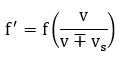
Where:

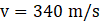 (speed of sound)
 (speed of train)
For approaching: 
For receding: 

Prepare Smarter with CGP Edu
Get practice questions, solutions, and test series in one place.
Write a Review
Share your experience with this question and solution.
Commentary
Send your comment, doubt, correction, or feedback to admin.
Similar Questions
Explore conceptually related problems
The ends of a stretched wire of length L are fixed at $x=0$ and $\mathbf{x} = \mathbf{L}.$ In one e…
In a large room, a person receives direct sound waves from a source 120 meters away from him. He al…
A train has just complicated a U-curve in a track which is a semicircle. The engine is at the forwa…
In the experiment for the determination of the speed of sound in air using the resonance column met…
Two cars are moving on two perpendicular roads towards a crossing with uniform speeds of 72 km/hr a…
A source producing sound of frequency 170 Hz is approaching a stationary observer with a velocity 1…