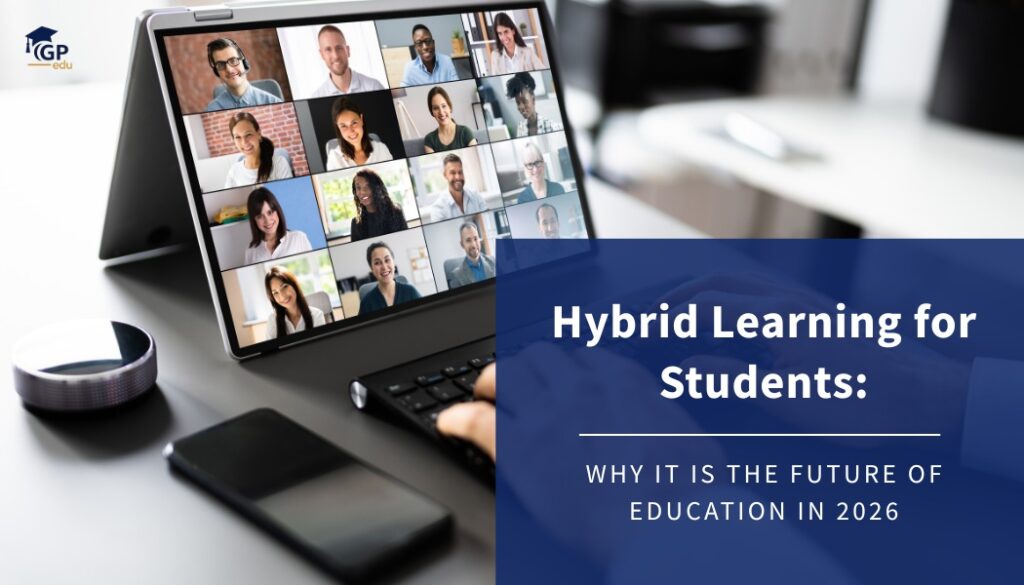
Hybrid Learning for Students: Why It Is the Future of Education in 2026
Education in 2026 is no longer divided strictly into offline classrooms or online classes. Instead, hybrid learning has emerged as one of the most effective and student-friendly education models. By combining the structure of traditional teaching with the flexibility of online learning, hybrid learning offers a balanced and practical approach to modern education.
This blog explains what hybrid learning for students really means, why it is trending rapidly, and how it supports better academic outcomes for school and competitive exam aspirants.
What Is Hybrid Learning
A Blend of Online and Guided Learning
Hybrid learning is an education model that combines:
- Online live or digital learning
- Teacher-guided instruction
- Personalized academic support
- Flexible study schedules
Unlike fully online or fully offline systems, hybrid learning adapts to the student’s academic needs while maintaining structure and accountability.
Why Hybrid Learning Is Trending in 2026
Flexibility Without Losing Discipline
Students want flexibility, but they also need guidance. Hybrid learning allows students to:
- Learn concepts online at their own pace
- Attend structured live classes
- Receive regular academic feedback
This balance makes learning effective and sustainable.
Growing Academic Pressure
With board exams, competitive exams, and school assessments overlapping, students need efficient learning models. Hybrid learning reduces time waste and academic overload while maintaining consistency.
Acceptance by Parents and Schools
Parents increasingly prefer hybrid models because they offer transparency, performance tracking, and personalized attention without compromising academic rigor.
Key Benefits of Hybrid Learning for Students
Personalized Learning Experience
Hybrid learning adapts to:
- Individual learning speed
- Strengths and weaknesses
- Subject-specific challenges
Students receive targeted support instead of generic instruction.
Better Conceptual Understanding
Recorded resources combined with live teacher interaction allow students to revisit concepts and clarify doubts easily. This improves long-term understanding and retention.
Improved Time Management
By reducing travel time and rigid schedules, hybrid learning helps students manage:
- School studies
- Revision
- Practice tests
- Rest and mental health
Time efficiency directly improves academic performance.
Challenges in Traditional Learning Models
Fixed Pace and Large Batches
In traditional classrooms, teachers must follow a fixed pace. Students who miss concepts often struggle later due to limited revision support.
Limited Individual Attention
Large class sizes make it difficult to address each student’s doubts. Hybrid learning bridges this gap through focused academic intervention.
How Hybrid Learning Supports Exam Preparation
Hybrid learning is especially effective for students preparing for:
- Board exams
- Entrance exams
- School assessments
It allows:
- Structured syllabus coverage
- Regular testing and analysis
- Focused revision cycles
- Continuous academic monitoring
This structured flexibility helps students stay exam-ready without burnout.
How CGP Edu Implements Hybrid Learning
CGP Edu follows a student-centric hybrid learning approach that combines personalized online classes with structured academic planning. The model focuses on:
- Concept-based teaching
- Customized study plans
- Regular performance analysis
- One-to-one doubt resolution
Parents and students can explore CGP Edu’s learning framework on the CGP Edu to understand how hybrid education supports consistent academic growth.
Students looking for subject-specific support can also refer to CGP Edu’s online personalized classes, designed to strengthen Mathematics, Science, and core concepts through guided hybrid learning.
Hybrid Learning and Long-Term Academic Success
Hybrid learning not only improves current exam performance but also builds essential academic skills such as:
- Independent learning
- Self-discipline
- Analytical thinking
- Consistency
A similar focus on personalized and technology-supported education is discussed in our AI in Education blog, which explains how smart systems enhance learning efficiency when combined with human mentorship.
Is Hybrid Learning Suitable for Every Student
Hybrid learning works best for:
- Students who need flexibility with guidance
- Learners struggling with concept clarity
- Students preparing for exams alongside school
- High achievers seeking optimized study routines
When implemented correctly, it benefits students across academic levels.
Final Thoughts on Hybrid Learning
Hybrid learning represents the future of education by combining the best of both worlds. It offers structure without rigidity and flexibility without chaos. For students navigating complex academic demands in 2026, hybrid learning provides a practical, effective, and sustainable path to success.
FAQs
- What is hybrid learning for students?
Hybrid learning combines online education with guided academic support and structured teaching. - How is hybrid learning different from online learning?
Hybrid learning includes active teacher guidance and personalized support, not just digital content. - Is hybrid learning suitable for school students?
Yes, it supports school students by balancing flexibility and discipline. - Does hybrid learning improve academic performance?
Yes, it improves concept clarity, time management, and consistency. - Can hybrid learning help exam-focused students?
Yes, it is highly effective for board and competitive exam preparation. - Does hybrid learning reduce academic stress?
Yes, it reduces pressure by offering flexible and personalized learning. - Is hybrid learning expensive compared to traditional coaching?
It is often more cost-effective due to reduced travel and optimized learning. - How can parents track progress in hybrid learning?
Through regular assessments, mentor feedback, and performance reports.