A rod of length 20 cm is made of metal. It expands by 0.075cm when its temperature is raised from 0°C to 100°C. Another rod of a different metal B having the same length expands by 0.045 cm for the same change in temperature. A third rod of the same length is composed of two parts, one of metal A and the other of metal B. This rod expands by 0.060 cm for the same change in temperature. The portion made of metal A has the length
Text Solution
Verified by ExpertsB

Rod A: 0.075 = 20 × × α α A × × 100 ⇒ ⇒ 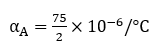
rod B: 0.045 = 20 × × α α B × × 100 ⇒ ⇒ 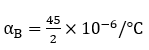
For composite rod: x cm of A and (20 – x) cm of B we have
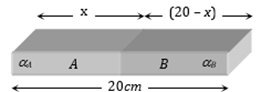
0.060 = x α α A × × 100 + (20 – x) α α B × × 100

On solving we get x = 10 cm.
Prepare Smarter with CGP Edu
Get practice questions, solutions, and test series in one place.
Write a Review
Share your experience with this question and solution.
Commentary
Send your comment, doubt, correction, or feedback to admin.
Similar Questions
Explore conceptually related problems