Published by:
CGP EDU Academic Team
Published on: September 12, 2026
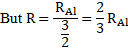
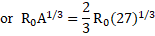
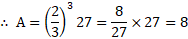
Find the binding energy of a nucleus consisting of equal numbers of protons and neutrons and having the radius one and a half time smaller than that of
nucleus. [atomic mass of
]
Text Solution
Verified by ExpertsThe correct answer is:
A
To find the binding energy of the given nucleus, we will follow these steps:
Step 1: Identify the atomic mass of the elements involved. The nucleus mentioned is similar in composition to Aluminum-27 (Al27), which has an atomic mass of approximately 27 u.
Step 2: Since the nucleus consists of equal numbers of protons and neutrons, if we consider N (number of protons) = N (number of neutrons), the total mass can be examined by using the mass of protons and neutrons given. Assuming the nucleus has 13 protons and 14 neutrons as in Al27:
Mass of protons = 13 × 1.007826 u
Mass of neutrons = 14 × 1.008665 u
Total mass = (13 * 1.007826) + (14 * 1.008665) = 13.1018 u + 14.12131 u = 27.22311 u
Step 3: The mass defect (Δm) can be calculated as:
Mass defect, Δm = (Actual mass - Total mass) = 27.22311 u - 27 u = 0.22311 u
Step 4: Convert the mass defect to binding energy (E) using Einstein's equation E = Δm * c². Given that 1 u corresponds to 931.5 MeV:
E = 0.22311 u * 931.5 MeV/u = 207.5 MeV
Conclusion: The binding energy of the nucleus is approximately 207.5 MeV.
Step 1: Identify the atomic mass of the elements involved. The nucleus mentioned is similar in composition to Aluminum-27 (Al27), which has an atomic mass of approximately 27 u.
Step 2: Since the nucleus consists of equal numbers of protons and neutrons, if we consider N (number of protons) = N (number of neutrons), the total mass can be examined by using the mass of protons and neutrons given. Assuming the nucleus has 13 protons and 14 neutrons as in Al27:
Mass of protons = 13 × 1.007826 u
Mass of neutrons = 14 × 1.008665 u
Total mass = (13 * 1.007826) + (14 * 1.008665) = 13.1018 u + 14.12131 u = 27.22311 u
Step 3: The mass defect (Δm) can be calculated as:
Mass defect, Δm = (Actual mass - Total mass) = 27.22311 u - 27 u = 0.22311 u
Step 4: Convert the mass defect to binding energy (E) using Einstein's equation E = Δm * c². Given that 1 u corresponds to 931.5 MeV:
E = 0.22311 u * 931.5 MeV/u = 207.5 MeV
Conclusion: The binding energy of the nucleus is approximately 207.5 MeV.
Prepare Smarter with CGP Edu
Get practice questions, solutions, and test series in one place.
Write a Review
Share your experience with this question and solution.
Commentary
Send your comment, doubt, correction, or feedback to admin.
Similar Questions
Explore conceptually related problems
The acronym LASER stands for
A radioactive material decays by -particle emission. During the first 2 seconds of a measurement, …
What kinetic energy must an -particle possess to split a deuteron whose binding energy is ?
A radio nuclide with half life second emits -particles of average kinetic energy 11.25 eV . At a…
A nucleus , initially at rest, undergoes alpha-decay according to the equation.
100 millicuries of radon which emits - particles are contained in a glass capillary tube 5 cm long…