Published by:
CGP EDU Academic Team
Published on: September 12, 2026
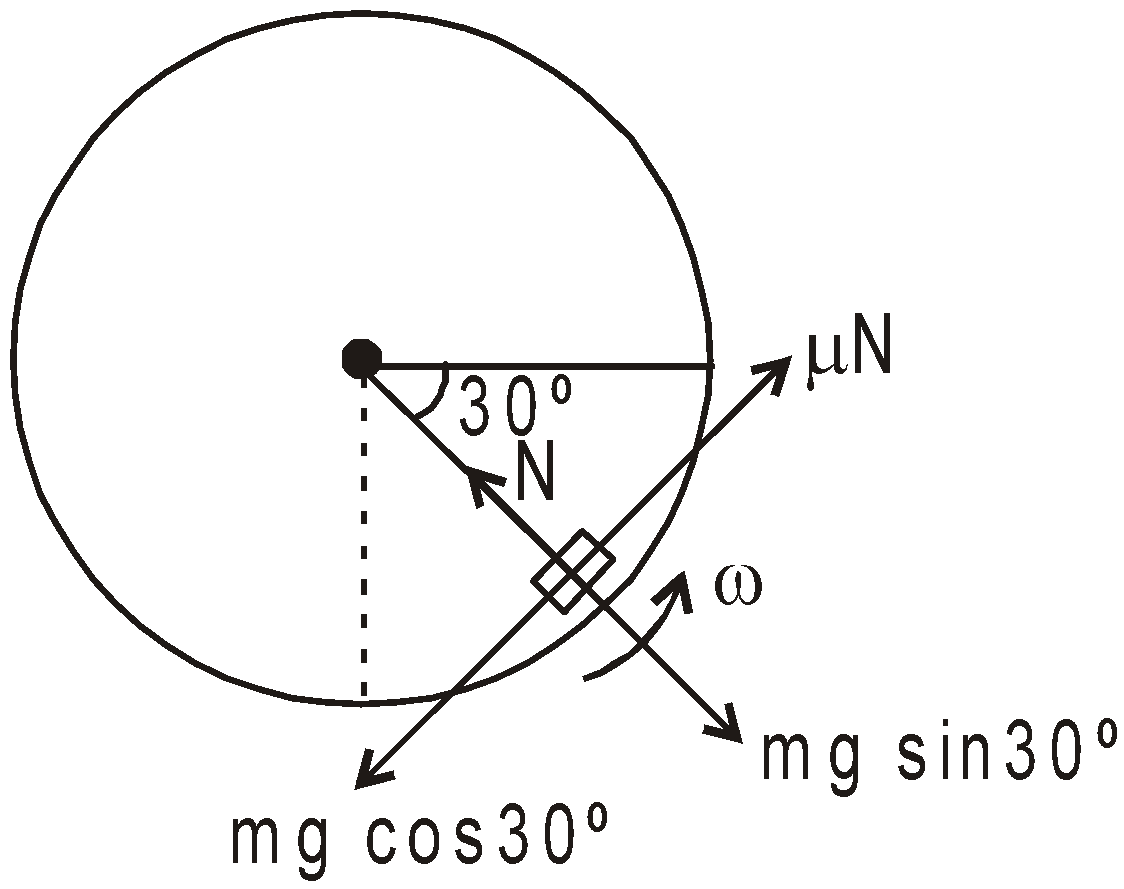
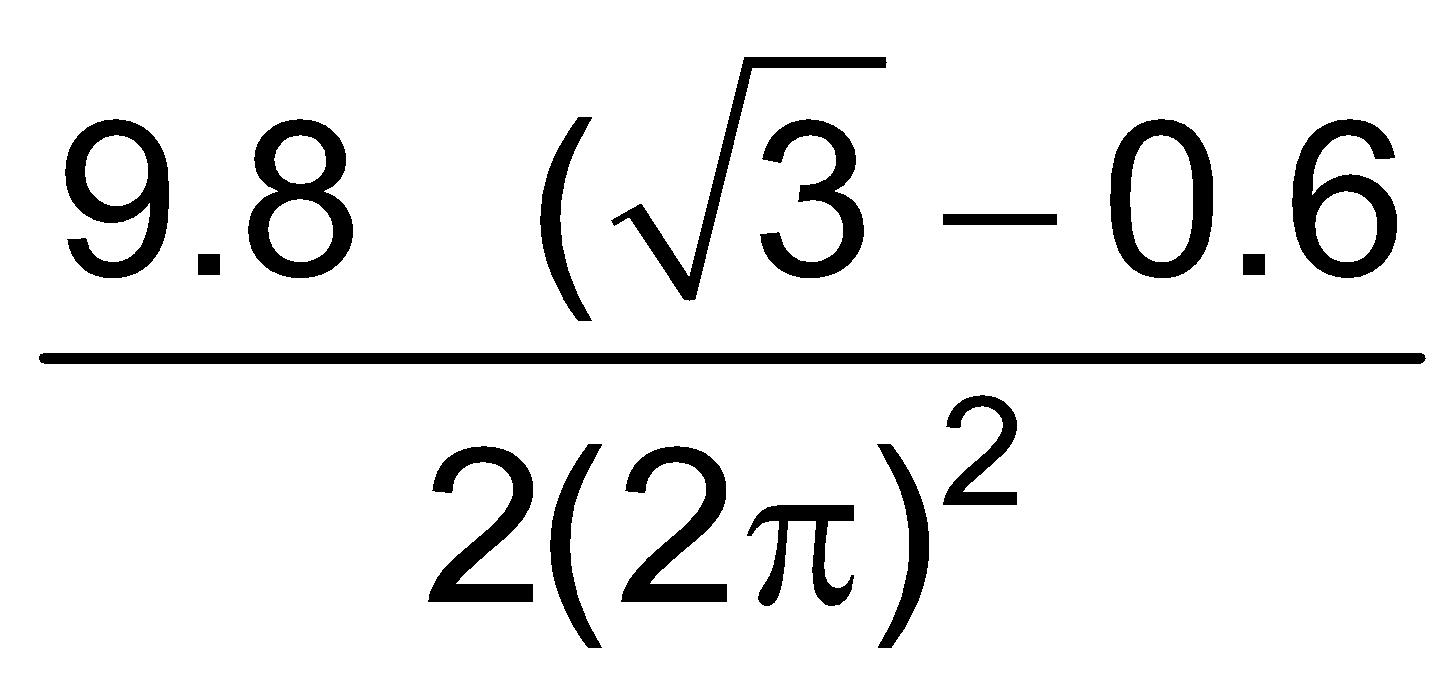
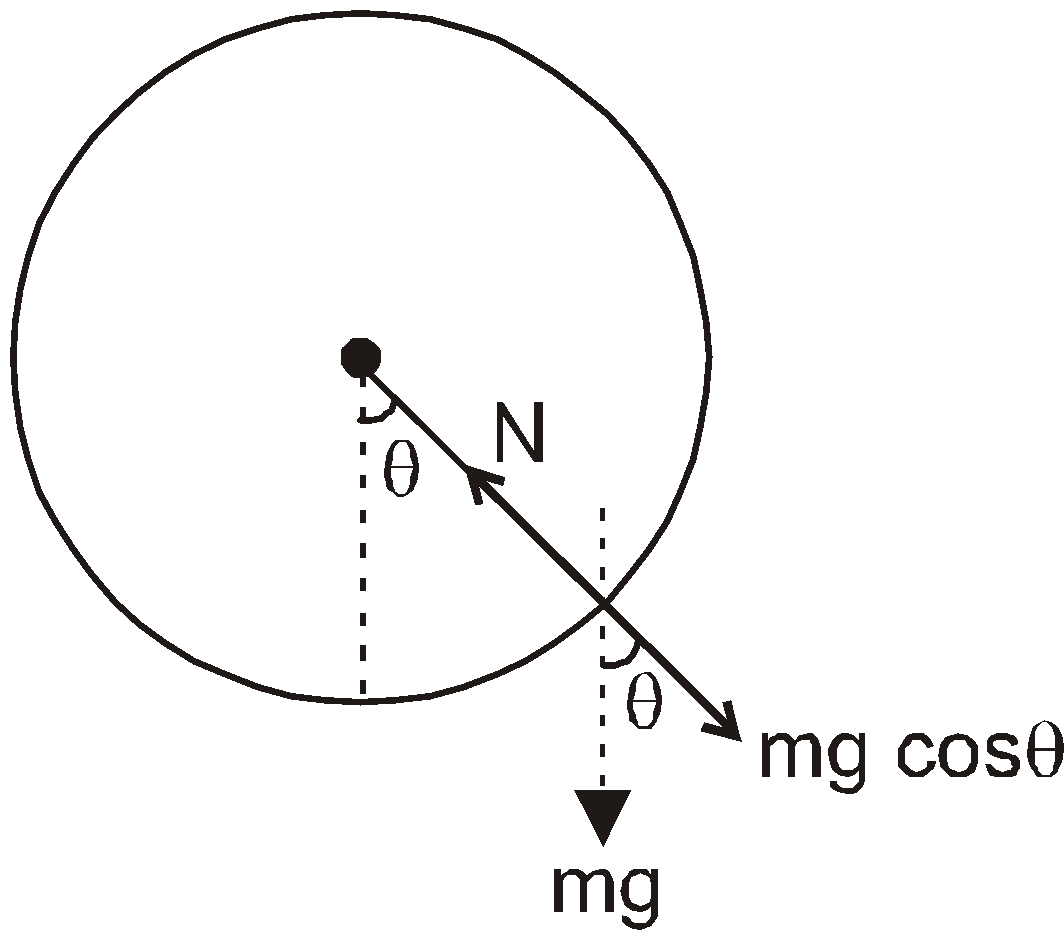
A block is placed inside a horizontal hollow cylinder. The cylinder is rotating with constant angular speed one revolution per second about its axis. The angular position of the block at which it begins to slide is 30° below the horizontal level passing through the center. Find the radius of the cylinder if the coefficient of friction is 0.6. What should be the minimum constant angular speed of the cylinder so that the block reaches the highest point of the cylinder?
Text Solution
Verified by ExpertsThe correct answer is:
A
Step 1: Understand the forces acting on the block.
When the hollow cylinder is rotating, the block experiences both gravitational force and centrifugal force due to the rotation. The gravitational force acting on the block is given by:
$$ F_g = mg $$
where m is the mass of the block and g is the acceleration due to gravity.
The centrifugal force acting outward is given by:
$$ F_c = m \omega^2 r $$
where \omega is the angular speed in radians per second and r is the radius of the cylinder.
Step 2: Find the components of the forces.
At the angle of 30° below the horizontal, we can resolve the forces:
1. The weight component along the cylinder: $$ F_{g, ||} = mg \sin(30°) = \frac{mg}{2} $$
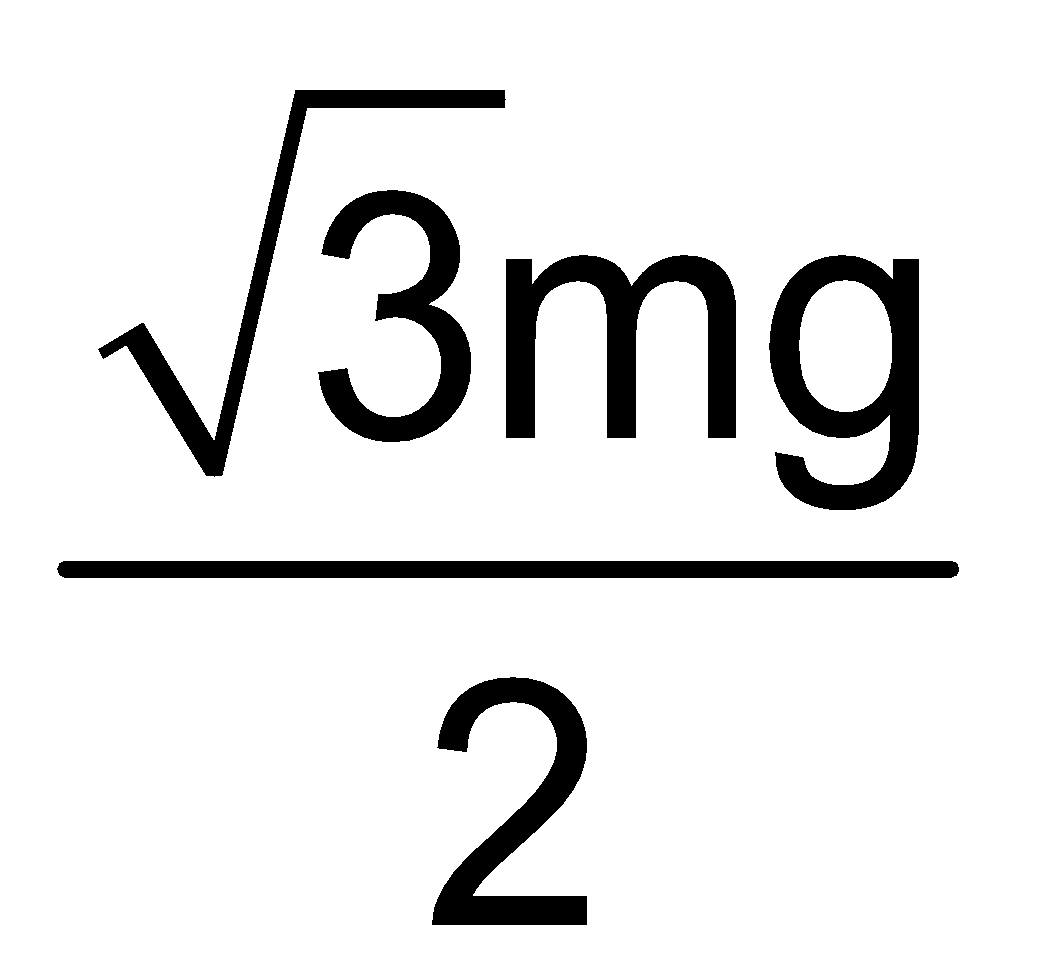
2. The weight component perpendicular to the cylinder: $$ F_{g, \perp} = mg \cos(30°) = mg \frac{\sqrt{3}}{2} $$
Step 3: Frictional force and maximum friction.
Friction acts upwards along the slope and is maximized by:
$$ F_f = \mu N $$ where \mu is the coefficient of friction and N is the normal force. The normal force is:
$$ N = F_{g, \perp} - F_c \Rightarrow N = mg \frac{\sqrt{3}}{2} - m \omega^2 r $$
Maximum friction can then be written as:
$$ F_f = \mu (mg \frac{\sqrt{3}}{2} - m \omega^2 r) $$
Step 4: Set up the balance equation.
For the block to remain at the angle and not slide back, the frictional force must balance the component of the gravitational force:
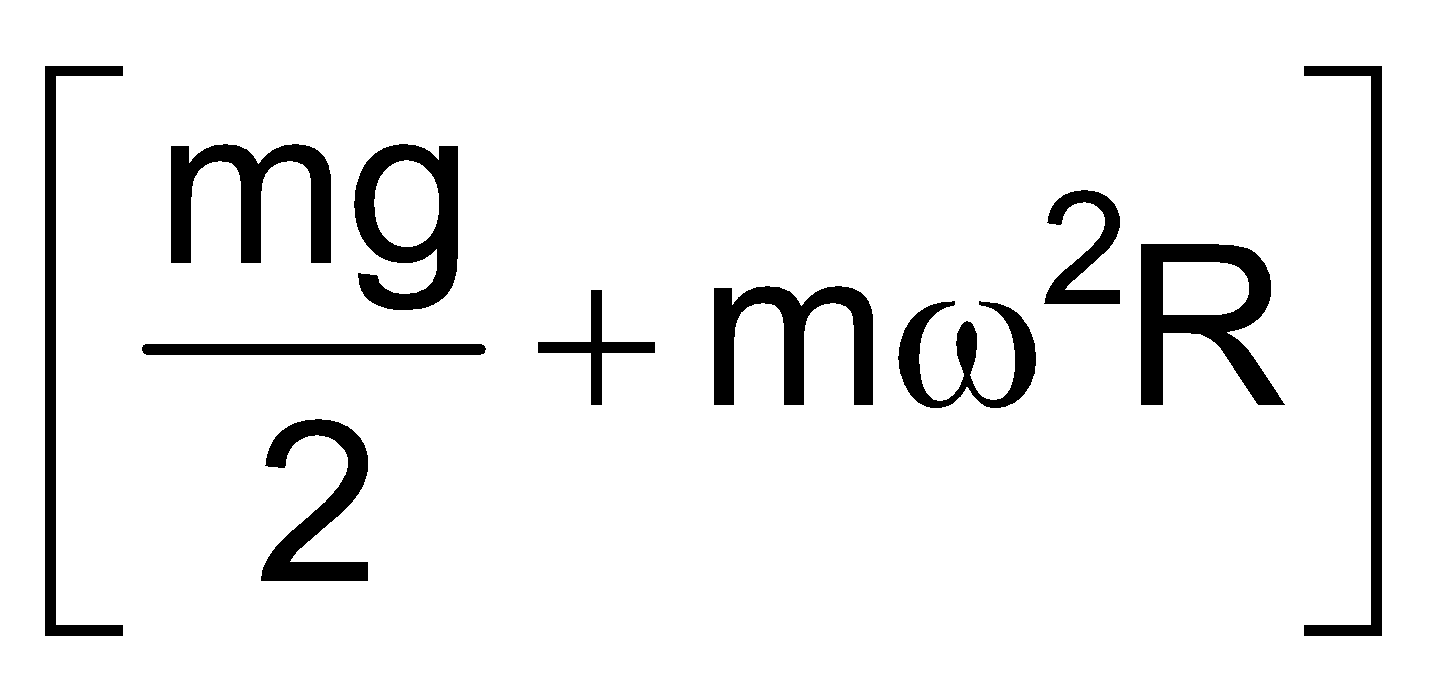
$$ F_f = F_{g, ||} \Rightarrow \mu \left( mg \frac{\sqrt{3}}{2} - m \omega^2 r \right) = \frac{mg}{2} $$
Dividing through by m and simplifying:
$$ \mu g \frac{\sqrt{3}}{2} - \mu \omega^2 r = \frac{g}{2} $$
Substituting for \mu = 0.6:
$$ 0.6 g \frac{\sqrt{3}}{2} - 0.6 \omega^2 r = \frac{g}{2} $$
Step 5: Solve for angular speed and radius.
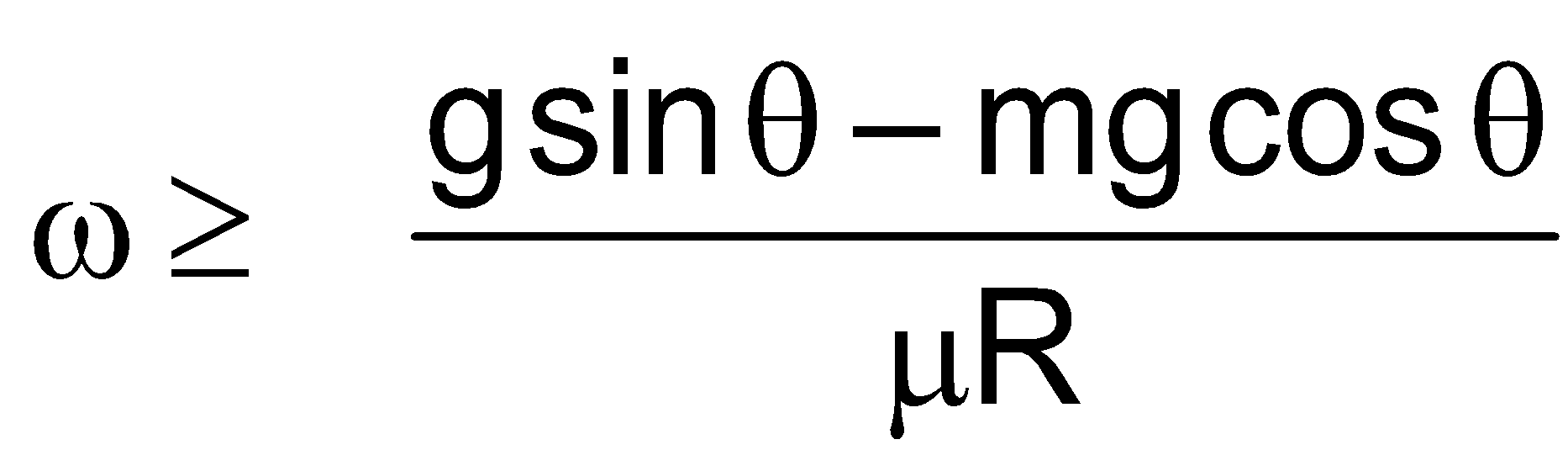
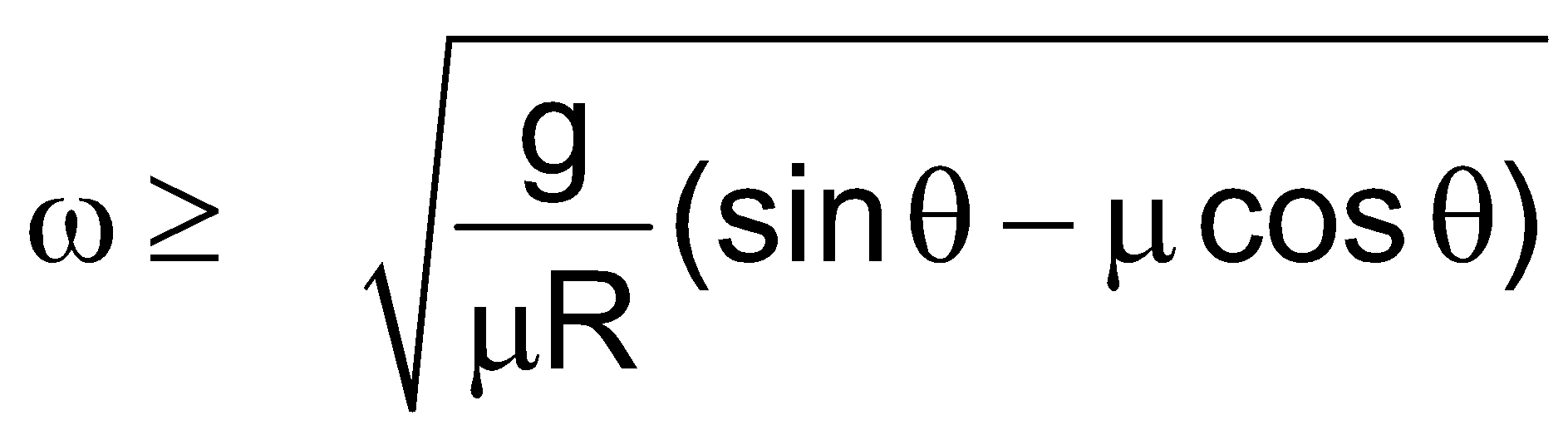
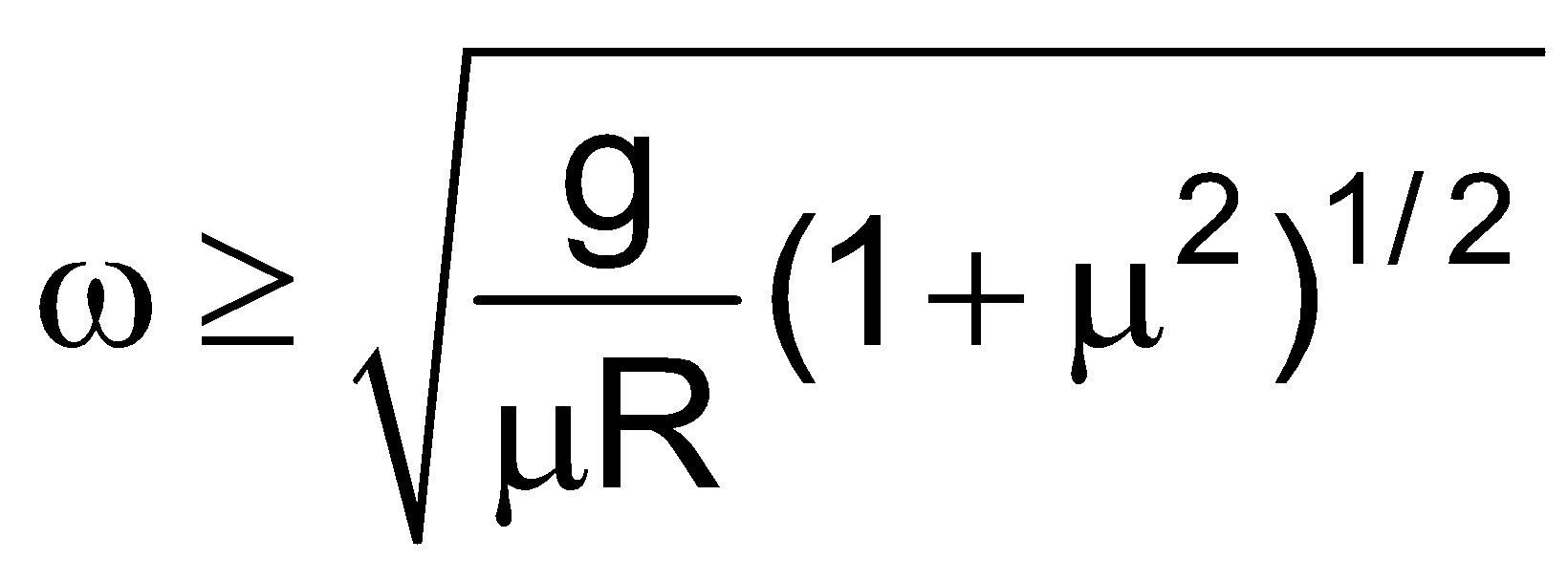
Rearranging for angular speed:
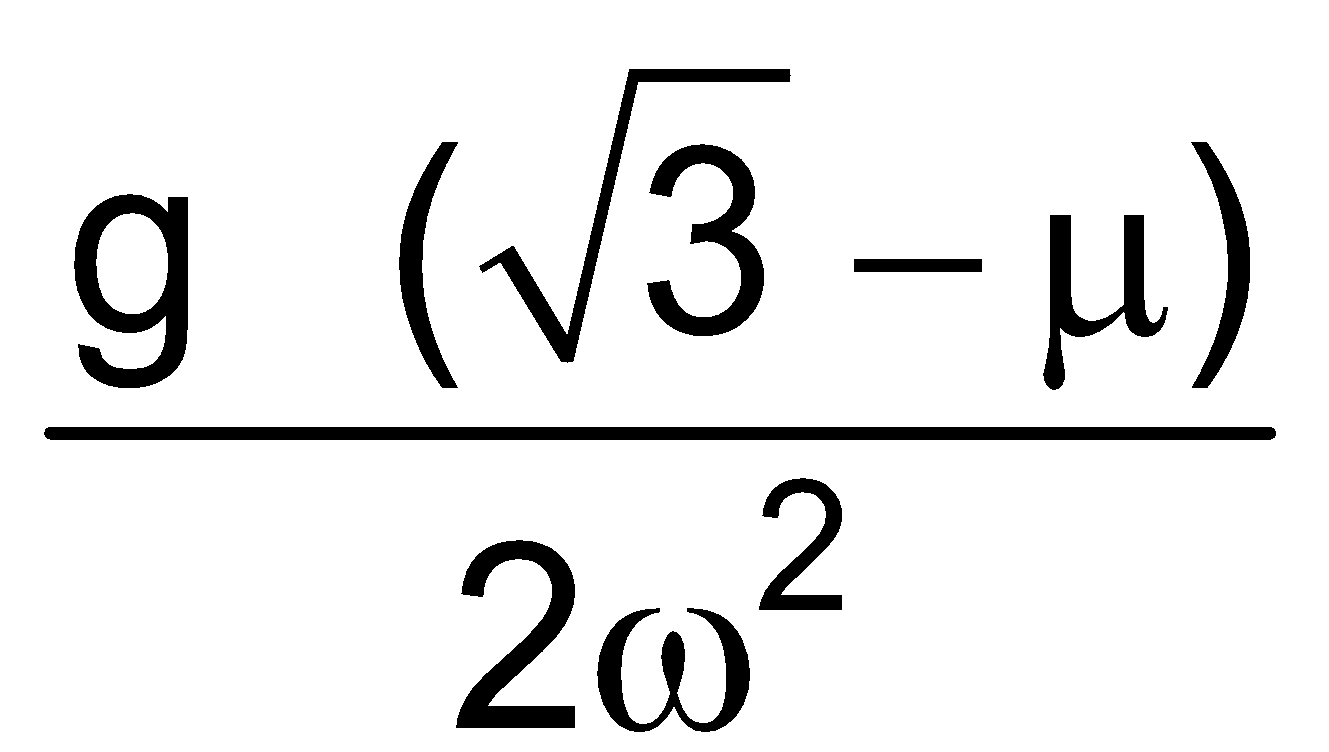
$$ 0.6 g \frac{\sqrt{3}}{2} - \frac{g}{2} = 0.6 \omega^2 r $$
Therefore:
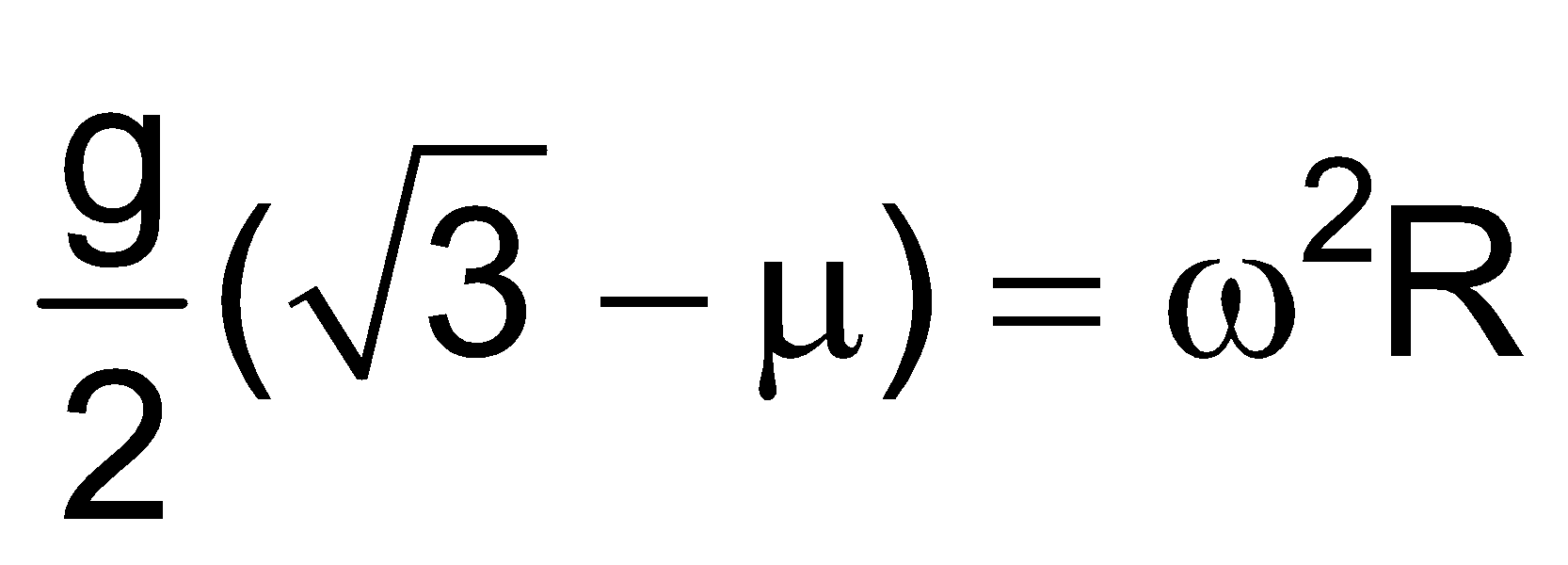
$$ (0.6 \cdot \sqrt{3} - 0.5) g = 0.6 \omega^2 r $$
Now we can find the radius when we need the minimum angular speed for the block to just reach the top position, which occurs when the centripetal force is equal to the gravitational force pulling the block downwards:
$$ m \omega^2 r = mg $$
therefore:
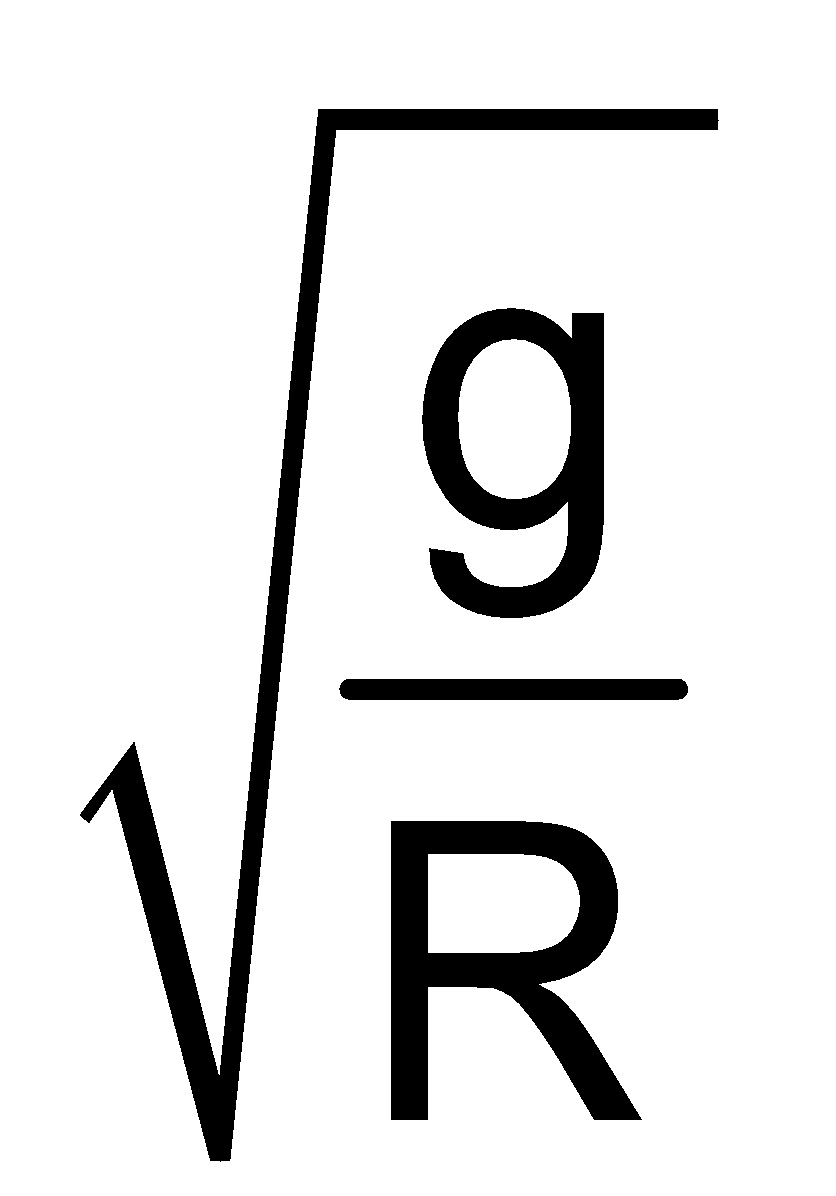
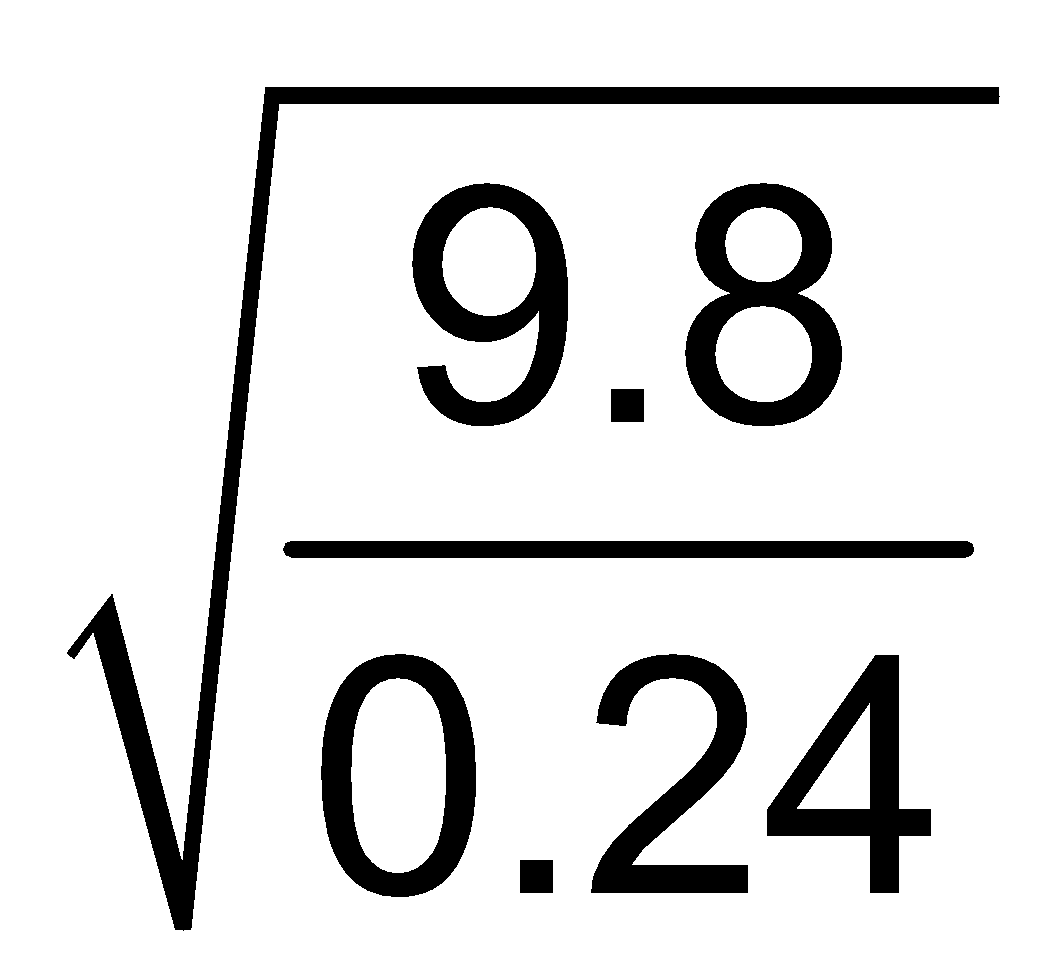
$$ \omega^2 = \frac{g}{r} $$
The minimum angular speed required to just reach the highest point is when friction creates enough force to prevent it from sliding back down. Setting them equal will allow us to find what we need. After substituting and solving for r you'll find the radius needed to maintain the desired effects. Letting g ≈ 9.81 m/s², you can find values stepwise based on that.
Hence, the radius is determined based on stability balance in terms of g and angular velocity with described coefficients involved.
When the hollow cylinder is rotating, the block experiences both gravitational force and centrifugal force due to the rotation. The gravitational force acting on the block is given by:
$$ F_g = mg $$
where m is the mass of the block and g is the acceleration due to gravity.
The centrifugal force acting outward is given by:
$$ F_c = m \omega^2 r $$
where \omega is the angular speed in radians per second and r is the radius of the cylinder.
Step 2: Find the components of the forces.
At the angle of 30° below the horizontal, we can resolve the forces:
1. The weight component along the cylinder: $$ F_{g, ||} = mg \sin(30°) = \frac{mg}{2} $$
2. The weight component perpendicular to the cylinder: $$ F_{g, \perp} = mg \cos(30°) = mg \frac{\sqrt{3}}{2} $$
Step 3: Frictional force and maximum friction.
Friction acts upwards along the slope and is maximized by:
$$ F_f = \mu N $$ where \mu is the coefficient of friction and N is the normal force. The normal force is:
$$ N = F_{g, \perp} - F_c \Rightarrow N = mg \frac{\sqrt{3}}{2} - m \omega^2 r $$
Maximum friction can then be written as:
$$ F_f = \mu (mg \frac{\sqrt{3}}{2} - m \omega^2 r) $$
Step 4: Set up the balance equation.
For the block to remain at the angle and not slide back, the frictional force must balance the component of the gravitational force:
$$ F_f = F_{g, ||} \Rightarrow \mu \left( mg \frac{\sqrt{3}}{2} - m \omega^2 r \right) = \frac{mg}{2} $$
Dividing through by m and simplifying:
$$ \mu g \frac{\sqrt{3}}{2} - \mu \omega^2 r = \frac{g}{2} $$
Substituting for \mu = 0.6:
$$ 0.6 g \frac{\sqrt{3}}{2} - 0.6 \omega^2 r = \frac{g}{2} $$
Step 5: Solve for angular speed and radius.
Rearranging for angular speed:
$$ 0.6 g \frac{\sqrt{3}}{2} - \frac{g}{2} = 0.6 \omega^2 r $$
Therefore:
$$ (0.6 \cdot \sqrt{3} - 0.5) g = 0.6 \omega^2 r $$
Now we can find the radius when we need the minimum angular speed for the block to just reach the top position, which occurs when the centripetal force is equal to the gravitational force pulling the block downwards:
$$ m \omega^2 r = mg $$
therefore:
$$ \omega^2 = \frac{g}{r} $$
The minimum angular speed required to just reach the highest point is when friction creates enough force to prevent it from sliding back down. Setting them equal will allow us to find what we need. After substituting and solving for r you'll find the radius needed to maintain the desired effects. Letting g ≈ 9.81 m/s², you can find values stepwise based on that.
Hence, the radius is determined based on stability balance in terms of g and angular velocity with described coefficients involved.
Prepare Smarter with CGP Edu
Get practice questions, solutions, and test series in one place.
Write a Review
Share your experience with this question and solution.
Commentary
Send your comment, doubt, correction, or feedback to admin.
Similar Questions
Explore conceptually related problems
A man swings a stone tied to a string of length in a vertical plane. The string remains stretched …
The driver of a car traveling at velocity v suddenly sees a broad wall in front of him at distance …
To anticipate the dip and hump in the road the driver of a car applies her brakes to produce a unif…
A certain rocket maintains a horizontal attitude of its axis during the powered phase of its fligh…
The turning of a car must be produced by an external force acting at an angle to the line of motion…
A body slips down a chute which is in the form of a loop as in fig. It starts from the lowest admis…