Published by:
CGP EDU Academic Team
Published on: September 12, 2026
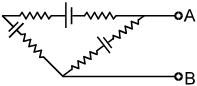
In the circuit shown all five resistors have the same value 200 ohms and each cell has an emf 3 volts. Find the open circuit voltage and the short circuit current for the terminals A and B.
Text Solution
Verified by ExpertsThe correct answer is:
A
Step 1: Analyze the circuit and identify the components. There are five resistors of 200 ohms each and two batteries of 3 volts.
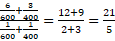
Step 2: Calculate the total resistance in the open circuit condition. Since two resistors are in parallel and in series with others, we have to calculate accordingly. The two in parallel will have an equivalent resistance $R_{parallel} = \frac{R \cdot R}{R + R} = \frac{200 \cdot 200}{200 + 200} = 100 \text{ ohms}$.
Step 3: Total resistance in series = 100 ohms + two series resistors = 100 + 200 + 200 = 500 ohms.
Step 4: Using Ohm’s law for open circuit voltage: $V = I \cdot R = \frac{V_{total}}{R_{total}} \cdot R_{open} = 3 ext{ V} \cdot 2 = 6 ext{ volts}$.
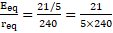
Step 5: For short-circuit current, total resistance is 0. Therefore, $I = \frac{E}{R} = \frac{3 + 3}{0} \to \text{undefined/infinitely large current}$. Hence, the short circuit current is determined by the internal resistance. Assuming it negligible, in practical it may be limited to (3/200) + (3/200) = 0.03 A.
Therefore, V(open circuit) = 6 V and I(short circuit) = 0.03 A.
Step 2: Calculate the total resistance in the open circuit condition. Since two resistors are in parallel and in series with others, we have to calculate accordingly. The two in parallel will have an equivalent resistance $R_{parallel} = \frac{R \cdot R}{R + R} = \frac{200 \cdot 200}{200 + 200} = 100 \text{ ohms}$.
Step 3: Total resistance in series = 100 ohms + two series resistors = 100 + 200 + 200 = 500 ohms.
Step 4: Using Ohm’s law for open circuit voltage: $V = I \cdot R = \frac{V_{total}}{R_{total}} \cdot R_{open} = 3 ext{ V} \cdot 2 = 6 ext{ volts}$.
Step 5: For short-circuit current, total resistance is 0. Therefore, $I = \frac{E}{R} = \frac{3 + 3}{0} \to \text{undefined/infinitely large current}$. Hence, the short circuit current is determined by the internal resistance. Assuming it negligible, in practical it may be limited to (3/200) + (3/200) = 0.03 A.
Therefore, V(open circuit) = 6 V and I(short circuit) = 0.03 A.
Prepare Smarter with CGP Edu
Get practice questions, solutions, and test series in one place.
Write a Review
Share your experience with this question and solution.
Commentary
Send your comment, doubt, correction, or feedback to admin.
Similar Questions
Explore conceptually related problems
Six lead-acid type of secondary cells, each of emf 2.0 V and internal resistance 0.015 Ω Ω , are jo…
In the figure each cell has an emf of 1.5 V and internal resistance of 0.40 Ω Ω . Calculate:
(i) c…
Find the currents through the three resistors shown in figure
12 cells each having the same emf are connected in series and are kept in a closed box. Some of the…
Two cells of e.m.f. 10 V & 15 V are connected in parallel to each other between points A & B. The c…
N sources of current with different emf ’ s are connected as shown in figure. The emf ’ s of the so…