Published by:
CGP EDU Academic Team
Published on: September 12, 2026
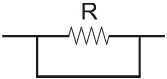
Match the statements in Column I with the current element in Column II
Column - I | Column - II | ||
(A) | Current always flows from higher potential to lower potential | (P) | A Resistor |
(B) | Energy dissipated in an element is always zero | (Q) | Ideal cell/Battery |
(C) | Current flow through the element is always zero | (R) | Non-Ideal cell/Battery |
(D) | Potential difference may/will be zero | (S) | Short-circuited resistor |
Text Solution
Verified by ExpertsThe correct answer is:
A
Step 1: Analyze the statements in Column I and match them with the appropriate elements in Column II based on known electrical principles.
A: Current always flows from higher potential to lower potential
This statement accurately describes the general behavior of electric current. Therefore, it correctly matches with P: A Resistor, as current passes through resistors in a circuit from a high voltage to a low voltage.
B: Energy dissipated in an element is always zero
This statement can be true only for an ideal cell or battery, which does not dissipate energy in an ideal scenario, thus matching it with Q: Ideal cell/Battery.
C: Current flow through the element is always zero
A non-ideal cell or battery can have situations (like open circuit) where no current flows; this is matched with R: Non-Ideal cell/Battery.
D: Potential difference may/will be zero
This situation is typical of a short circuit, where the potential difference across a resistor is negligible, hence it correctly pairs with S: Short-circuited resistor.
Considering the above matches:
A-P, B-Q, C-R, D-S.
A: Current always flows from higher potential to lower potential
This statement accurately describes the general behavior of electric current. Therefore, it correctly matches with P: A Resistor, as current passes through resistors in a circuit from a high voltage to a low voltage.
B: Energy dissipated in an element is always zero
This statement can be true only for an ideal cell or battery, which does not dissipate energy in an ideal scenario, thus matching it with Q: Ideal cell/Battery.
C: Current flow through the element is always zero
A non-ideal cell or battery can have situations (like open circuit) where no current flows; this is matched with R: Non-Ideal cell/Battery.
D: Potential difference may/will be zero
This situation is typical of a short circuit, where the potential difference across a resistor is negligible, hence it correctly pairs with S: Short-circuited resistor.
Considering the above matches:
- A - P
- B - Q
- C - R
- D - S
A-P, B-Q, C-R, D-S.
Prepare Smarter with CGP Edu
Get practice questions, solutions, and test series in one place.
Write a Review
Share your experience with this question and solution.
Commentary
Send your comment, doubt, correction, or feedback to admin.
Similar Questions
Explore conceptually related problems
The balancing length for a cell is 560 cm in a potentiometer experiment. When an external resistanc…
The series combination of two batteries, both of the same emf 10V, but different internal resistanc…
Four resistances of 15 Ω Ω , 12 Ω Ω , 4 Ω Ω and 10 Ω Ω respectively in cyclic order to form Wheatst…
Match the following:
The following table gives the lengths of four copper rods at the same temperat…
Match the statements in Column I with the current element in Column II
Column - IColumn - II(A)Curr…
A continuous beam of electrons emitted by a heating filament are accelerated in free space by an el…