A ball is dropped vertically from a height  above the ground. It hits the ground and bounces up vertically to a height
  . Neglecting subsequent motion and air resistance, its velocity
  varies with the height
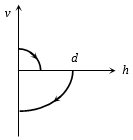
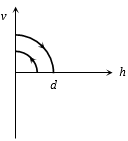
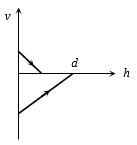
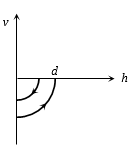
  above the ground is
Text Solution
Verified by ExpertsA
For the given condition initial height  and velocity of the ball is zero. When the ball moves downward its velocity increases and it will be maximum when the ball hits the ground & just after the collision it becomes half and in opposite direction. As the ball moves upward its velocity again decreases and becomes zero at height
  . This explanation match with graph ( A ).
Prepare Smarter with CGP Edu
Get practice questions, solutions, and test series in one place.
Write a Review
Share your experience with this question and solution.
Commentary
Send your comment, doubt, correction, or feedback to admin.
Similar Questions
Explore conceptually related problems