Published by:
CGP EDU Academic Team
Published on: September 12, 2026
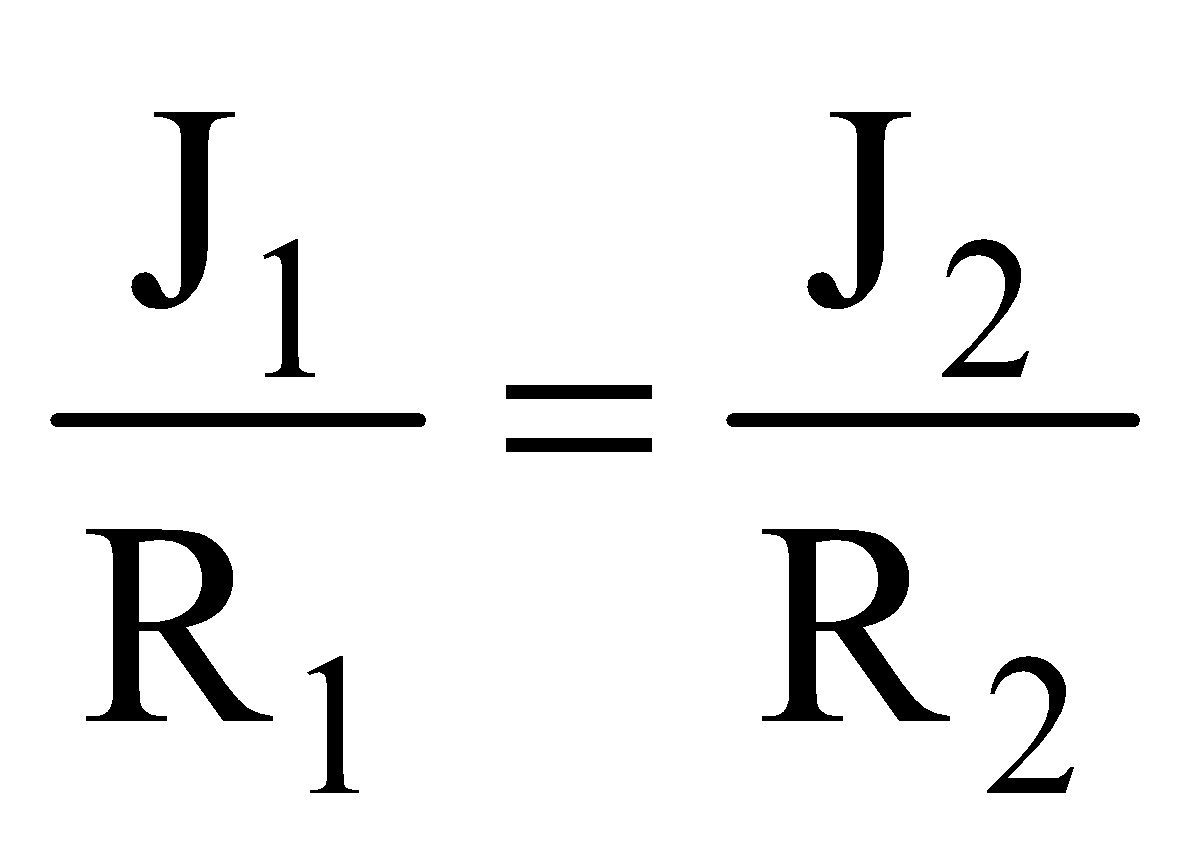
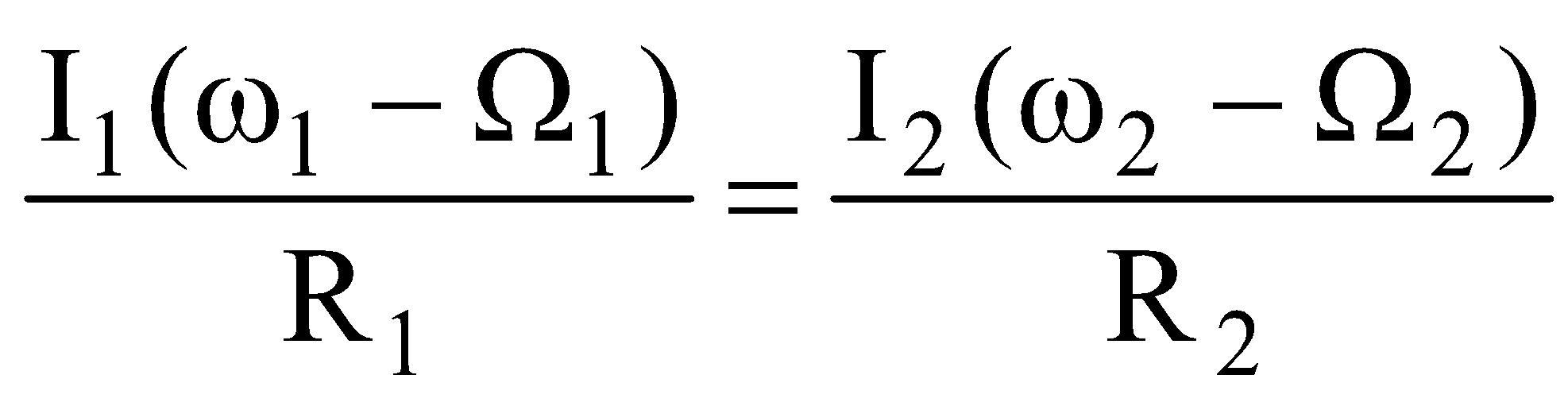
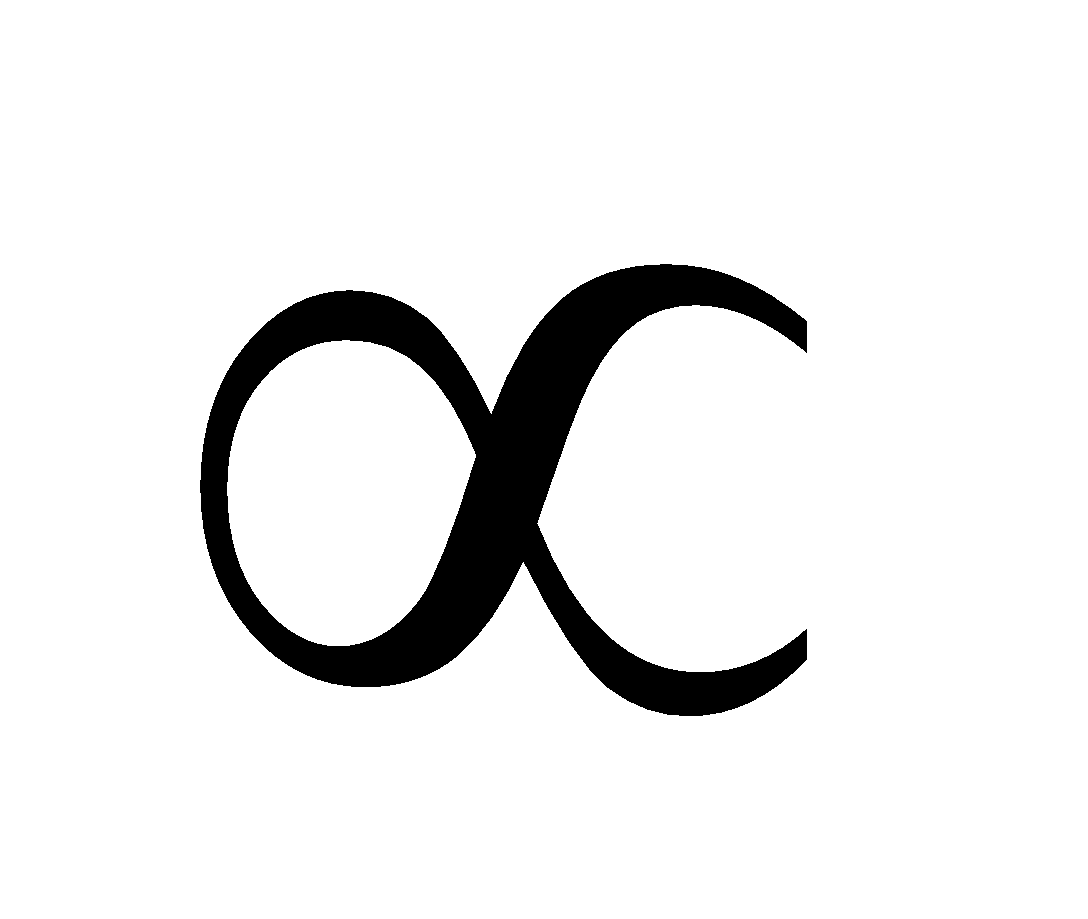
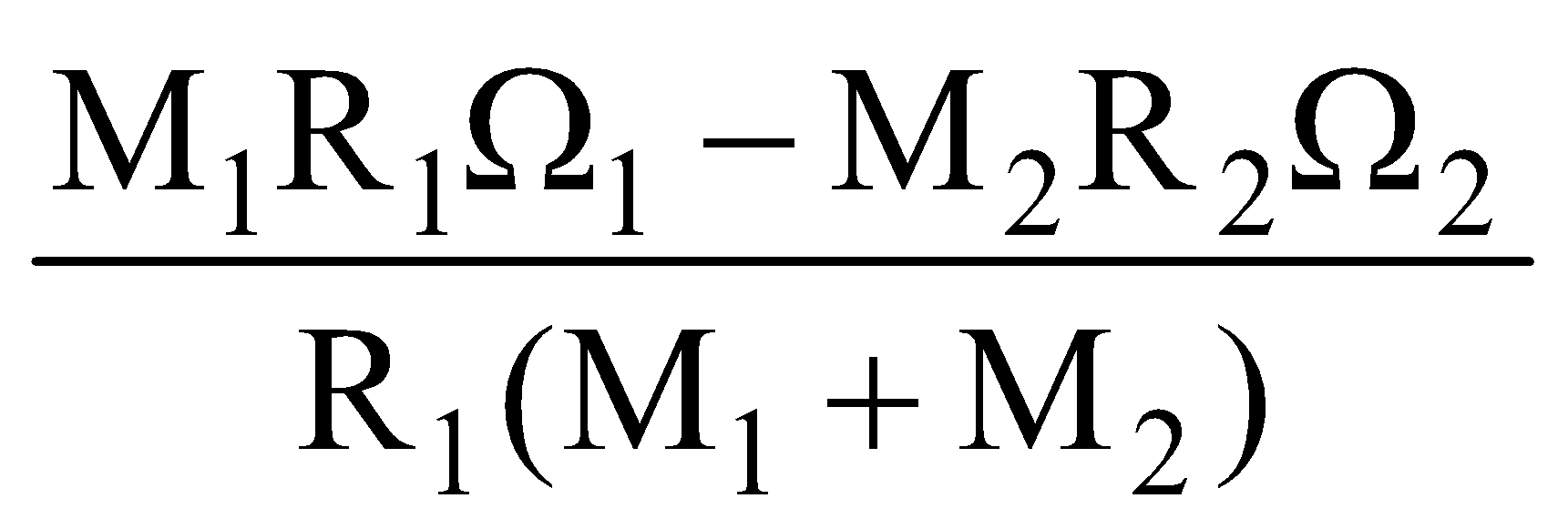
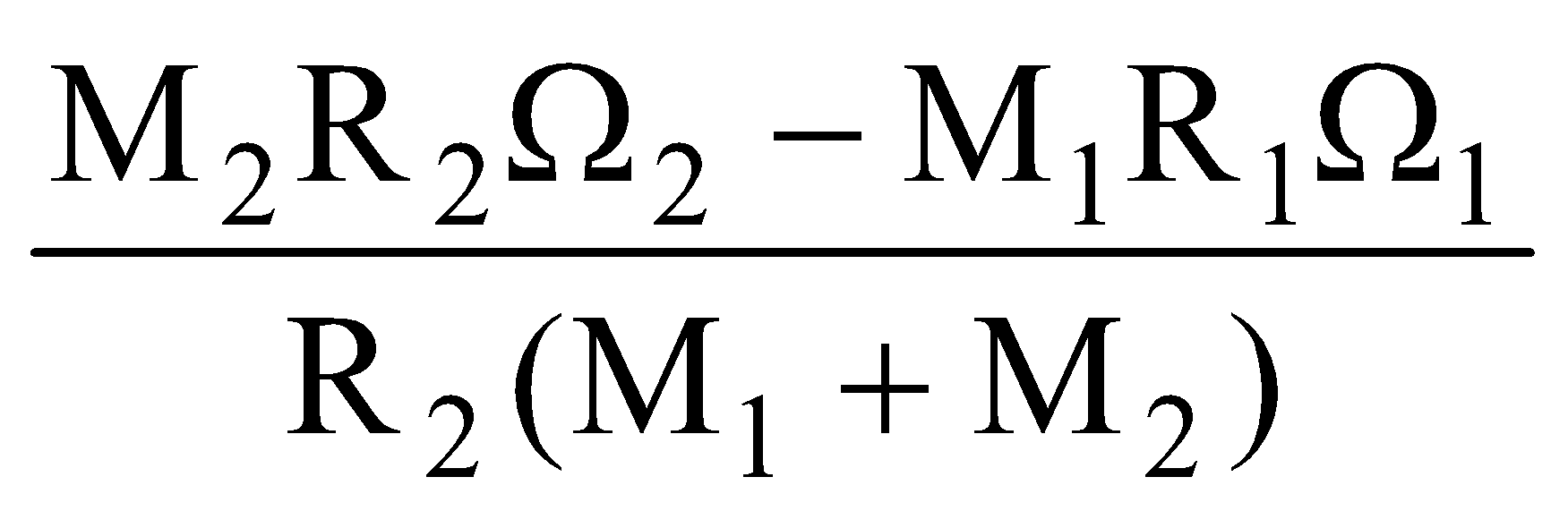
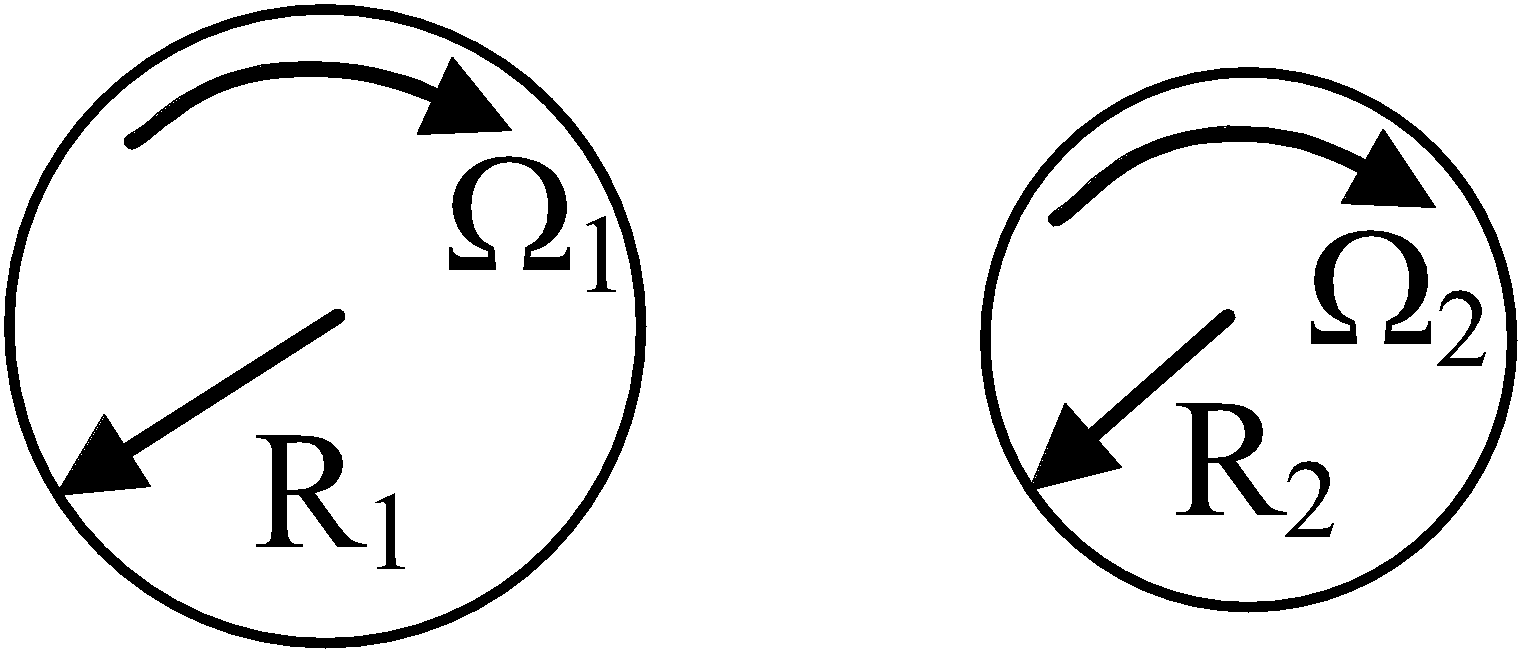
Two uniform cylinders are spinning independently about their axes, which are parallel. One has radius R 1 mass M 1 , the other R 2 and M 2 . Initially they rotate in the same sense with angular speeds Ω 1 and Ω 2 respectively as shown in fig . They are then displaced until they touch along a common tangent. After a steady state is reached, what is the final angular velocity of each cylinder ?
Text Solution
Verified by ExpertsThe correct answer is:
A
Step 1: Identify the angular momentum of each cylinder. The angular momentum \(L\) of a cylinder is given by \(L = I \Omega\), where \(I\) is the moment of inertia and \(\Omega\) is the angular velocity. For a cylinder, \(I = \frac{1}{2}MR^2\).
Step 2: Calculate the initial angular momentum for both cylinders:
- For cylinder 1: \(L_1 = \frac{1}{2}M_1 R_1^2 \Omega_1\)
- For cylinder 2: \(L_2 = \frac{1}{2}M_2 R_2^2 \Omega_2\)
Step 3: When the cylinders touch, their final angular momentum will be equal to their initial angular momentum because angular momentum is conserved. Therefore, \(L_{final} = L_1 + L_2\).
Step 4: Let the final angular velocities of the cylinders after they touch be \(\Omega_f\). The final angular momentum for both cylinders combined is:
\(L_{final} = \frac{1}{2}M_1 R_1^2 \Omega_f + \frac{1}{2}M_2 R_2^2 \Omega_f\)
Step 5: Equate the initial and final angular momentum:
\(\frac{1}{2}M_1 R_1^2 \Omega_1 + \frac{1}{2}M_2 R_2^2 \Omega_2 = \left(\frac{1}{2}M_1 R_1^2 + \frac{1}{2}M_2 R_2^2\right) \Omega_f\
Step 6: Solving for \(\Omega_f\): \(\Omega_f = \frac{M_1 R_1^2 \Omega_1 + M_2 R_2^2 \Omega_2}{M_1 R_1^2 + M_2 R_2^2}\)
Therefore, A.
Step 2: Calculate the initial angular momentum for both cylinders:
- For cylinder 1: \(L_1 = \frac{1}{2}M_1 R_1^2 \Omega_1\)
- For cylinder 2: \(L_2 = \frac{1}{2}M_2 R_2^2 \Omega_2\)
Step 3: When the cylinders touch, their final angular momentum will be equal to their initial angular momentum because angular momentum is conserved. Therefore, \(L_{final} = L_1 + L_2\).
Step 4: Let the final angular velocities of the cylinders after they touch be \(\Omega_f\). The final angular momentum for both cylinders combined is:
\(L_{final} = \frac{1}{2}M_1 R_1^2 \Omega_f + \frac{1}{2}M_2 R_2^2 \Omega_f\)
Step 5: Equate the initial and final angular momentum:
\(\frac{1}{2}M_1 R_1^2 \Omega_1 + \frac{1}{2}M_2 R_2^2 \Omega_2 = \left(\frac{1}{2}M_1 R_1^2 + \frac{1}{2}M_2 R_2^2\right) \Omega_f\
Step 6: Solving for \(\Omega_f\): \(\Omega_f = \frac{M_1 R_1^2 \Omega_1 + M_2 R_2^2 \Omega_2}{M_1 R_1^2 + M_2 R_2^2}\)
Therefore, A.
Prepare Smarter with CGP Edu
Get practice questions, solutions, and test series in one place.
Write a Review
Share your experience with this question and solution.
Commentary
Send your comment, doubt, correction, or feedback to admin.
Similar Questions
Explore conceptually related problems
A ring rolls without slipping on ground. Its centre c moves with a constant speed u. P is any point…
A rectangular plate of mass 20 kg is suspended from points A and B as shown. If the pin B is sudden…
A solid sphere rolls on a rough horizontal surface with a linear speed 7 m/s collides elastically w…
A uniform ball of radius R = 10 cm rolls without slipping between two rails such that the horizonta…
A ball of radius R = 20 cm has a mass m = 0.75 kg and moment of inertia about its diameter I = 0.01…
The pinion A of the hoist motor drives gear B, which is attached to the hoisting drum. The load L i…