Longitudinal standing waves can be produced in a solid rod by holding it at some point between the fingers of one hand and stroking it with the other hand. The rod oscillates with antinodes at both ends.
Text Solution
Verified by ExpertsCHECK THE SOLUTION.
The steel rod has standing waves much like a pipe open at both ends, as shown in Figure.
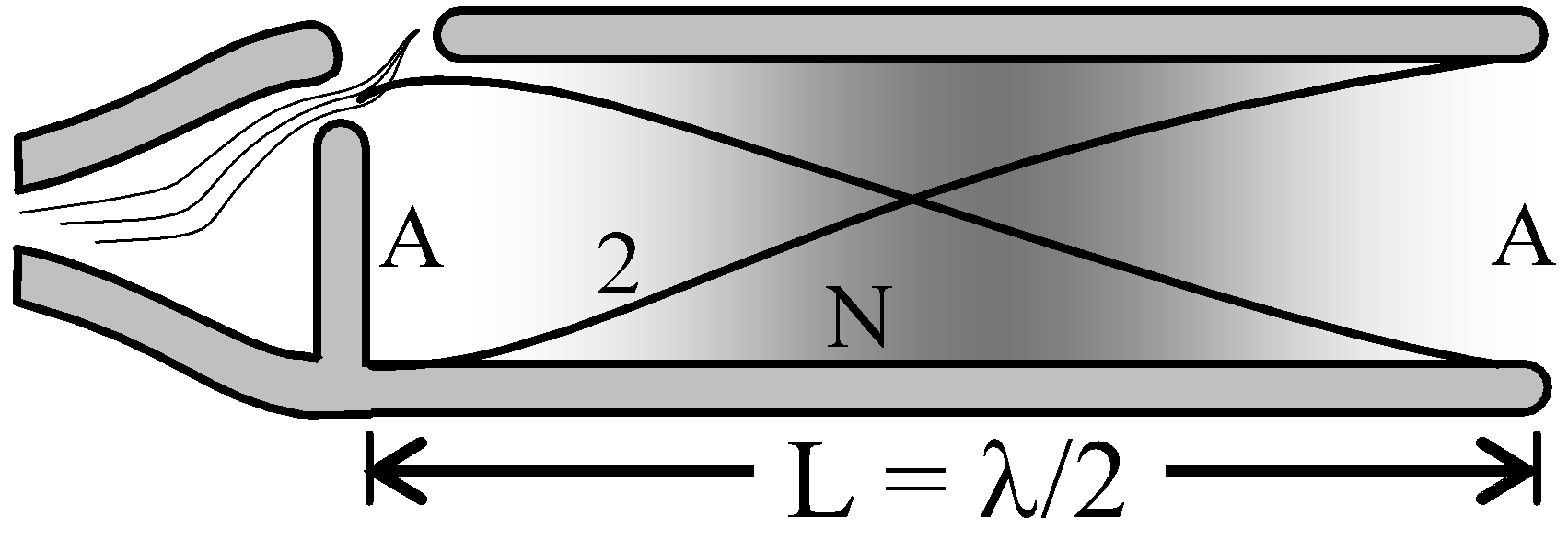

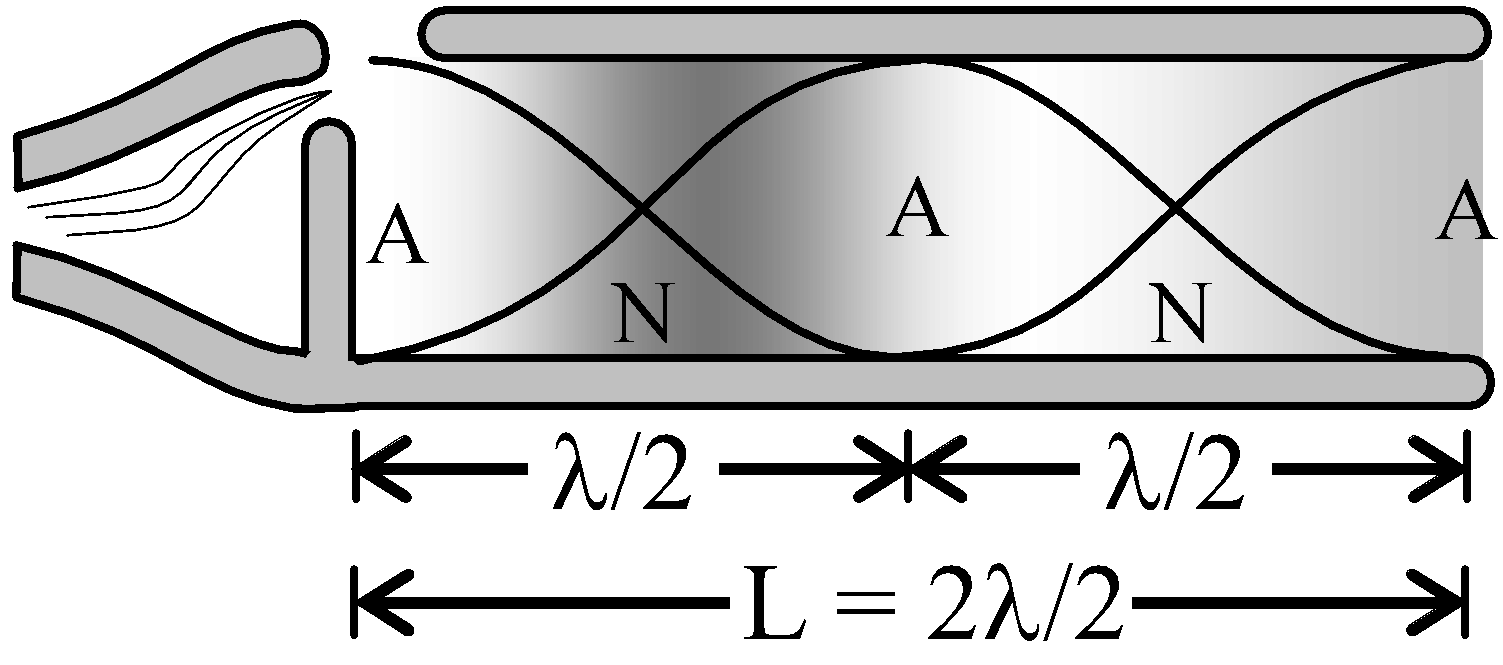
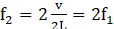
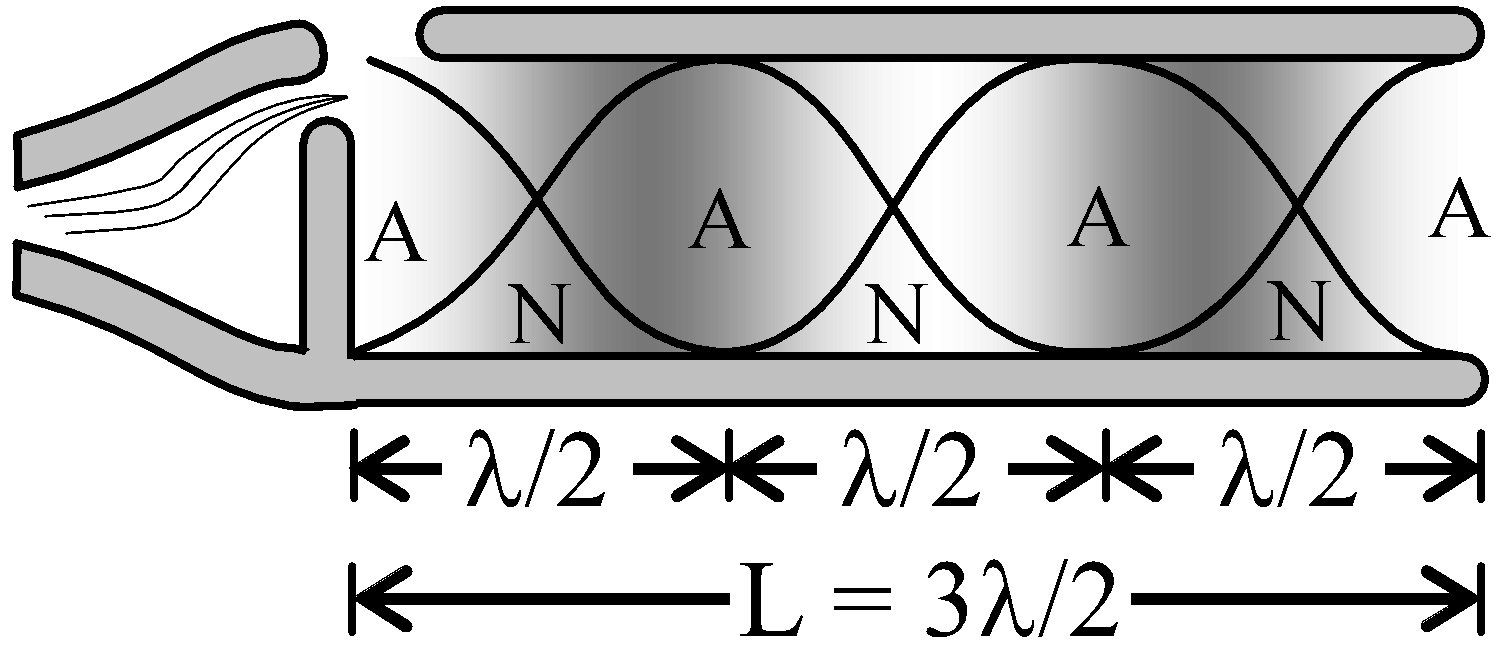
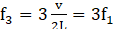
An integral number of half wavelengths must fit on the rod, that is, f n =  .
.
The ends of the rod are antinodes because the ends of the rod are free to oscillate.
The fundamental can be produced when the rod is held at the middle because a node is located there.
f 1 =  = 1980 Hz.
The next harmonic is n = 2, or f 2 = 3961 Hz. We would need to hold the rod at an n = 2 node, which is located at L/4 from either end, or at 0.375 m from either end.
Prepare Smarter with CGP Edu
Get practice questions, solutions, and test series in one place.
Write a Review
Share your experience with this question and solution.
Commentary
Send your comment, doubt, correction, or feedback to admin.
Similar Questions
Explore conceptually related problems