
The chapter Biomolecules introduces students to the chemical components that form the structural and functional basis of living organisms. It explains the structure, properties, classification, and biological functions of important biomolecules such as carbohydrates, proteins, lipids, and nucleic acids, along with their roles in maintaining cellular activities.
Students learn about monosaccharides, disaccharides, polysaccharides, amino acids, proteins, nucleotides, DNA, RNA, and lipids, including their structures and biological significance. The chapter also covers enzymes, their characteristics, mechanism of action, cofactors, and factors affecting enzyme activity. A clear understanding of Biomolecules helps students develop a strong foundation in biochemistry, metabolism, molecular biology, and physiology, making it an important chapter for NEET preparation.
Class 11 Biology Chapter 9 Overview
Students learn about the major classes of biomolecules—carbohydrates, proteins, lipids, and nucleic acids, along with their building blocks, structures, properties, and functions. The chapter also covers enzymes and their catalytic activity, including enzyme specificity, cofactors, and the effects of temperature, pH, and substrate concentration on enzyme activity. Students are introduced to the chemical organisation of living systems and understand how different biomolecules work together to support cellular structure and biological processes. A clear understanding of Biomolecules helps students develop a strong foundation in biochemistry, metabolism, molecular biology, and physiology, making it an important chapter for NEET preparation.
NCERT Solutions for Class 11 Biology Chapter 9 – Biomolecules
Question 9.1. What are macromolecules? Give examples.
Solution:
The biomolecules known as macromolecules are created when a large number of micromolecules with larger molecular weights polymerise. Because they are insoluble, micromolecules are present in the intercellular fluid in the colloidal condition. One type of macromolecule is protein.
Question 9.2. Illustrate a glycosidic peptide and a phospho-diester bond.
Solution:
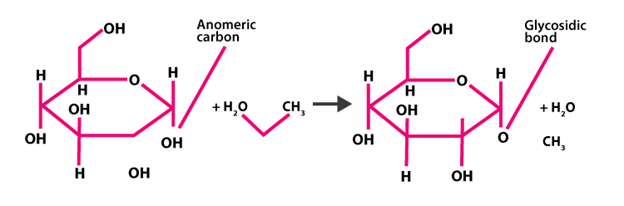
Glycosidic bond: The bond between the individual monosaccharides is called a glycosidic linkage. This bond is formed between two carbon atoms of two adjacent monosaccharide units.
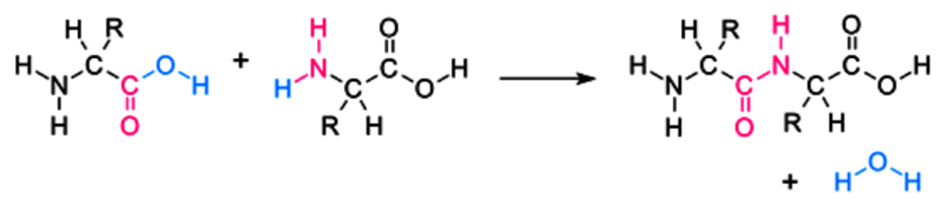
Peptide bond: The bond is covalent. Peptide bonds bind the amino acids that make up proteins to one another. It is created when an amino acid’s carboxyl group ($-\text{COOH}$) interacts with the neighbouring amino acid’s amino group ($-\text{NH}_2$) during condensation.
Phospho-diester bond: That joins successive sugar molecules in a polynucleotide. It is a strong covalent bond formed between two adjacent sugar groups and phosphate. These are the bonds that form the sugar-phosphate backbone of the nucleic acids.
Question 9.3. What is meant by the tertiary structure of proteins?
Solution:
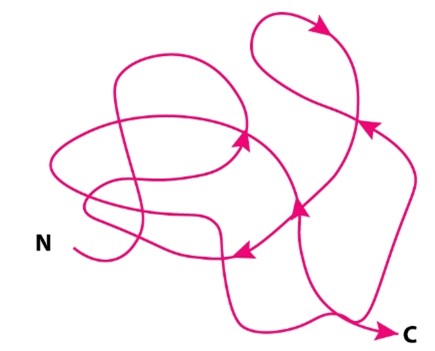
It is a structure that forms when the secondary coiled polypeptides are folded to produce a hollow, woollen ball-like structure. It is folded such that the functional side groups appear on the surface while the inactive side groups are found inside.
Question 9.4. Find and write down structures of 10 interesting small molecular weight biomolecules. Find if there is any industry which manufactures the compounds by isolation. Find out who are the buyers.
Solution:
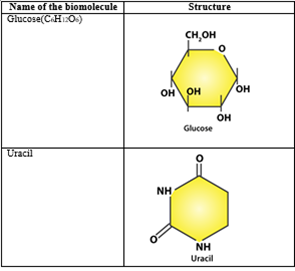
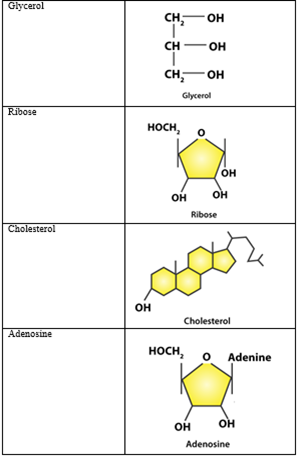
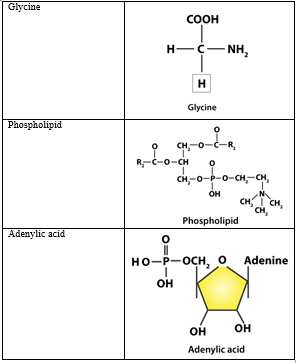
| Compound | Manufacturer | Buyer |
|---|---|---|
| Starch | Premier starch products private limited | Research institutes and laundries |
| Liquid Glucose | Imperial liquid glucose | Used in making flavoured drinks and in research |
| Enzymes like amylase, protease, and cellulase | Planet Biotech India | Used in research |
Question 9.5. Proteins have a primary structure. If you are given a method to know which amino acid is at either of the two termini (ends) of a protein, can you connect this information to the purity or homogeneity of a protein?
Solution:
The main structure of a protein refers to its positional information. The N-terminal amino acid is the first amino acid found in a protein, while the C-terminal amino acid is the last amino acid found in a protein. Indeed, we can use this information to determine a protein’s homogeneity or purity. Amino acids can be neutral, basic, or acidic depending on their carboxyl and amino groups. Proteins can be neutral, basic, or acidic.
Question 9.6. Find out and make a list of proteins used as therapeutic agents. Find other applications of proteins (e.g., Cosmetics, etc.)
Solution:
Following is the list of proteins used as therapeutic agents:
Insulin, Oxytocin, Immunoglobulin, Antidiuretic Hormone ($\text{ADH}$), Thrombin, Fibrinogen, Renin and streptokinases.
Some other applications are:
– They are used as artificial sweeteners. Thaumatin is a low-calorie sweetener.
– Proteins are used as dietary supplements to maintain health.
– They are used in creams and shampoos.
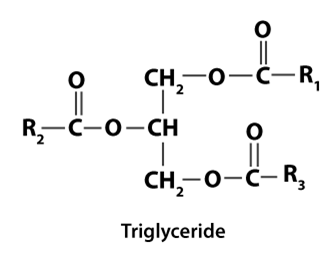
Question 9.7. Explain the composition of triglyceride.
Solution:
When glycerol combines with three fatty acids on each of the $\text{OH}$ groups through ester bonds, it is known as a triglyceride. All three fatty acids of triglyceride in pure fat are similar, while in mixed fat, they are dissimilar.
Question 9.8. Can you describe what happens when milk is converted into curd or yoghurt, from your understanding of proteins
Solution:
During fermentation, milk protein such as casein is denatured, which transforms globular proteins into fibrous proteins. This change is responsible for the production of curd or yoghurt.
Question 9.9. Can you attempt building models of biomolecules using commercially available atomic models (Ball and Stick models)?
Solution:
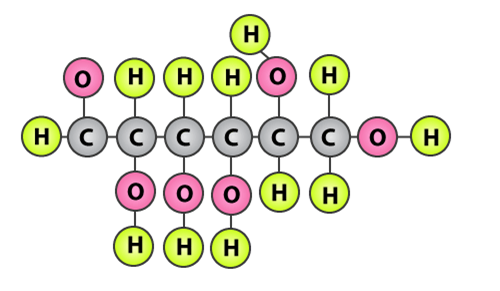
Yes, the ball and stick paradigm can be used to depict biomolecules. Here, the atoms are represented by balls, while the bonds holding the molecule together are shown by sticks. In the D-glucose model shown in the picture below, green balls stand in for hydrogen atoms, pink balls for oxygen atoms, and grey balls for carbon atoms.
Question 9.10. Attempt titrating an amino acid against a weak base and discover the number of dissociating (ionisable) functional groups in the amino acid.
Solution:
The pH of the amino acid is recorded, and the weak base is slowly supplemented to the amino acids while continuously noting the pH. The number of changes recorded indicates the number of ionisable functional groups – $\text{COOH}$ in the acidic range and –$\text{NH}_2$ in the alkaline range.
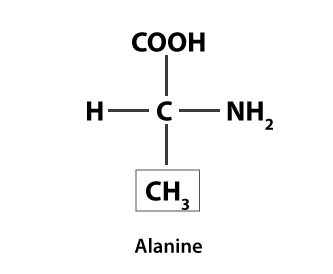
Question 9.11. Draw the structure of the amino acid alanine.
Solution:
The structure of Alanine is as follows:
Question 9.12. What are gums made of? Is Fevicol different?
Solution:
Gums are heteropolysaccharides formed by different monosaccharide units associated with glycosidic bonds. On the other hand, Fevicol is different from gums, as it is made up of synthetic polymers.
Question 9.13. Find out a qualitative test for proteins, fats and oils, and amino acids and test any fruit juice, saliva, sweat and urine for them.
Solution:
Qualitative test for proteins: Biuret test identifies the presence of proteins by turning the colour of the solution from light blue to purple.
Qualitative test for fats and oils: Grease test for oils gives a translucent stain on brown paper.
Qualitative test for amino acids: Ninhydrin test turns the colour to pink, purple or blue.
| Test | Name of item | Procedure | Result | Conclusion |
|---|---|---|---|---|
| Biuret’s test | Fruit juice | Juice + biuret’s reagent | Change of colour from light blue to purple | Presence of protein |
| Saliva | Saliva + biuret’s reagent | Change of colour from light blue to purple | Presence of protein | |
| Sweat | Sweat + biuret’s reagent | Colour does not change | Absence of protein | |
| Urine | Drops of urine + biuret’s reagent | Change of colour from light blue to purple | Presence of protein | |
| Grease test | Fruit juice | Few drops of juice on brown paper | A translucent spot is not observed | Absence of oils and fats |
| Saliva | Few drops of saliva on the brown paper | A translucent spot is not observed | Absence of oils and fats | |
| Solubility test | Sweat | Water added with sweat | Oil presence | Fats or oils can be present |
| Urine | Water added to a few drops of urine | Slight oily presence | Fats may or may not be present | |
| Ninhydrin test | Fruit juice | Juice + ninhydrin reagent (boil for few minutes) | Change of colour from no colour to purple, pink or blue | Presence of amino acids |
| Saliva | Saliva + ninhydrin reagent (boil for a few minutes) | Change of colour from no colour to purple, pink or blue | Presence of amino acids | |
| Sweat | Sweat + ninhydrin reagent (boil for a few minutes) | No colour change | Absence of amino acids | |
| Urine | Urine + ninhydrin reagent (boil for a few minutes) | Colourless solution changes to purple, pink or blue | Presence of amino acids |
Question 9.14. Find out how much cellulose is made by all the plants in the biosphere and compare it with how much of paper is manufactured by man and hence what is the consumption of plant material by man annually. What a loss of vegetation!
Solution:
Out of $170\text{ billion tonnes}$ of total organic matter, the biosphere generates roughly $100\text{ billion tonnes}$ of cellulose. Approximately $0.5\text{ billion tonnes}$ of wood are used in the production of paper. Other uses for trees include the production of food, medicine, lumber, spices, and more. It is estimated that $1.5\text{ billion tonnes}$ of food are needed. Two billion tonnes of wood are needed for a variety of uses. As a result, estimating how much plant material humans consume each year is challenging. Thus, there was a significant loss of vegetation as a result of the use of cellulose.
Question 9.15. Describe the important properties of enzymes.
Solution:
Almost all enzymes are proteins. Important properties of enzymes are as follows:
– They have a higher molecular weight and are complex macromolecules.
– They catalyse the biochemical reactions involved in the cell, assisting in breaking down larger molecules into simpler molecules or getting together two smaller molecules to form a larger one.
– Enzymes do not initiate but accelerate a reaction.
– They have an impact on the biological reaction’s rate but not its direction.
– A reaction becomes more efficient when there is a greater turnover of enzymes. The turnover number of the majority of enzymes is high.
– Temperature has an effect on enzymes. Enzymatic activity falls with rising temperatures. Activity peaks between $30$ and $40^\circ\text{C}$.
– The pH range of $6 – 8$ is where maximum activity is seen.
– The enzyme velocity rises in tandem with the substrate concentration, reaching its maximum velocity.
Why Class 11 Biology Chapter 9 Matters in NEET
Class 11 Biology Chapter 9: Biomolecules is highly important for NEET because it explains the chemical substances that form the structural and functional basis of living organisms. Students learn important concepts such as carbohydrates, proteins, lipids, nucleic acids, enzymes, and other biomolecules, along with their structures, properties, functions, and biological significance. NEET frequently includes direct NCERT-based questions on monosaccharides, disaccharides, polysaccharides, amino acids, protein structure, nucleic acids, enzymes, cofactors, and factors affecting enzyme activity. A thorough understanding of this chapter helps students build a strong foundation in biochemistry, metabolism, molecular biology, and physiology while improving their performance in the examination.
Preparation Tips for Class 11 Biology Chapter 9
Begin by understanding the basic classification and functions of biomolecules, especially carbohydrates, proteins, lipids, and nucleic acids. Study important carbohydrates such as glucose, fructose, sucrose, lactose, starch, glycogen, and cellulose, along with their structures, functions, and differences. Pay special attention to the basic structure of amino acids and the levels of protein organisation.
Study proteins, lipids, and nucleic acids carefully, focusing on their building blocks, structures, bonds, and biological functions. Learn the structure and functions of DNA and RNA, including their nucleotide components and major differences. Also revise the important properties and functions of different types of lipids.
Pay special attention to enzymes, including their characteristics, mechanism of action, enzyme-substrate interaction, cofactors, and factors affecting enzyme activity such as temperature, pH, and substrate concentration. Prepare comparison tables for different biomolecules and revise important structures and examples regularly. Complete all NCERT diagrams, tables, examples, and exercise questions, and practise NEET previous-year questions to improve accuracy, speed, and confidence.
FAQs
1. What are the most important topics in Class 11 Biology Chapter 9?
The most important topics include carbohydrates, proteins, lipids, nucleic acids, enzymes, amino acids, nucleotides, protein structure, DNA, RNA, cofactors, and factors affecting enzyme activity. These topics are frequently tested in NEET.
2. What are the major types of biomolecules?
The major biomolecules include carbohydrates, proteins, lipids, and nucleic acids. These molecules perform important structural, energy-related, catalytic, genetic, and regulatory functions in living organisms.
3. What are carbohydrates?
Carbohydrates are organic compounds that mainly contain carbon, hydrogen, and oxygen. They are classified into monosaccharides, oligosaccharides, and polysaccharides. Examples include glucose, sucrose, starch, glycogen, and cellulose.
4. What are proteins?
Proteins are polymers of amino acids joined together by peptide bonds. They perform several important functions, including structural support, transport, defence, movement, and enzymatic activity. Protein structure is organised into primary, secondary, tertiary, and quaternary levels.
5. What are nucleic acids?
Nucleic acids are biological macromolecules involved in the storage and transmission of genetic information. The two major types are DNA (deoxyribonucleic acid) and RNA (ribonucleic acid). They are composed of nucleotide units.
6. What are enzymes?
Enzymes are biological catalysts, mostly proteins, that accelerate biochemical reactions without being consumed in the reaction. They are highly specific and their activity is affected by factors such as temperature, pH, and substrate concentration.
7. What are cofactors?
Cofactors are non-protein components required for the proper functioning of certain enzymes. They may include metal ions, coenzymes, and prosthetic groups. Cofactors assist enzymes in carrying out biochemical reactions.
8. What factors affect enzyme activity?
Enzyme activity is affected by factors such as temperature, pH, substrate concentration, and enzyme concentration. Each enzyme generally has an optimum temperature and pH at which it shows maximum activity.