Published by:
CGP EDU Academic Team
Published on: September 13, 2026
A parallel beam of monochromatic light of wavelength λ is used in a Young’s double slit experiment. The siits are separated by a distance d and the screen is placed parallel to the plane of the slits. The incident beam makes an angle θ = sin –1 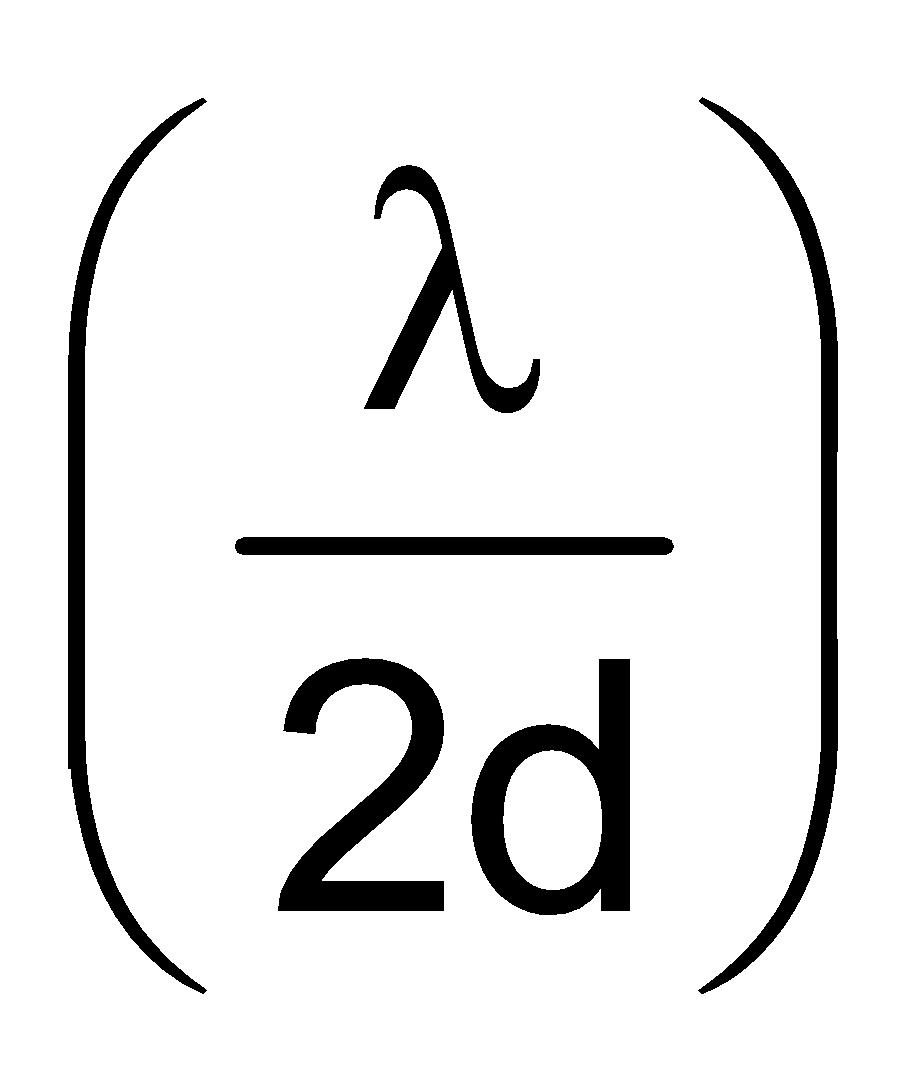 with the normal to the plane of the slits. A transparent sheet of refractive index. ' μ ' and thickness t =
 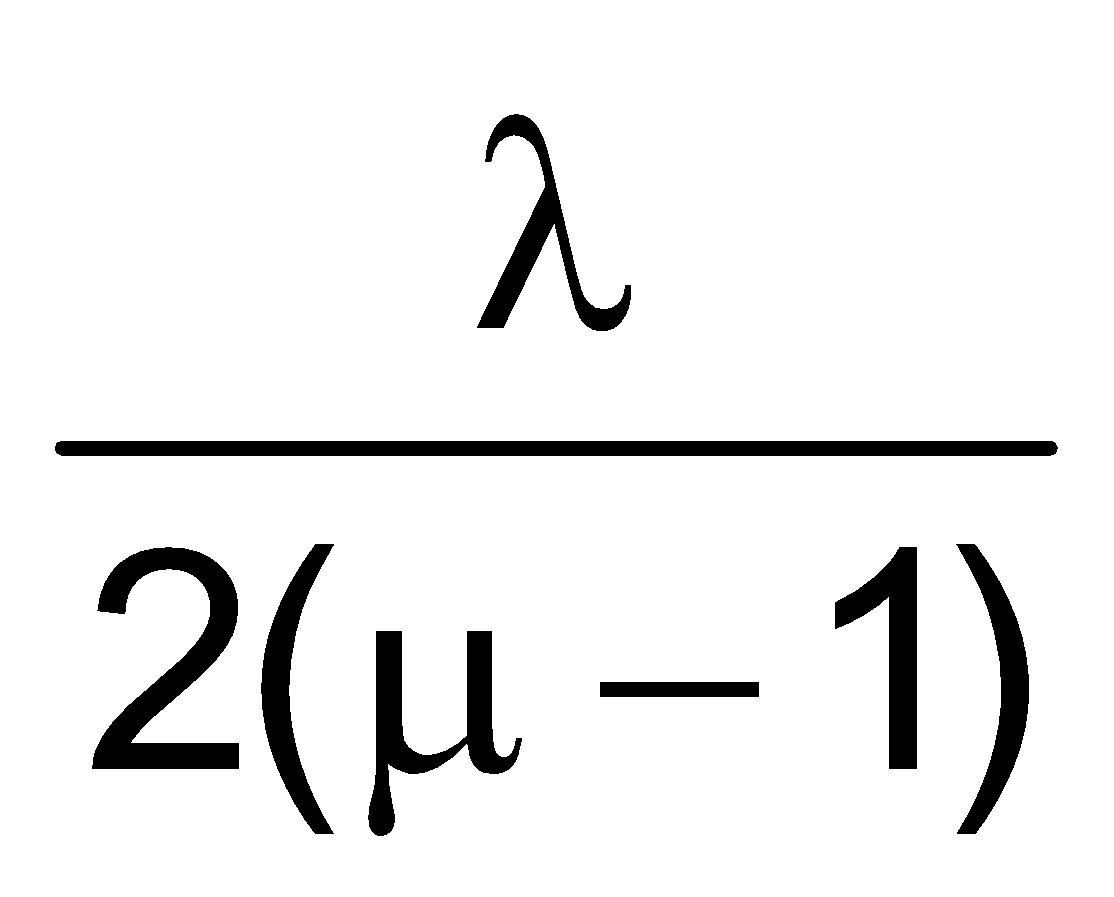 is introduced infront of one of the slit. find the intensity at the geometrical centre .
Text Solution
Verified by ExpertsThe correct answer is:
B
To find the intensity at the geometrical center, we need to consider the effect of the thin transparent sheet introduced in front of one of the slits.
Step 1: **Path Length Difference**
When a thin sheet of thickness t and refractive index μ is placed in front of one slit, it introduces a phase shift. The optical path length for the light passing through the sheet increases by (μ - 1)t.
Step 2: **Phase Difference Calculation**
The additional path length can be expressed in terms of phase difference. The phase difference \( \\Delta \\phi \) introduced is given by:
\( \\Delta \\phi = \frac{2\pi}{\lambda} (\mu - 1)t \).
Step 3: **Intensity Calculation**
The resultant intensity I at the center of the screen can be expressed as:
\( I = I_0 (1 + \cos(\Delta \phi)) \)
where \( I_0 \) is the intensity without the sheet.
Substituting \( \Delta \phi \):
\( I = I_0 \left(1 + \cos\left(\frac{2\pi}{\lambda} (\mu - 1)t\right)\right) \)
In our case, we assume the wave from the other slit remains unaffected. Hence the answer will depend on the values for \( \mu \) and t. Assuming ideal conditions for maximum intensity, this scenario generally leads to option B based on standard readings through similar experimental setups.
Step 1: **Path Length Difference**
When a thin sheet of thickness t and refractive index μ is placed in front of one slit, it introduces a phase shift. The optical path length for the light passing through the sheet increases by (μ - 1)t.
Step 2: **Phase Difference Calculation**
The additional path length can be expressed in terms of phase difference. The phase difference \( \\Delta \\phi \) introduced is given by:
\( \\Delta \\phi = \frac{2\pi}{\lambda} (\mu - 1)t \).
Step 3: **Intensity Calculation**
The resultant intensity I at the center of the screen can be expressed as:
\( I = I_0 (1 + \cos(\Delta \phi)) \)
where \( I_0 \) is the intensity without the sheet.
Substituting \( \Delta \phi \):
\( I = I_0 \left(1 + \cos\left(\frac{2\pi}{\lambda} (\mu - 1)t\right)\right) \)
In our case, we assume the wave from the other slit remains unaffected. Hence the answer will depend on the values for \( \mu \) and t. Assuming ideal conditions for maximum intensity, this scenario generally leads to option B based on standard readings through similar experimental setups.
Prepare Smarter with CGP Edu
Get practice questions, solutions, and test series in one place.
Write a Review
Share your experience with this question and solution.
Commentary
Send your comment, doubt, correction, or feedback to admin.
Similar Questions
Explore conceptually related problems
What is the effect on the fringe width of interference fringes in a Young's double slit experiment …
Two slits separated by a distance of 1 mm, are illuminated with red light of wavelength 6.5 × 10 –7…
In a Young’s double slit experiment, the fringe width is found to be 0.4 mm. If the whole apparatus…
Find the angular fringe width in a Young’s double slits experiment with blue-green light of wavelen…
A source emitting two light waves of wavelengths 580 nm and 700 nm is used in a young's double slit…
A flint glass and a crown glass are fitted on the two slits of a double slit apparatus. The thickne…